A blank wall might be the most underused piece of fitness equipment in your home. Pilates wall exercises turn that flat surface into a coach, a support, and a built-in alignment check. You get instant feedback on your posture, and you train strength and control at the same time.
Wall-based Pilates blew up across social feeds over the past year, and the hype is mostly fair. The moves are simple, the barrier to entry is low, and the wall gently corrects your form as you go. In this 2026 guide, I will show you exactly how to use it, which moves earn their place, and where home practice ends and expert coaching begins.
| Quick Answer Pilates wall exercises use a wall for support, resistance, and alignment feedback while you perform controlled Pilates movements. They build core strength, improve posture, and make tricky moves more accessible, all with zero equipment. Beginners and experienced movers alike can practice them safely at home. |
Why the Wall Is Such a Smart Training Partner
The wall does three jobs at once, and that is what makes it special. First, it supports you, so you can hold positions you could not manage in open space. Second, it adds gentle resistance when you press into it. Third, and best of all, it tells the truth about your alignment.
Stand with your back to a wall and you instantly feel where your body drifts. Maybe your lower back arches away. Maybe one shoulder sits higher than the other. The wall reveals these habits without a single mirror or coach. As a result, you fix them in real time.
Great for Tight Spaces and Busy Days
You do not need a studio full of machines to train well. A clear stretch of wall and a yoga mat will do. That makes Pilates wall exercises perfect for apartments, hotel rooms, and quick sessions between meetings. When time is short, the wall keeps you moving.
Why 2026 Is the Year to Try Wall Pilates
Home fitness keeps shifting toward smarter, lower-impact training, and Pilates wall exercises sit right in that sweet spot. They demand no pricey gear, no large room, and no prior experience. That accessibility is exactly why so many people made the wall their go-to this year.
There is also a growing focus on posture and longevity rather than quick aesthetic fixes. People want to move well at fifty and sixty, not just look a certain way at thirty. Pilates wall exercises support that goal beautifully, since they train alignment and control that pay off for decades.
If you have been meaning to start, this is a good moment. Begin at home with the routine below, and consider a visit to a Pilates studio Las Vegas trainers run when you want to refine your technique. The combination keeps your progress steady and your form honest.
What You Need Before You Start
The setup is refreshingly simple. Gather these few things and you are ready to go.
- A clear wall: at least the width of your shoulders, free of pictures or switches.
- A non-slip mat: for grip and a little cushioning under your spine.
- Comfortable clothing: fitted enough that you can see your alignment.
- Bare feet or grippy socks: for stable contact with the floor.
- A few minutes: even ten focused minutes deliver real results.
That is the whole list. No springs, no straps, no subscription. Just a wall and your willingness to move with control.
The Best Pilates Wall Exercises to Try This Year
These moves cover strength, mobility, and alignment. Start with the gentler options, then layer in the harder ones as your control improves.
Wall Roll-Down
Stand with your back against the wall and slowly peel your spine away, one vertebra at a time. This loosens a stiff back and teaches smooth spinal articulation. Roll back up just as slowly to finish.
Wall Sit With Core Brace
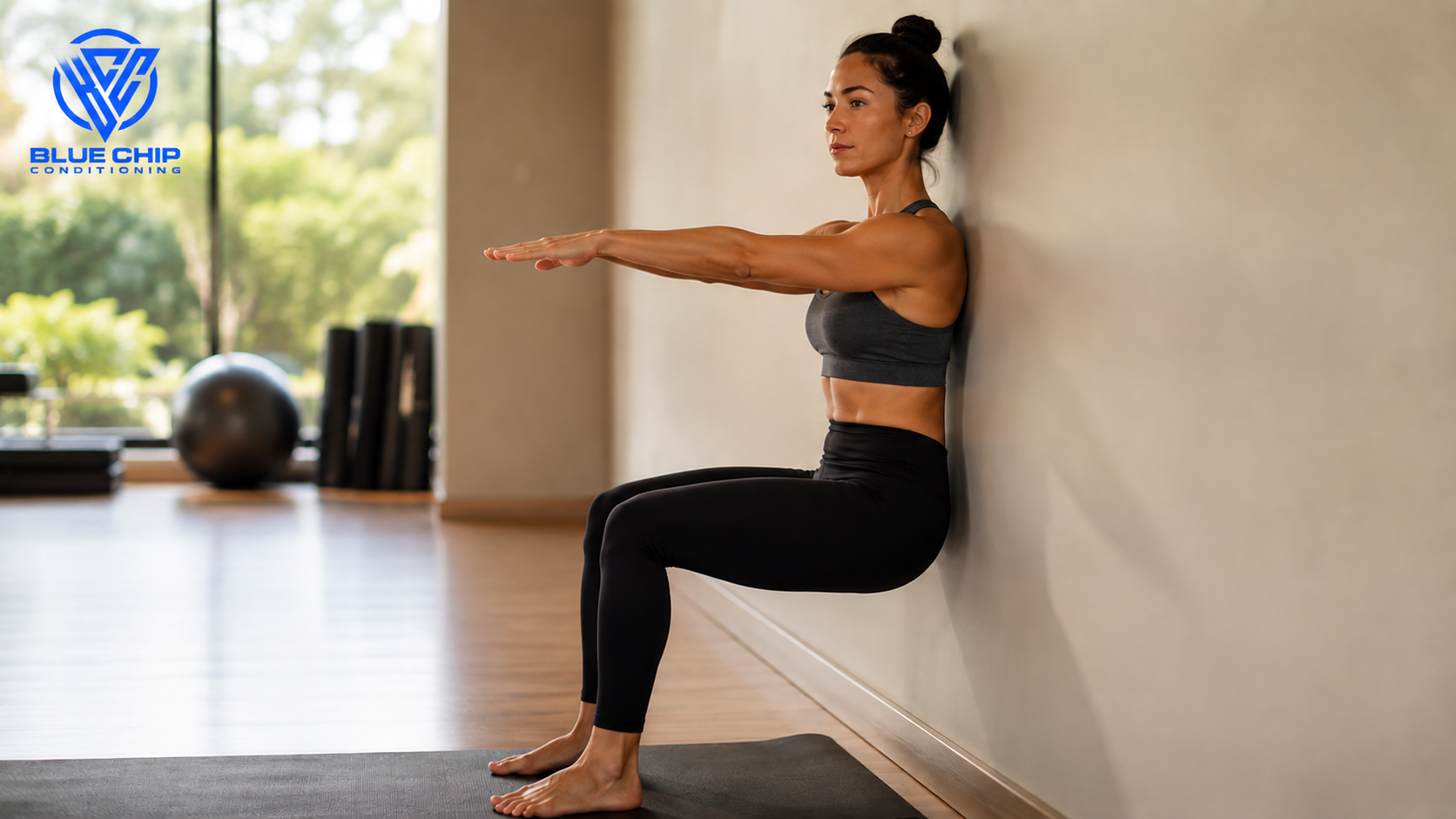
Slide down into a seated position against the wall, thighs parallel to the floor. Then draw your belly in and breathe. Your legs burn, your core braces, and your posture stays tall. It is deceptively tough.
Wall Push-Up
Face the wall, place your hands at shoulder height, and lower your chest toward it. This joint-friendly push-up builds arm and chest strength while the wall keeps your spine honest. Great for beginners and recovery days alike.
Standing Leg Lifts
With one side against the wall for balance, lift the outer leg in slow, controlled arcs. The wall removes the wobble, so you can focus purely on the working muscles. Switch sides and repeat.
Cycle through these Pilates wall exercises two or three times a week. Consistency beats intensity here every single time.
| Want a coach to refine your alignment in person? Visit our Pilates studio in Las Vegas for sessions that build on the same wall-based principles. |
A 12-Minute Wall Routine You Can Follow Today
Short on time? This quick flow hits posture, strength, and balance in one tidy session. Move slowly and breathe with each rep.
- Warm up: Perform 5 slow wall roll-downs to wake up the spine.
- Strengthen: Hold a wall sit for 30 seconds, bracing your core throughout.
- Push: Do 12 controlled wall push-ups, keeping your body in one straight line.
- Balance: Complete 10 standing leg lifts per side using the wall for support.
- Stretch: Press your palms into the wall and lean in for a 30-second chest opener.
- Reset: Finish with one slow roll-down and three deep breaths.
Repeat the circuit twice if you have the time. New to mat work in general? Our at-home Pilates starter guide covers the fundamentals before you build up.
Alignment: The Real Reason to Train Against a Wall
Strength is great, but alignment is the quiet superpower of wall work. Most of us carry small postural quirks we cannot even feel. A forward head here, a tilted pelvis there. Over years, those quirks turn into aches.
The wall acts like a level. Press your back, hips, and shoulders against it and you immediately sense what is out of line. Then you practice holding the corrected position. Bit by bit, your body learns the new pattern and carries it into daily life.
A Simple Wall Posture Check
Stand with your heels a few inches from the wall and lean back. Ideally, your hips, upper back, and the back of your head all touch lightly. If your head cannot reach without straining, that is a sign of forward-head posture worth working on. Pilates wall exercises gradually close that gap.
Mistakes That Sneak Into Wall Workouts
The wall is forgiving, but a few habits still hold people back. Keep an eye out for these.
- Leaning too hard: let the wall guide you, not carry you.
- Rushing the reps: slow control is where the magic happens.
- Forgetting to breathe: exhale on the effort to engage your deep core.
- Arching the lower back: keep your spine long and your ribs gently down.
Home Wall Work vs. Studio Coaching
Home practice wins on convenience and cost. You can roll out a mat any time and squeeze in a session whenever life allows. For building consistency, that freedom is priceless.
Still, the wall can only correct what you can feel. Some alignment issues hide from your own awareness, and that is where a trained eye matters. A coach at a Las Vegas Pilates studio can spot the subtle drift you miss and adjust you on the spot. Many people pair regular home sessions with the occasional studio visit to keep their form clean.
If you want to add spring-loaded resistance later, the natural progression is the machine. Our reformer Pilates classes extend the same control-and-alignment focus with adjustable load. A good Pilates studio in Las Vegas can map out exactly when to make that jump.
Quick Pros and Cons
- Home – Pro: free, flexible, and available any time of day.
- Home – Con: no expert feedback on the habits you cannot feel.
- Studio – Pro: personalized coaching and access to specialized equipment.
- Studio – Con: requires scheduling and a bit of travel.
How to Progress Your Wall Workouts Over Time
Wall Pilates is easy to start, yet it still leaves plenty of room to grow. The trick is to change one variable at a time, so your body adapts without getting overwhelmed.
Add Time and Reps
Once a 30-second wall sit feels comfortable, push it to 45 seconds, then a full minute. Add a few reps to your push-ups and leg lifts each week. Small jumps add up faster than you expect.
Slow the Tempo
Speed is the easy way out. So take it away. Lower into each move on a slow four-count and your muscles work far harder. This single tweak makes basic Pilates wall exercises surprisingly challenging.
Reduce the Support
As your balance improves, rely on the wall a little less. Touch it with fingertips instead of a full hand, or move slightly farther away. You keep the alignment benefits while building real independent strength.
Track your progress in a simple note on your phone. When you can see last month’s numbers, staying motivated gets a whole lot easier.
Fit Wall Pilates Into a Bigger Plan
Wall work is excellent, but it shines brightest as one piece of a balanced week. Pair it with walking, light strength training, or a full mat session, and you cover most of your fitness bases.
Think of the wall as your daily alignment reset and your travel-friendly fallback. Then layer richer training around it. A coach at a Pilates studio Las Vegas locals trust can help you design that weekly mix so nothing gets neglected and nothing gets overtrained.
This is also where structured guidance pays off. A good Pilates studio Las Vegas residents recommend will assess your posture, set realistic goals, and adjust your plan as you improve. Home wall sessions then become the consistent thread that ties the whole program together. Many of our most consistent members built their habit on exactly this combination of simple Pilates wall exercises at home and focused coaching in the studio.
Who Should Try Wall Pilates
The honest answer is almost everyone. Beginners love the support and the built-in guidance. Desk workers use it to counter long hours of slouching. People returning from injury appreciate how gentle and controlled the movements stay.
I remember a client who travelled constantly for work and felt his posture sliding with every flight. We built him a ten-minute wall routine he could do in any hotel room. Three months later he stood taller, his shoulder pain had faded, and he no longer dreaded long trips. All he needed was a wall and a plan.
Final Thoughts
Pilates wall exercises prove that great training does not require a room full of machines. With nothing but a wall and steady, mindful movement, you can build strength, sharpen your posture, and feel more aligned from head to toe. Start with the routine above, stay consistent, and let the wall do its quiet coaching.
| Ready to take your form to the next level? Book a session at Blue Chip Conditioning, a trusted Las Vegas Pilates studio built around smart, supportive training. |
Frequently Asked Questions
Are Pilates wall exercises effective for beginners?
Yes. The wall offers support and instant alignment feedback, which makes the moves easier to learn and safer to perform from day one.
Do I need any equipment?
No. A clear wall and a mat are enough. The wall itself provides the support and gentle resistance you need.
How often should I do wall Pilates?
Two or three sessions a week works well. Even short, ten-minute routines deliver steady gains when you stay consistent.
Can wall Pilates improve my posture?
Very much so. The wall acts like a level, helping you find and hold better alignment until it becomes a natural habit.
Is wall Pilates good for back pain?
For many people, yes. The controlled, low-impact moves strengthen the core and ease common strain. Check with a professional for persistent pain.
Should I join a Las Vegas Pilates studio too?
It helps. A Las Vegas Pilates studio offers expert feedback and equipment that home practice cannot, which speeds up your progress.
Is this just a passing trend?
The format is trendy, but the principles are decades old. Wall work simply makes proven Pilates fundamentals more accessible.