
Pilates for Dancers Las Vegas: 7 Proven Ways It Transforms Performance
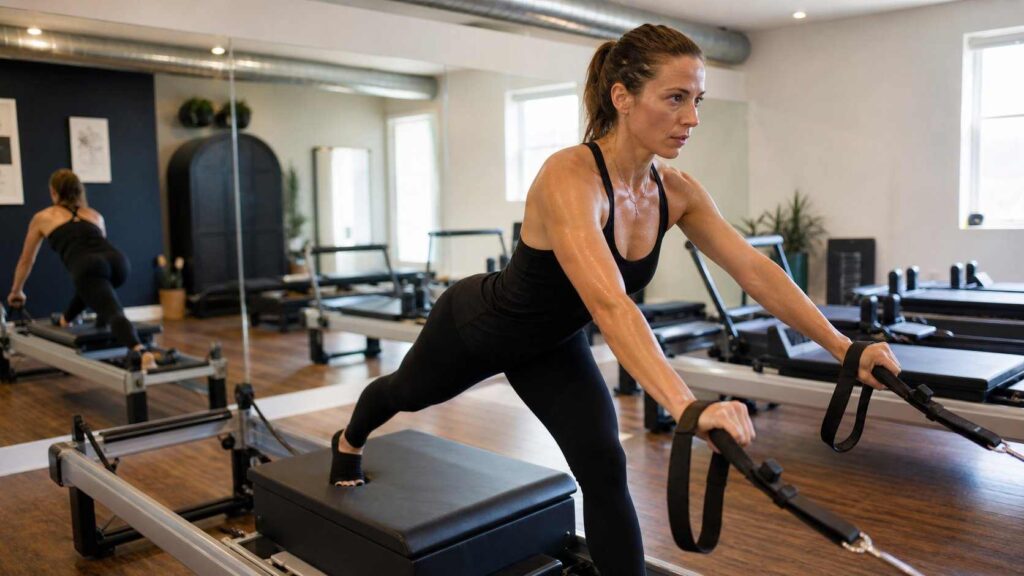
Pilates for dancers Las Vegas programs exist for one blunt reason: this city works its dancers harder than almost anywhere on earth. Strip productions run multiple shows nightly, competition studios train year-round, and audition season never really ends. Dancers here need bodies that can absorb that load and still perform with precision. That’s exactly what a well-built Pilates for dancers program delivers – and in this article, I’ll walk through the seven specific ways it transforms dance performance, drawn from years of training professional and pre-professional dancers on the reformer. Quick Answer Pilates for dancers Las Vegas training uses reformer-based conditioning to build the core control, turnout strength, jump mechanics, and injury resilience that dance technique classes alone can’t develop. Professional companies worldwide use it because it strengthens dancers without adding bulk or compromising their lines. Table of Contents 1. Why Dance Class Alone Isn’t Enough 2. 7 Proven Ways Pilates Transforms Dancers 3. How Pilates for Dancers Las Vegas Sessions Are Structured 4. Dancers Are Athletes: The Cross-Training Reality 5. A Sample Weekly Plan for a Working Dancer 6. Choosing the Right Program in Las Vegas 7. Final Thoughts 8. FAQs Why Dance Class Alone Isn’t Enough Dance technique class teaches skill, artistry, and choreography. What it doesn’t do systematically is build strength. Repeating jumps in class grooves the pattern, but it also accumulates fatigue in the same tissues, the same way, every day. Over time, that combination – high skill demand plus repetitive load – produces the classic dancer injury list: labral tears, stress reactions, ankle sprains, and chronic low back pain. Conditioning fills the gap. It strengthens tissues beyond what performance demands, so choreography feels submaximal instead of maximal. Joseph Pilates understood this decades ago, which is why ballet companies were among his very first devoted clients. The relationship between the method and dance has been continuous ever since. 7 Proven Ways Pilates Transforms Dancers Here’s what changes when a dancer commits to consistent reformer work. I’ve watched each of these play out repeatedly in our studio. How Pilates for Dancers Las Vegas Sessions Are Structured A dancer’s session looks different from a general fitness session, and it should. Programming respects the aesthetic demands of dance – long lines, articulate feet, mobile spines – while quietly building athletic capacity underneath. The Assessment Comes First Before anything else, a qualified instructor evaluates turnout range versus turnout strength, single-leg stability, spinal articulation, and jump mechanics. Dancers are famously good at hiding weaknesses with skill, so the assessment digs beneath the polish. From there, the program targets the actual limiters. What a Session Includes Most dancers train in private or semi-private sessions so programming stays individualized. Group classes work for maintenance, but dancers with performance contracts or audition goals get far more from the personalized formats. Dancers Are Athletes: The Cross-Training Reality Sports science settled this question long ago – dancers sustain athletic workloads comparable to contact-sport athletes, according to research recognized by organizations like the National Academy of Sports Medicine. Yet dancers historically cross-train far less than athletes in other disciplines. That gap is closing fast, and athletic enhancement Las Vegas programs are a big part of why. The best athletic enhancement Las Vegas facilities now treat dancers as a core client group, not an afterthought. At Blue Chip Conditioning, dancers train in the same building as golfers, fighters, and college recruits, because the underlying needs overlap heavily. Pilates for athletes and Pilates for dancers share the same foundation: build the core, balance the hips, strengthen the weak links, and let sport-specific or dance-specific skill sit on top of that base. Our athletic enhancement training draws from both worlds, and dancers benefit enormously from being treated as the athletes they are. Interestingly, the crossover runs both ways. We’ve had football players adopt dancer footwork drills for agility, and dancers borrow loading progressions from pilates for athletes programming to bulletproof their ankles. Good movement is good movement. A Sample Weekly Plan for a Working Dancer Here’s how conditioning fits around a realistic Las Vegas dance schedule without burning anyone out: Two focused sessions per week is the sweet spot for most working dancers. Pre-professional students on lighter performance schedules can handle three. The mistake to avoid is stacking hard conditioning onto heavy show weeks – a good instructor adjusts the plan weekly. Common Dance Injuries Reformer Work Helps Prevent Prevention claims deserve specifics, so here are the injuries a good Pilates for dancers Las Vegas program targets most often and how the conditioning addresses each one. Every dancer reading this will recognize at least two. Ankle Sprains and Chronic Instability The most common dance injury by a wide margin. Repeated sprains stretch the lateral ligaments, and the ankle never regains stability on its own. Reformer footwork and single-leg jumpboard drills rebuild the strength and reaction speed of the muscles that catch the ankle before it rolls. Dancers with a sprain history should treat this work as non-negotiable. Hip Impingement and Labral Irritation Forcing turnout beyond available hip rotation grinds the joint, and years of it produce the deep groin pinch so many dancers quietly manage. Conditioning attacks the cause: it builds rotation strength through the range the hip actually owns, so dancers stop borrowing range from the knee and lumbar spine. Pain frequently drops within weeks once the loading pattern changes. Low Back Pain From Extension Overload Arabesques, cambrés, and back-bending choreography demand spinal extension, but most dancers extend from one or two hypermobile segments instead of the whole chain. Reformer work distributes extension across the spine and strengthens the anterior core that controls it. The result is bigger, safer backbends – not smaller ones. Stress Reactions in the Foot and Shin These accumulate silently during heavy rehearsal blocks. Low-impact spring loading lets dancers maintain lower-leg strength on recovery days without adding the repetitive ground impact that drives the injury. Smart scheduling matters as much as the exercises here, which is another argument for individualized programming. What Progress Looks