
Introduction
Posture is one of those things people usually notice only when it starts to slip. A stiff neck, a tired lower back, shoulders that keep rounding forward, or a body that feels “off” after sitting too long are all signs that alignment needs attention. This is where pilates reformer exercises stand out. They do not rely on impact, speed, or brute force. They focus on controlled movement, body awareness, and steady muscle engagement.
The reason this method has lasting value is simple: posture is not only about appearance. It affects how the spine is supported, how the ribs expand, how the hips move, and how the body handles daily tasks. When these pieces work together, standing and moving feel easier. When they do not, strain builds quietly over time. pilates reformer exercises help correct that imbalance by training the deeper stabilizing muscles that keep the body organized from the inside out.
Another strength of this method is that it blends structure with adaptability. A beginner can use the reformer to learn alignment without feeling overwhelmed, while a more experienced client can use it to refine control and build deeper strength. That is why so many people exploring local reformer classes are looking for more than a workout. They want a system that improves movement quality, not just calorie burn. For clients who prefer a guided environment, a dedicated studio environment can make a major difference. The machine, springs, and straps create feedback that helps the body understand where it is working too hard and where it needs more support. Over time, that feedback becomes a learning tool. It teaches the body to stack, stabilize, and move with better efficiency, which is the foundation for both posture and core strength.
Why posture improves through reformer-based training
Good posture is not about forcing the chest up or pulling the shoulders back in an exaggerated way. Real posture comes from balance. The spine needs support from the core, hips, upper back, and breathing system working together. When one area is weak or overactive, the rest of the body usually compensates. pilates reformer exercises help reduce that compensation by building awareness and strength in the right places.
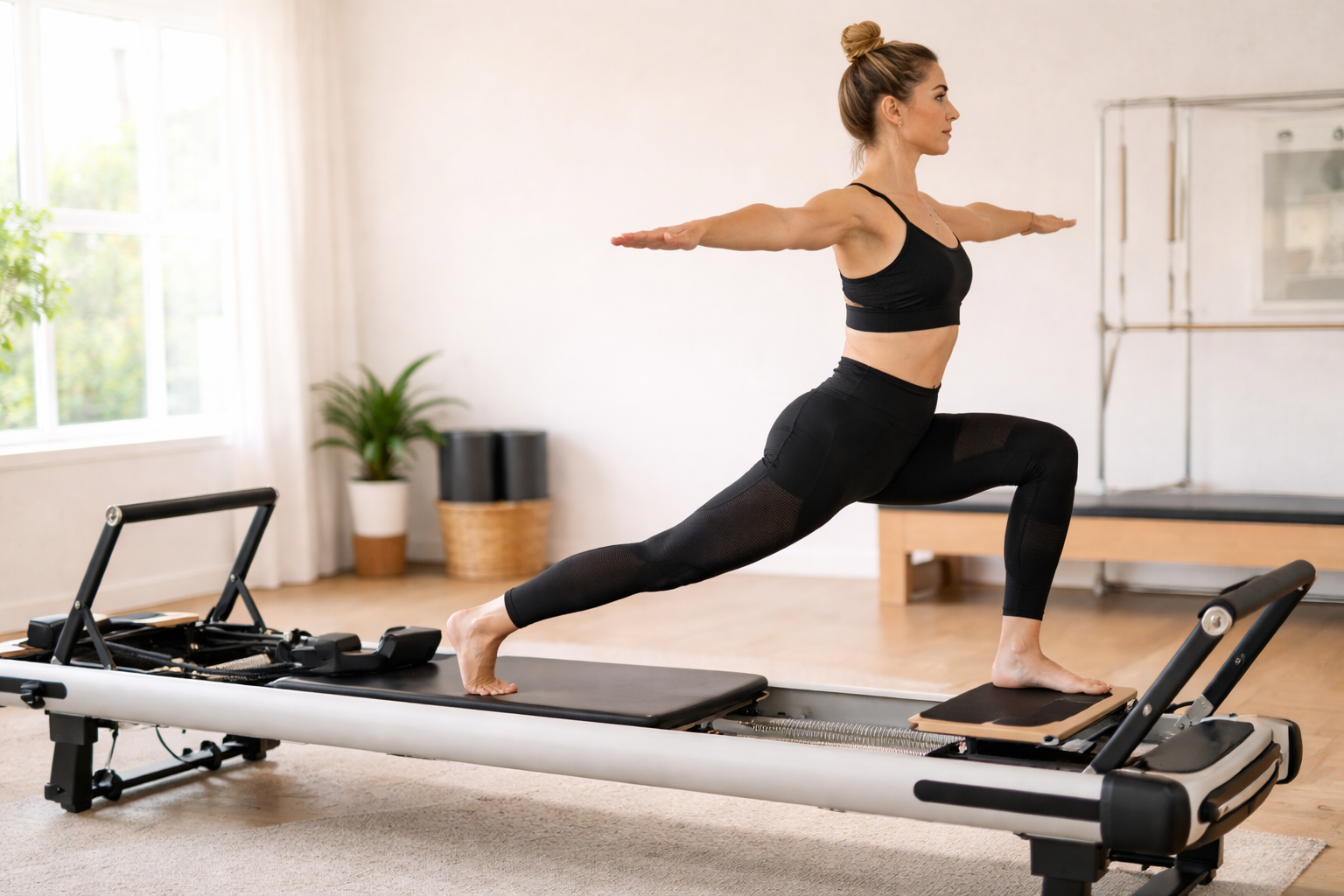
The moving carriage changes how the body works. It creates a stable challenge without making the movement rigid. That means the small stabilizing muscles must stay alert while the larger muscles assist in a controlled way. This is one reason reformer work can improve posture more effectively than random exercise. It teaches the body to hold itself well while still moving freely.
Another reason the method works is that it trains alignment under pressure. Many people can stand tall for a moment if they think about it, but they cannot keep that position when they move, sit, or reach. pilates reformer exercises teach the body to keep that support during motion. That is where posture actually changes in daily life.
Core strength that supports real movement
Core strength is often misunderstood. It is not just about visible abdominal muscles or holding a long plank for as long as possible. The deeper goal is stability. The core must control the pelvis, protect the spine, and transfer force between the upper and lower body. pilates reformer exercises are especially effective because they train that function directly.
Instead of isolating one area, the reformer asks the body to coordinate many areas at once. The abdomen engages, the pelvic floor supports, the hips stay active, and the back muscles contribute without over-tightening. That creates strength that feels useful, not just cosmetic. When the center becomes more stable, the rest of the body moves with more confidence.
This is also why people who train regularly often notice improvements in balance and endurance. The body is not wasting energy on unnecessary tension. It is learning to work more efficiently. For anyone seeking a smarter approach than repetitive crunches or rushed gym work, pilates reformer exercises offer a more complete path.
Key ways the method improves posture
1. It strengthens the deep support system
The muscles that matter most for posture are not always the ones people see in the mirror. The deeper layers around the trunk and pelvis are what keep the spine organized. The reformer encourages these muscles to activate consistently because the body must stay balanced against resistance. That kind of work builds support instead of stiffness, which is a major distinction.
When practiced with consistency, pilates reformer exercises reduce the body’s tendency to rely too heavily on the lower back and shoulders. That makes standing, walking, and sitting feel more natural. It also helps the body maintain a taller position without constant effort. In a well-run dedicated studio environment, that type of training can be guided with precision so the client learns exactly where support should come from.
2. It improves shoulder and hip alignment
Rounded shoulders and uneven hip positioning are common in modern life, especially for people who sit for long periods or spend hours at a desk. The reformer helps correct these patterns by opening the chest, strengthening the upper back, and training the hips to work symmetrically. That balance matters because posture problems often spread through the body rather than staying in one place.
When the shoulders are supported and the hips are stable, the spine can settle into a more natural line. This is one reason pilates reformer exercises are often recommended for people who want to improve daily movement habits, not just one isolated muscle group. The work is subtle, but the effect is noticeable over time.
3. It increases movement awareness
A major benefit of reformer training is that it makes the body more aware of itself. Small adjustments become easier to feel. If the ribs flare, the shoulders tense, or the pelvis shifts too far, the carriage provides instant feedback. That feedback is powerful because posture cannot improve well when the body keeps repeating the same hidden errors.
With repetition, the nervous system begins to recognize better positions and cleaner movement patterns. That is one of the quiet strengths of pilates reformer exercises. They do not just strengthen the body; they teach it how to organize movement more intelligently. People often carry that awareness into walking, lifting, sitting, and even breathing.
What makes the reformer especially effective
- The carriage adds controlled instability, so the body has to stabilize instead of just going through motions.
- Spring resistance can be adjusted to match different levels, which makes progress more manageable and precise.
- The structure supports full-body movement, so posture and strength develop together rather than separately.
- The machine gives immediate feedback, helping the client notice alignment issues faster.
These features explain why reformer training continues to be valued by people who want measurable progress. It is not about doing more for the sake of doing more. It is about doing the right work with enough control for the body to adapt properly. That is also why reformer pilates las vegas classes often attract clients who want a disciplined, results-oriented method.
How the method supports long-term body balance
One reason people stay with this approach is that it does not chase exhaustion. It builds capacity. That matters because lasting posture improvements depend on habits the body can repeat. If a person only trains in a way that creates fatigue, the body may become stronger in a narrow sense but still move inefficiently. pilates reformer exercises avoid that trap by emphasizing form, timing, and coordinated effort, especially when guided inside a professional pilates reformer studio las vegas environment.
Another benefit is that the reformer helps connect the upper and lower body. Many people have strong legs but poor trunk control, or decent core awareness but weak shoulder mechanics. Reformer work links those systems so the body becomes more balanced overall. That is especially valuable for people who feel strong in one area but unstable in another, which is why many choose a structured pilates reformer studio las vegas setting for better guidance and consistency.
The process is gradual, and that is a good thing. Posture changes that last are usually built through repetition, not intensity alone. The reformer gives enough challenge to create adaptation while still keeping the body under control. For clients working with a trusted pilates reformer studio las vegas provider, that combination often becomes the difference between temporary effort and real progress.
A smarter approach for everyday function
The best training method is the one that helps people move better in daily life. That means getting up from a chair without strain, carrying groceries with better control, standing for longer without fatigue, and moving through the day with less tightness. pilates reformer exercises are effective because they train those exact qualities.
People often notice that once the core becomes more responsive, everything else starts to improve. The back does less unnecessary work. The shoulders sit more naturally. The pelvis feels more centered. None of that comes from brute force. It comes from training the body to support itself properly.
For clients who want guided sessions and a thoughtful training environment, reformer pilates las vegas options can be especially useful. They provide structure, consistency, and expert correction, which are important when the goal is long-term posture improvement. The right studio helps keep the work precise, and precision is what makes this method stand out.
Practical benefits people usually notice
- Less tension in the lower back after sitting or standing for long periods.
- Better control through the midsection during movement and exercise.
- Improved shoulder positioning and less rounding through the upper body.
- Greater confidence in balance, coordination, and general movement quality.
These changes may seem small at first, but they add up. Over time, the body begins to feel less reactive and more organized. That is the real value of reformer-based training. It does not just create a stronger body on paper. It creates a body that functions better in the real world.
Common mistakes that slow progress
- Moving too fast and losing control of the carriage, which turns the exercise into momentum instead of work.
- Holding tension in the neck and shoulders, which takes pressure away from the core and changes the exercise.
- Treating every session as the same, instead of adjusting spring resistance and focus based on the body’s needs.
- Expecting posture to change from a few sessions, rather than allowing the body time to relearn better movement habits.
Why consistency matters more than intensity
A lot of people try to improve posture by working harder, but that is not always the answer. Posture responds best to regular, controlled practice. The body learns through repetition, and the nervous system needs time to replace old habits with better ones. pilates reformer exercises work well because they make that repetition purposeful instead of mechanical.
Consistency also matters because the body adapts slowly. If a person trains once in a while, the progress tends to fade. When training is steady, the body begins to trust the new patterns. That trust shows up in how the person stands, sits, walks, and breathes. It also becomes easier to maintain alignment without thinking about it all day.
This is why many people prefer working in a dedicated studio environment. The environment supports consistency, and consistency is what turns good technique into lasting results. With the right instruction, the method becomes more than exercise. It becomes a way to move through life with better support.
Conclusion
Strong posture and real core strength are built through habits, not shortcuts. pilates reformer exercises give the body a controlled, intelligent way to develop both at the same time, which is why they remain such a reliable training method. When practiced consistently, they help the body feel more aligned, stable, and capable in everyday movement. That is the kind of progress people can actually live with, not just notice for a moment in the studio. In practice, pilates reformer exercises help the body keep that support when daily life gets busy.
For clients who want expert guidance and a focused environment, Blue Chip Conditioning offers a professional approach built around quality movement and long-term results. At BlueChip Conditioning the emphasis stays on posture, strength, and sustainable performance. For anyone exploring reformer pilates las vegas options, the right studio can make the difference between temporary effort and meaningful change.
FAQs
1. How often should pilates reformer workouts be done for better posture?
Most people see better results with two to three sessions per week. That gives the body enough repetition to learn new movement patterns without creating too much fatigue. Regular practice matters more than doing very intense sessions once in a while.
2. Are these exercises suitable for beginners?
Yes, the reformer is very beginner-friendly when taught properly. The resistance can be adjusted, so new clients can build control at a manageable pace. That makes it a good option for people who want to improve posture without jumping into high-impact training.
3. Can this method help with back discomfort?
It can help when the discomfort is related to poor support, weak core control, or bad movement habits. The work strengthens the muscles that stabilize the spine and pelvis, which often reduces unnecessary strain. For ongoing pain, it is still important to get proper medical advice.
4. How long does it take to see posture changes?
Some people notice small changes within a few weeks, especially in how they sit or stand. More visible changes usually take longer because the body is relearning old patterns. Consistency is what makes those changes hold over time.
5. What makes reformer training different from mat-based exercise?
The reformer adds springs, straps, and a moving carriage, which create more feedback and more control options. That helps the body train alignment while also building strength. It is a more guided experience for many clients, especially in a dedicated studio environment.
6. Does this style of training build real core strength?
Yes, because it trains the deep muscles that support the spine, hips, and pelvis together. It does not only focus on the front abdominal muscles. That is why pilates reformer exercises often feel more functional than simple crunch-style work.
7. Why do people choose studio-based reformer classes?
People often choose studio classes because they want instruction, correction, and a clear training structure. That guidance helps them move safely and progress with better form. It also makes it easier to stay consistent, which is essential for posture improvement.