
Introduction
Pelvic pilates exercises are a safe and effective way for postpartum women to rebuild core strength, restore pelvic floor support, and feel stable in their bodies again. These gentle, controlled movements focus on healing, alignment, and confidence without pressure or strain.
After pregnancy, your body doesn’t feel the same.
Simple things feel harder. Standing up. Walking. Laughing. Even sleeping.
Pelvic pilates exercises can feel like a quiet reset button when your body feels unfamiliar and tired.
Many postpartum women feel pressure to “bounce back.”
But your body just did something incredible.
It doesn’t need punishment.
It needs support, patience, and smart movement.
If you’re dealing with core weakness, pelvic heaviness, back pain, or low energy, this article is written for you.
Not athletes. Not influencers.
Real women, in real bodies, after real life changes.
The Hidden Problems Postpartum Women Face Every Day
Most postpartum struggles don’t show on the outside.
But you feel them.
Your core feels weak, even months after delivery.
Your lower back feels tight and sore by the end of the day.
You feel pressure in your pelvis when standing too long.
Your posture feels off.
Your breathing feels shallow.
Mentally, it’s just as heavy.
You’re tired.
You’re juggling care, work, and recovery.
You want to move again, but you’re scared of making things worse.
Ignoring these signs doesn’t make them disappear.
It just teaches your body bad habits.
What Is Pelvic Pilates Exercises and Why It Works
Pelvic pilates exercises are not about crunches or intense workouts.
They are slow, controlled movements that teach your body how to work together again.
They focus on:
- Gentle core strength
- Pelvic floor awareness
- Breathing control
- Posture and alignment
Instead of forcing strength, they rebuild it.
Think of it like repairing the foundation of a house before decorating the walls.
That’s why pelvic pilates work so well after pregnancy.
Why Pilates Classes in Las Vegas Are Ideal for Postpartum Women
Getting back into movement after pregnancy can feel overwhelming. That’s why many women choose pilates classes in las vegas designed to be calm, structured, and supportive rather than intense or rushed.
Group classes offer guidance without pressure.
You’re not alone, but you’re not pushed either.
For postpartum women, this balance matters more than anything.
Small Classes, Big Support
One of the biggest benefits of pilates classes in las vegas is the class environment. Smaller group sizes mean instructors can actually see you move.
They help with:
- Correct posture
- Safe breathing patterns
- Gentle core engagement
- Modifications based on recovery stage
This kind of attention helps prevent doing too much too soon.
A Routine That Fits Real Life
Postpartum life is busy and unpredictable. Consistent pilates classes in las vegas help create a simple routine without overwhelming your schedule.
Most classes:
- Last under an hour
- Focus on full-body support
- Leave you feeling energized, not exhausted
That makes it easier to stay consistent, even with limited time.
Confidence Grows with Every Session
Many women feel unsure moving their bodies again. Attending pilates classes in las vegas helps rebuild confidence slowly.
You learn how to trust your body.
You feel stronger week by week.
You move with less fear.
Choosing the right class isn’t about fitness goals. It’s about finding a space where healing and strength can grow together and that’s exactly what the right pilates classes in las vegas can offer.
How Pelvic Pilates Exercises Specifically Help Postpartum Women
Pelvic pilates exercises meet your body where it is today.
Not where it was before pregnancy.
Here’s what many women notice:
- Stronger deep core muscles without strain
- Better posture while holding or feeding a baby
- Less lower back and hip pain
- Improved bladder control
- Easier breathing and relaxation
- More confidence moving again
This isn’t about sweating hard.
It’s about feeling stable again.
A Realistic Weekly Plan for Busy Postpartum Life
You don’t need daily workouts.
You need consistency.
A simple plan:
- 2–3 sessions per week
- 45–60 minutes per session
- Focus on form, not speed
After about 4 weeks, many women notice:
- Less pelvic discomfort
- Easier movement during daily tasks
- Better connection to their core
Pelvic pilates exercises reward patience.
Slow progress is still progress.
Pilates vs Gym Workouts for Postpartum Women
Gym Workouts:
- Heavy weights too soon
- Fast movements
- Easy to lose form
- Higher injury risk
Pilates Approach:
- Controlled movements
- Safe for healing bodies
- Focus on posture and breathing
- Builds strength from the inside
Pelvic pilates exercises aren’t easier.
They’re smarter.
How Reformer training Supports Postpartum Recovery
After pregnancy, your body needs guidance more than intensity. Reformer training offers a gentle but effective way to rebuild strength without overwhelming joints, muscles, or the pelvic floor.
The reformer machine supports your body while still challenging it in the right way. Instead of fighting gravity, you work with controlled resistance that helps muscles wake up slowly and safely.
Support Where Your Body Needs It Most
One of the biggest benefits of Reformer training is how supported you feel during movement. The machine helps guide your alignment, which is especially important when your core feels weak or disconnected.
This support allows you to:
- Move without holding your breath
- Strengthen deep core muscles safely
- Reduce pressure on the lower back and hips
- Feel stable during each exercise
For postpartum women, this creates confidence instead of fear.
Strength Without Strain
Unlike fast workouts, Reformer training focuses on slow, intentional movement. Every exercise is controlled, giving your body time to relearn how to move properly.
This is helpful if you’re dealing with:
- Pelvic weakness
- Back discomfort
- Poor posture from feeding or carrying a baby
You build strength without feeling drained afterward.
A Smarter Way to Return to Exercise
Postpartum recovery isn’t about pushing harder. It’s about rebuilding smarter. Reformer training meets you where you are and grows with you as your strength improves.
Each session helps you feel more connected, supported, and confident in your body again. When movement feels safe, consistency becomes easier and that’s where real recovery happens.
Popular Pelvic Pilates Exercises Explained Simply
Pelvic tilts help reconnect your core gently. You lie down, breathe, and slowly tilt your pelvis to wake up deep muscles without strain.
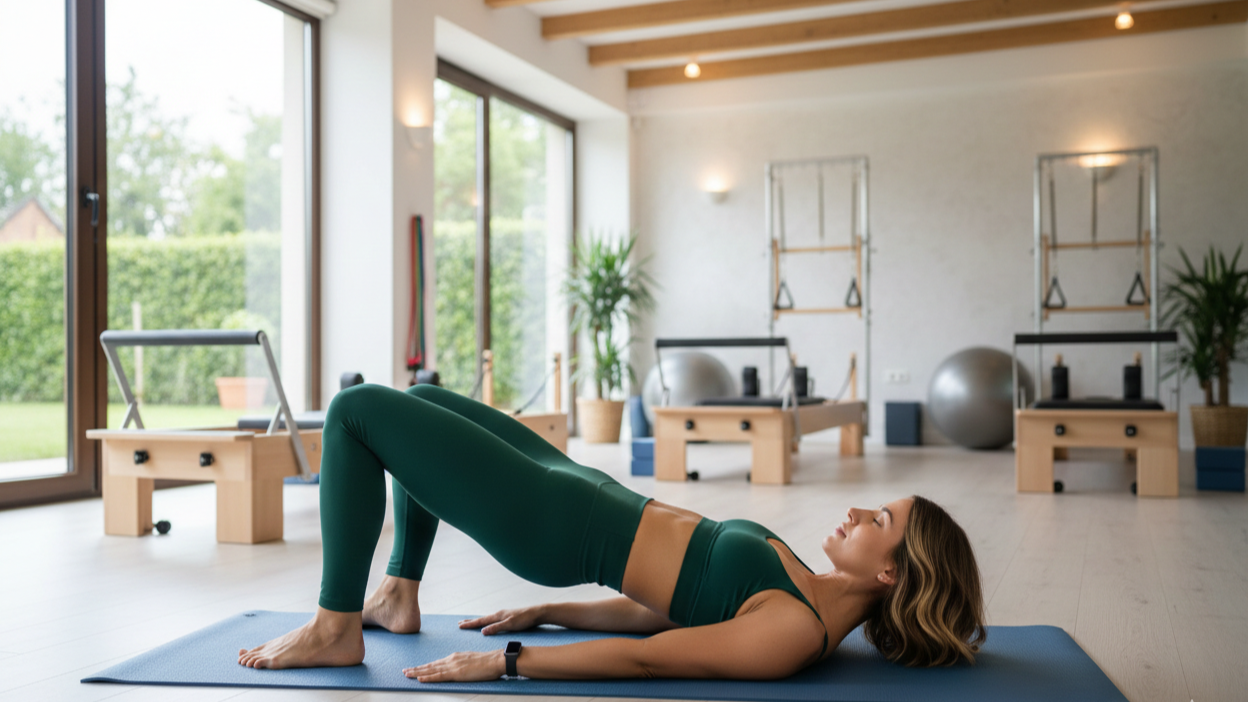
Bridge pose strengthens your glutes and supports your lower back. You lift your hips slowly, feeling stability instead of pressure.
Kegel activation teaches awareness, not squeezing nonstop. You learn how to lift and relax the pelvic floor properly.
Dead bug looks simple but challenges coordination. Opposite arm and leg movements build core control safely.
Clamshell strengthens hips and supports pelvic stability. Small movement, big support.
These pelvic pilates work together, not alone.
Two Real-Life Postpartum Stories
Sarah, 34, first-time mom:
She avoided exercise for months because her core felt weak. After starting pelvic pilates exercises, she noticed better posture while carrying her baby within weeks.
Maya, 38, working mom:
She returned to work with back pain and pelvic pressure. Gentle sessions focused on breathing and alignment helped her feel supported again without exhaustion.
Why Blue Chip Conditioning Feels Different
At Blue Chip Conditioning, the focus isn’t on rushing recovery.
Classes are small.
Movements are corrected.
Your body is respected.
Many postpartum women prefer guidance in a calm space where questions are welcome.
Whether someone is exploring a pilates reformer studio las vegas for the first time or easing back into movement, the environment matters.
You’re not just another number in pilates classes in las vegas.
You’re a human body in recovery.
Bridge Pose: A Gentle Strength Builder for Postpartum Bodies
Bridge pose may look simple, but it’s one of the most supportive movements for postpartum recovery. This exercise helps reconnect your glutes, core, and pelvic floor without putting pressure on healing areas.
When practiced correctly, bridge pose teaches your body how to create strength while staying relaxed something many postpartum women struggle with after months of physical change.
Learning this movement in a pilates reformer studio las vegas can make a big difference, especially when you’re unsure how to engage the right muscles.
Why Bridge Pose Is So Effective After Pregnancy
Bridge pose focuses on areas that often feel weak or sore after childbirth.
It helps by:
- Activating the glutes to support the pelvis
- Gently engaging the deep core
- Reducing tension in the lower back
- Improving posture over time
Instead of forcing strength, it builds stability slowly. In a pilates reformer studio las vegas, the reformer adds support so you can focus on form instead of effort.
Proper Guidance Makes Bridge Pose Safer
Many women unknowingly push too hard through the lower back during bridge pose. This is where professional guidance matters.
In a pilates reformer studio las vegas, instructors help you:
- Control your breathing
- Move through the spine smoothly
- Avoid gripping or overworking muscles
This turns a basic movement into a powerful recovery tool.
A Small Movement with Long-Term Benefits
Bridge pose isn’t about how high you lift. It’s about how connected you feel.
Practicing it regularly, especially in a pilates reformer studio las vegas, helps postpartum women feel stronger during everyday tasks like standing, lifting, and walking.
Sometimes the most effective exercises are the quiet ones the ones that rebuild trust in your body, one controlled movement at a time.
Common Myths Postpartum Women Believe
“Pilates is too easy.”
Done correctly, it’s deeply challenging.
“I’m not flexible enough.”
Flexibility is built, not required.
“I should wait until I feel stronger.”
Strength comes from the right movement.
“The gym is faster.”
Healing isn’t a race.
Pelvic pilates support long-term recovery, not shortcuts.
Dead Bug: A Safe Core Exercise for Postpartum Stability
The dead bug exercise may have a funny name, but it’s one of the most effective movements for rebuilding core control after pregnancy. It teaches your body how to stabilize the spine while your arms and legs move something many postpartum women lose after carrying a baby.
When learned properly, dead bug feels calm and controlled, not intense or stressful. That’s why many instructors who teach pilates in las vegas include it in postpartum-focused programs.
Why Dead Bug Works So Well After Pregnancy
Dead bug helps reconnect the deep core muscles without putting pressure on the pelvic floor.
It supports recovery by:
- Teaching safe core engagement
- Improving coordination between breathing and movement
- Reducing strain on the lower back
- Helping posture during daily activities
In many pilates in las vegas studios, this exercise is taught slowly, with clear cues, so the body learns control instead of tension.
Form Matters More Than Speed
Rushing through dead bug can do more harm than good. That’s why learning it in a guided setting matters.
In pilates in las vegas, instructors focus on:
- Keeping the spine stable
- Moving arms and legs with intention
- Maintaining steady breathing
This attention helps postpartum women feel supported rather than challenged.
Building Confidence Through Simple Movement
Dead bug isn’t about doing more reps. It’s about doing the movement correctly.
With consistent practice, often in pilates in las vegas programs designed for recovery, women notice better balance, improved core strength, and less fear of movement.
Sometimes the best progress comes from exercises that look simple but teach your body how to move safely again.
FAQ
1. What are pelvic pilates exercises and how are they different from regular Pilates?
Pelvic pilates exercises focus specifically on rebuilding the deep core and pelvic floor after pregnancy.
Regular Pilates works the whole body, but pelvic-focused work slows things down and prioritizes healing.
Instead of big movements, these exercises teach your body how to:
- Support your spine again
- Control pressure inside your abdomen
- Move without leaking, pain, or heaviness
It’s not about doing more.
It’s about doing what your body actually needs right now.
2. When can postpartum women safely start pelvic pilates exercises?
Most women can start gentle pelvic pilates exercises about 6–8 weeks after delivery, once cleared by their doctor.
If you had a C-section, complicated delivery, or pelvic pain, starting with supervised sessions is even more important.
The key is gentle, guided movement, not pushing through discomfort.
If something feels painful or heavy, it’s a sign to slow down not quit.
3. Can pelvic pilates exercises help with pelvic floor weakness or leaking?
Yes, and this is one of the biggest reasons women search for them.
Pelvic pilates exercises don’t just tell you to “squeeze.”
They teach:
- How to lift the pelvic floor properly
- When to relax it
- How to coordinate it with breathing
Many women notice improved bladder control because their body finally learns how to support itself again.
4. Will pelvic pilates exercises help with postpartum belly and core separation?
Pelvic pilates exercises are often recommended for women with diastasis recti (ab separation).
Instead of crunches that push outward, these movements:
- Gently draw muscles back together
- Reduce pressure on the abdomen
- Teach safer ways to move daily
Over time, the core feels flatter, stronger, and more connected without strain.
5. I feel pressure or heaviness in my pelvis. Can Pilates help?
Pelvic pressure is common after pregnancy, but it shouldn’t be ignored.
Pelvic pilates exercises help by:
- Strengthening the muscles that support your organs
- Improving posture and alignment
- Teaching better breathing to reduce downward pressure
Many women report feeling more “lifted” and supported after consistent practice.
6. Are pelvic pilates exercises safe if I have back or hip pain?
Yes — when done correctly.
In fact, pelvic pilates exercises often reduce back and hip pain because they:
- Improve core support
- Reduce strain on joints
- Correct posture habits formed during pregnancy
The movements are controlled and slow, making them safer than high-impact workouts during recovery.
7. How often should postpartum women do pelvic pilates exercises?
Most women benefit from:
- 2–3 sessions per week
- 45–60 minutes per session
More isn’t better.
Consistency is.
Your body needs time to adapt and heal between sessions, especially in the postpartum phase.
8. Do I need a reformer, or can pelvic pilates exercises be done on the mat?
Pelvic pilates exercises can be done on both.
Mat work is great for awareness and breathing.
Reformer work adds gentle resistance and support, which many postpartum women find helpful.
The best option is the one where:
- Your form is corrected
- Movements are properly guided
- You feel safe and supported
9. I’ve never exercised before. Is pelvic Pilates still for me?
Absolutely.
Pelvic pilates exercises are often best for beginners, especially postpartum women.
They start slow, focus on basics, and build confidence without intimidation.
You don’t need flexibility, strength, or fitness experience just a willingness to move gently and listen to your body.
10.How long does it take to see results from pelvic pilates exercises?
Many women notice small changes within 3–4 weeks, such as:
- Better posture
- Less back discomfort
- Improved control and confidence
Bigger changes, like core strength and pelvic stability, usually build over 8–12 weeks.
The progress is steady and that’s what makes it last.
Final Thoughts: Your Recovery Deserves Patience, Not Pressure
Postpartum recovery is not about getting your old body back.
It’s about learning how to support the body you have now.
Pelvic pilates exercises give postpartum women a safe, steady way to rebuild strength from the inside out. They don’t rush healing. They respect it. With the right guidance, these movements help restore core support, reduce pain, improve confidence, and make everyday life feel easier again.
You don’t need to be fit.
You don’t need to be flexible.
You don’t need to push through discomfort.
You just need a calm, supportive approach that listens to your body instead of fighting it.
If you’re ready to move again gently, safely, and with purpose starting with the right kind of support can make all the difference. Your body has already done something incredible. Now it deserves movement that helps it heal, not hustle.
A Gentle Next Step for Your Body
Your body has carried, changed, and adapted in ways most people will never fully understand. It’s normal to feel unsure about how to move again and it’s okay to start slowly.
If you’re curious about reconnecting with your core and feeling supported from the inside out, trying one guided session can be a simple first step. A calm space, patient instruction, and movements that respect postpartum healing can help you feel safe and confident as you begin again.
You don’t need to rush your recovery.
You just need the right kind of support to move forward one steady step at a time.