
Athletes recovering from injury face one of the most challenging phases of their careers. The balance between rebuilding strength, protecting joints, and preventing re-injury requires a smarter approach than traditional gym workouts. This is exactly where pilates arm exercises become a game-changer.
Unlike heavy lifting or aggressive resistance training, Pilates offers controlled, precise, and joint-friendly movements that restore strength while improving coordination and stability. For injured athletes, especially those returning from shoulder, elbow, wrist, or upper-body injuries, pilates arm exercises provide a proven path to recovery and elite performance.
At Bluechip Conditioning, athletes don’t just recover they rebuild smarter.
Why Injured Athletes Need a Smarter Arm Training System
Post-injury training is not about lifting heavier weights. It’s about:
- Re-educating muscles
- Restoring neuromuscular control
- Improving joint stability
- Building balanced strength
Traditional workouts often overload the arms without addressing the deeper stabilizing muscles. Pilates arm exercises work from the inside out, activating smaller stabilizers that protect injured joints while still developing strength.
This is why professional rehab specialists and performance coaches now integrate Pilates into elite Athlete Development programs worldwide.
The Science Behind Pilates Arm Exercises in Injury Recovery
Pilates is based on six core principles: control, precision, flow, concentration, breathing, and alignment. For injured athletes, these principles are essential.
Key Benefits of Pilates Arm Exercises:
- Reduced joint stress
- Improved shoulder girdle stability
- Enhanced muscle symmetry
- Better movement efficiency
Every pilates arm exercises sequence is designed to move through safe ranges of motion, helping athletes regain confidence in their bodies after injury.
Core Stability: The Hidden Weapon for Arm Recovery
Most arm injuries are not isolated problems. Weakness in the trunk and pelvis often leads to compensations in the shoulders and arms. That’s why Pilates integrates arm movements with a core strengthening workout.
A stable core:
- Protects the spine
- Improves force transfer
- Reduces strain on injured arms
When athletes perform pilates arm exercises with proper core engagement, they rebuild strength safely and sustainably.
The Role of Core Strength in Injury Recovery for Athletes
When athletes are recovering from injury, attention often goes straight to the injured area—shoulders, arms, or joints—while the foundation of movement is overlooked. In reality, the core plays a decisive role in how safely and effectively the upper body functions. A well-designed core strengthening workout can dramatically improve recovery outcomes, especially for athletes returning from upper-body injuries.
The core is more than just abdominal muscles. It includes the deep stabilizers of the spine, pelvis, diaphragm, and hips. These muscles work together to stabilize the body, allowing the arms to generate force without placing excessive stress on injured tissues.
Why Core Stability Matters During Upper-Body Rehabilitation
For athletes, arm movements are rarely isolated. Throwing, striking, pushing, and pulling all rely on efficient force transfer from the center of the body outward. When core stability is compromised, the arms and shoulders compensate, increasing the risk of pain, inflammation, and re-injury.
A targeted core strengthening workout helps injured athletes by:
- Improving postural alignment
- Enhancing balance and coordination
- Reducing unnecessary strain on the shoulders and arms
- Supporting controlled, efficient movement patterns
This integrated support system is essential during recovery phases when the body is relearning proper mechanics.
Core Training That Supports Healing, Not Stress
Unlike high-impact or high-load exercises, recovery-focused core training emphasizes control, breath, and precision. Movements are performed slowly, ensuring that stabilizing muscles activate before larger muscle groups engage. This approach protects healing tissues while restoring functional strength.
When paired with controlled upper-body training, core-focused work creates a stable base that allows athletes to rebuild strength safely and confidently. This is why Pilates-based systems are so effective during post-injury conditioning—they train the body as a connected unit rather than isolated parts.
How Core Strength Improves Arm Performance
A strong core allows the arms to move freely and powerfully without overcompensation. Athletes with proper trunk stability experience:
- Better shoulder mechanics
- Improved endurance during repetitive movements
- Greater efficiency in sport-specific actions
Over time, this leads to stronger performance with less physical stress. A properly structured core strengthening workout ensures that gains made during recovery translate into real-world athletic performance.
Integrating Core Training Into an Athlete’s Recovery Plan
Core training should not be treated as an add-on. It must be integrated thoughtfully into the overall recovery and performance plan. Frequency, intensity, and progression should be tailored to the athlete’s injury history and sport demands.
Performance-based facilities like Bluechip Conditioning emphasize core development as a foundational element of athlete recovery. This approach ensures that when athletes return to full training, their bodies are resilient, balanced, and prepared for high-level demands.
Building Long-Term Resilience Through Smart Core Training
Recovery is not just about healing it’s about preventing future injuries. Strengthening the core improves movement awareness and reduces faulty patterns that often lead to chronic issues.
By committing to a progressive, intelligent core strengthening workout, athletes don’t just recover they build a stronger, more reliable body capable of sustaining elite performance over time.
Why Pilates Is Superior to Traditional Rehab Training
Traditional rehab often isolates muscles. Pilates integrates the entire kinetic chain.
Pilates vs Traditional Rehab:
| Traditional Rehab | Pilates |
| Isolated movements | Full-body integration |
| Limited progression | Scalable difficulty |
| Repetitive | Dynamic & functional |
This integrated approach makes pilates arm exercises ideal for athletes who want to return to competition stronger, not just “cleared.”
Reformer Training: The Gold Standard for Safe Arm Strength
One of the most powerful tools in Pilates recovery is Reformer training. The reformer uses adjustable spring resistance, allowing athletes to load muscles gradually without joint compression.
Why Reformer Training Works:
- Controlled resistance
- Smooth, joint-friendly motion
- Customizable for injury stages
In advanced pilates arm exercises, reformer work allows injured athletes to regain strength faster while minimizing risk.
Pilates Arm Exercises for Shoulder Injury Recovery
Shoulder injuries are common in athletes across all sports. Pilates emphasizes scapular stability and controlled arm motion.
Key movements focus on:
- Rotator cuff activation
- Scapular alignment
- Balanced muscle engagement
By consistently performing pilates arm exercises, athletes restore shoulder strength without aggravating sensitive tissues.
Elbow & Wrist Rehabilitation Through Pilates
For tennis players, baseball pitchers, and combat athletes, elbow and wrist injuries can be career-threatening. Pilates addresses these areas through controlled resistance and precision.
Benefits include:
- Improved joint mobility
- Strengthened forearm stabilizers
- Reduced inflammation
Well-designed pilates arm exercises ensure the smaller joints receive attention, not overload.
Injury Prevention Through Smart Arm Conditioning
Recovery is only half the battle. Preventing re-injury is just as important.
Pilates builds:
- Muscle balance
- Joint awareness
- Movement efficiency
Athletes who incorporate pilates arm exercises into their weekly routine experience fewer setbacks and longer careers.
Why Elite Athletes Choose Pilates
Top-level athletes don’t guess they invest in proven systems. Pilates is now a cornerstone of elite Athlete Development because it blends rehab with performance.
From Olympic athletes to professional fighters, Pilates has become essential for:
- Longevity
- Mobility
- Strength without breakdown
This is why serious performance centers integrate Pilates into training cycles.
Building Resilient Athletes Through Smarter Performance Systems
Modern athletic success is no longer defined by raw strength alone. Longevity, injury resistance, and movement efficiency now separate good athletes from great ones. This shift has transformed how high-level training systems approach recovery, conditioning, and performance preparation especially for athletes returning from injury.
A well-designed elite Athlete Development framework recognizes that recovery is not a setback phase, but a strategic opportunity to rebuild better movement patterns, correct imbalances, and strengthen the body at its foundation.
Why Injury Recovery Is a Critical Phase of Athlete Development
Injuries often expose weaknesses that were previously hidden poor mobility, lack of stability, or inefficient movement mechanics. Rather than simply restoring pre-injury capacity, smart performance programs use this phase to create stronger, more adaptable athletes.
Effective development systems focus on:
- Movement quality over load
- Joint stability before maximal strength
- Balanced muscular coordination
- Long-term durability rather than short-term gains
This approach ensures athletes don’t just return to play they return with improved efficiency and reduced risk of recurrence.
The Role of Integrated Training in Long-Term Performance
High-level development models avoid isolated training methods. Instead, they integrate mobility, strength, control, and coordination into a cohesive system. This integration is especially important during recovery, when athletes must relearn how to move efficiently under controlled conditions.
Within elite Athlete Development, Pilates-based training plays a crucial role by reinforcing proper alignment, controlled resistance, and full-body coordination. These elements help athletes rebuild confidence while strengthening the systems that protect them during high-intensity sport.
Developing Athletes, Not Just Rehabilitating Injuries
True performance development looks beyond pain resolution. It aims to enhance how the body functions as a whole. Athletes who train within structured development systems experience:
- Improved joint awareness
- Better force transfer through the body
- Enhanced balance and postural control
- Greater consistency in performance output
These benefits translate directly to improved athletic execution and fewer training interruptions over time.
Why Professional Guidance Matters
Athlete development is highly individualized. Two athletes with the same injury may require completely different recovery and training paths based on sport demands, movement history, and physical structure.
Performance-focused environments like Bluechip Conditioning emphasize assessment-driven programming and intelligent progressions. This ensures that recovery strategies align with competitive goals rather than generic fitness standards.
Transitioning From Recovery to Peak Performance
One of the biggest challenges athletes face is the transition from rehabilitation back to full competition. Without a structured system, this phase often leads to setbacks.
An elite Athlete Development model bridges this gap by gradually increasing complexity, resistance, and movement demands while maintaining control and precision. This allows athletes to re-enter high-performance training with confidence and physical readiness.
Creating Athletes Built for Longevity
The ultimate goal of development-focused training is sustainability. Athletes who invest in intelligent systems during recovery often experience longer careers, improved consistency, and greater trust in their bodies.
By prioritizing movement quality, stability, and intelligent progression, elite Athlete Development transforms recovery into a performance advantage helping athletes not only return to sport, but stay competitive at the highest level.
Bluechip Conditioning’s Athlete-Focused Pilates Philosophy
At bluechip conditioning, Pilates is not treated as a fitness trend it’s a performance tool.
Their athlete-specific approach includes:
- Injury-informed programming
- Individual movement assessments
- Progressive loading strategies
Every pilates arm exercises plan is customized to the athlete’s injury history, sport, and goals.
Pilates Studio Las Vegas: Why Location Matters
Finding the right environment is critical. A professional pilates studio las vegas offers:
- Certified instructors
- Athlete-ready equipment
- Rehab-friendly programming
Athletes training in Las Vegas have access to world-class recovery resources designed to meet professional standards.
How Pilates Accelerates Return-to-Play Timelines
When done correctly, Pilates speeds up recovery by:
- Improving circulation
- Enhancing neuromuscular coordination
- Rebuilding strength safely
Athletes using pilates arm exercises often return to sport with better movement quality than before injury.
Integrating Pilates Into an Athlete’s Weekly Training
Pilates does not replace strength training — it enhances it.
Ideal weekly structure:
- 2–3 Pilates sessions
- Integrated with sport-specific training
- Focus on mobility, control, and strength
This balanced approach ensures pilates arm exercises support performance instead of competing with it.
Mental Confidence After Injury
Injury recovery is psychological as well as physical. Pilates helps athletes reconnect with their bodies.
Through mindful movement, athletes:
- Regain confidence
- Reduce fear of re-injury
- Improve body awareness
This mental reset is a hidden advantage of pilates arm exercises.
Why Pilates Is the Best Choice for Injured Athletes
To summarize, Pilates stands above other methods because it:
- Protects injured joints
- Builds intelligent strength
- Enhances performance
- Reduces future injury risk
No other system blends recovery and performance as effectively as pilates arm exercises.
Advanced Pilates Arm Exercises for Different Stages of Injury Recovery
Not all injured athletes are at the same recovery stage. One of the biggest advantages of pilates arm exercises is their adaptability across every phase of rehabilitation. Whether an athlete is just cleared for movement or already preparing for return-to-play, Pilates meets the body where it is.
Early-Stage Recovery: Restoring Movement Without Stress
In the early stages of recovery, the priority is restoring mobility and circulation without irritating healing tissues. Traditional strength training is often too aggressive at this point.
Pilates arm exercises in this phase emphasize:
- Gentle range of motion
- Breath-controlled movement
- Low-load activation
- Neuromuscular re-education
These movements help injured athletes reconnect with their arms safely while avoiding compensations that lead to setbacks.
Mid-Stage Recovery: Rebuilding Strength and Control
Once pain decreases and mobility improves, athletes transition into controlled strength development. This is where Pilates truly separates itself from conventional rehab.
Mid-stage pilates arm exercises focus on:
- Time under tension
- Slow eccentric control
- Integrated core engagement
- Symmetry between dominant and non-dominant sides
When paired with a structured core strengthening workout, athletes develop arm strength that is supported by spinal stability and postural control.
Late-Stage Recovery: Preparing for High-Performance Demands
As athletes approach return-to-play, their training must resemble real sport demands without unnecessary risk. Pilates excels here by layering complexity without impact.
Advanced pilates arm exercises include:
- Multi-plane arm movements
- Speed-control challenges
- Resistance variation
- Unilateral loading patterns
This stage bridges the gap between rehab and competition, making Pilates a powerful transition tool.
Why Core Integration Makes Arm Recovery Faster
Many arm injuries linger because the root cause is never addressed. Weak trunk stability forces the arms to overwork, especially in throwing, striking, or overhead sports.
Pilates emphasizes that arm strength is only as good as the core supporting it.
A properly programmed core strengthening workout within Pilates:
- Reduces shoulder overload
- Improves force transfer
- Enhances balance and coordination
This is why athletes using pilates arm exercises often feel stronger with less effort their bodies are finally working as one system.
Reformer Training: Precision Without Punishment
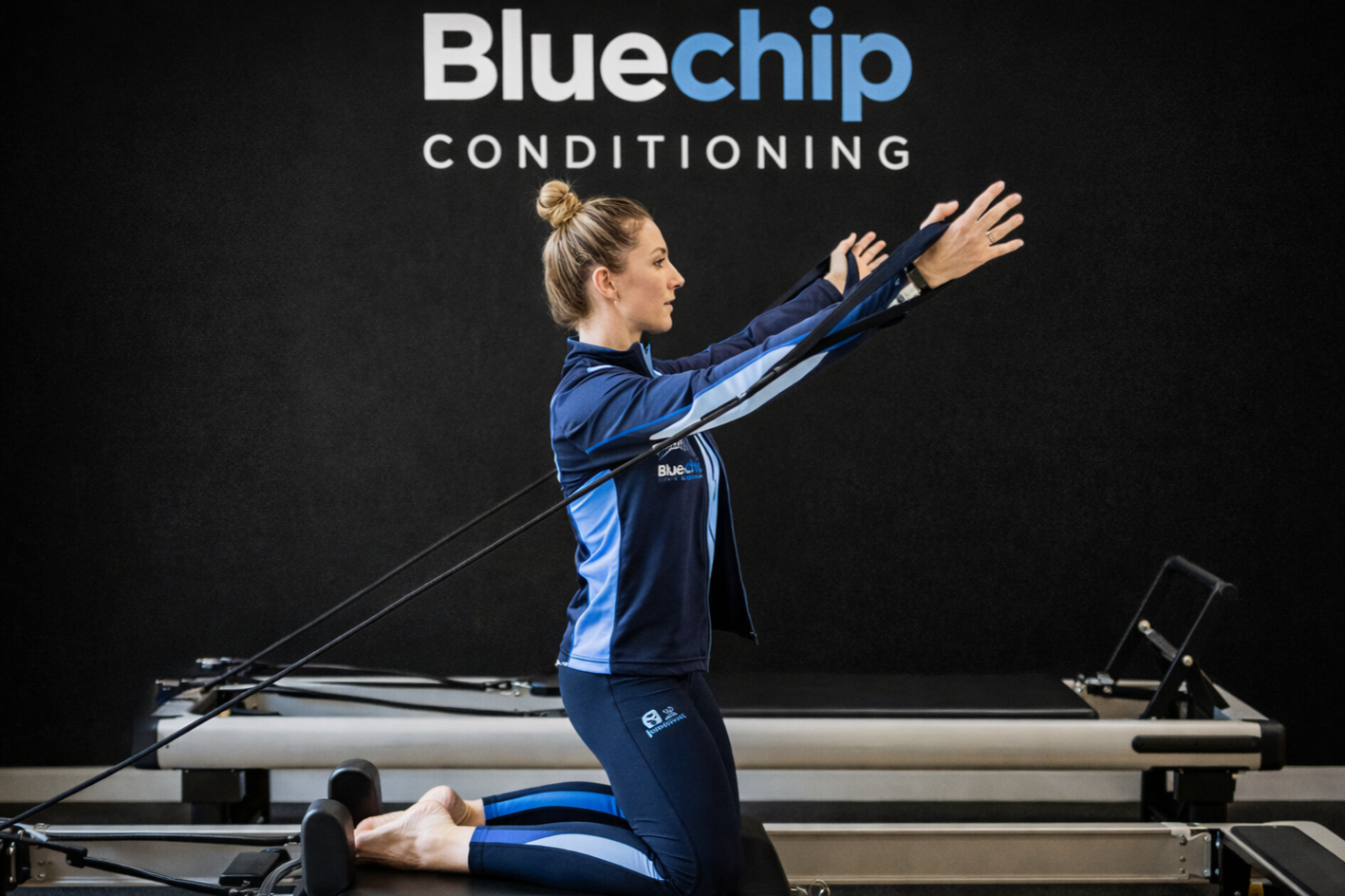
Among all Pilates tools, the reformer stands out for injured athletes. Reformer training provides resistance without gravity-based compression, making it ideal for sensitive joints.
Key advantages include:
- Adjustable resistance levels
- Smooth, guided movement paths
- Reduced joint shear forces
Athletes recovering from shoulder surgery, tendon injuries, or chronic overuse benefit enormously from reformer-based pilates arm exercises.
Pilates for Overhead Athletes
Overhead athletes such as swimmers, baseball pitchers, volleyball players, and CrossFit competitors place extreme demands on their arms. Injuries in these sports often stem from imbalance, not weakness.
Pilates arm exercises address:
- Scapular stability
- Rotator cuff endurance
- Thoracic spine mobility
- Postural alignment
This balanced approach ensures that strength gains do not come at the cost of joint health.
Injury-Specific Benefits of Pilates Arm Training
Shoulder Injuries
Pilates retrains scapular rhythm and shoulder mechanics, reducing impingement risk.
Elbow Injuries
Controlled resistance strengthens surrounding musculature without aggravating tendons.
Wrist Injuries
Pilates improves grip stability and forearm coordination with minimal compression.
Across all cases, pilates arm exercises allow athletes to progress safely without sacrificing intensity.
The Role of Breathing in Injury Recovery
Breathing is often overlooked in rehab, yet it plays a critical role in recovery. Pilates integrates breathing into every movement.
Correct breathing during pilates arm exercises:
- Improves oxygen delivery
- Reduces muscle tension
- Enhances movement efficiency
- Supports core engagement
This mind-body connection accelerates healing and improves training quality.
Pilates vs Weights for Injured Athletes
Weights have their place but timing matters. Too much load too soon can derail recovery.
Pilates Offers:
- Joint-friendly resistance
- Controlled movement speeds
- Reduced injury risk
When athletes use pilates arm exercises before returning to heavy lifting, they build a safer foundation for long-term strength.
Why Elite Development Programs Trust Pilates
Modern elite Athlete Development programs focus on longevity, not burnout. Pilates aligns perfectly with this philosophy.
Elite programs use Pilates to:
- Extend athletic careers
- Reduce injury recurrence
- Improve movement quality
This shift explains why Pilates is no longer optional it’s strategic.
Bluechip Conditioning’s Integrated Recovery Model
At Bluechip Conditioning, Pilates is not isolated from performance training. It’s integrated into a complete system.
Athletes benefit from:
- Injury-aware programming
- Performance-based progressions
- Individualized recovery plans
This system ensures pilates arm exercises directly support athletic goals, not just general fitness.
Why Environment Matters in Recovery
Training environment influences recovery outcomes more than most athletes realize. A professional pilates studio las vegas offers structure, safety, and expertise that home workouts cannot match.
The right studio provides:
- Athlete-focused instruction
- Specialized equipment
- Progressive programming
This professional setting accelerates results and reduces risk.
Choosing the Right Training Environment for Athlete Recovery
For athletes recovering from injury, where they train is just as important as how they train. The recovery phase demands precision, expert supervision, and an environment designed to support healing while rebuilding performance. A professional pilates studio las vegas offers far more than general fitness classes it provides the structure and expertise required for safe, effective athletic recovery.
Unlike standard gyms, a dedicated Pilates environment is built around controlled movement, alignment, and progressive resistance, all of which are essential when joints and tissues are vulnerable.
Why Environment Matters During Injury Recovery
Injury recovery is a sensitive process. Poor instruction, overcrowded classes, or generic programming can slow progress or lead to setbacks. Athletes need a setting where movements are monitored, resistance is adjusted carefully, and progressions are intentional.
A high-quality Pilates studio supports recovery by offering:
- Certified instructors with injury-awareness
- Specialized equipment designed for joint-friendly training
- Small-group or individualized sessions
- Emphasis on movement quality over intensity
These elements create a safer path back to full performance.
Athlete-Specific Training vs General Fitness Pilates
Not all Pilates studios are designed with athletes in mind. Many focus on general wellness rather than sport-specific recovery and performance. Athletes returning from injury require a more advanced approach that bridges rehabilitation and high-performance training.
An athlete-focused pilates studio las vegas understands:
- The demands of competitive sports
- Common injury patterns in athletes
- How to progress safely from rehab to performance
- The importance of integrating core stability with upper-body control
This distinction is critical for athletes who want long-term success, not just short-term relief.
Equipment That Supports Safe Strength Development
Professional Pilates studios are equipped with tools such as reformers, towers, and stability apparatuses that allow precise control of resistance. These tools enable athletes to strengthen muscles without excessive joint compression or impact.
For injured athletes, this means:
- Gradual loading without strain
- Smooth, guided movement patterns
- Improved control and coordination
- Reduced risk of re-injury
This equipment-driven precision is difficult to replicate in traditional gym settings.
The Value of Expert Supervision
Recovery-focused training requires constant feedback and adjustment. Skilled instructors can identify movement compensations, correct alignment issues, and modify exercises in real time. This level of supervision ensures that every repetition contributes to healing and performance rather than reinforcing faulty patterns.
Facilities like Bluechip Conditioning emphasize athlete-specific programming, making Pilates an integrated part of a larger performance and recovery system rather than a standalone activity.
Supporting Long-Term Athletic Performance
Training in a professional pilates studio las vegas is not just about returning from injury it’s about building a body that can withstand future demands. Athletes who recover in the right environment often experience better movement efficiency, improved joint stability, and greater confidence in their physical capabilities.
This foundation supports longevity, consistency, and peak performance across an athlete’s career.
Why the Right Studio Makes the Difference
Recovery is an opportunity to rebuild smarter. The right training environment transforms Pilates from a gentle exercise method into a powerful performance tool.
By choosing a studio designed for athletes, recovery becomes structured, progressive, and purposeful—helping athletes return to competition stronger, more resilient, and better prepared than before.
Pilates and Long-Term Athletic Longevity
Injury recovery isn’t just about returning it’s about staying healthy. Pilates improves:
- Joint alignment
- Movement efficiency
- Muscular balance
Athletes who commit to pilates arm exercises experience fewer injuries over time and maintain peak performance longer.
Psychological Recovery Through Controlled Movement
Injury often leaves athletes feeling disconnected from their bodies. Pilates restores trust through precision and control.
Benefits include:
- Reduced fear of movement
- Improved body awareness
- Renewed confidence
This mental component makes pilates arm exercises uniquely powerful during recovery.
How to Progress Pilates Safely After Injury
Safe progression requires:
- Gradual resistance increases
- Consistent movement quality
- Professional supervision
When guided correctly, pilates arm exercises evolve from rehab tools into performance enhancers.
Why Pilates Is the Smartest Investment for Injured Athletes
Time lost to injury is costly. Pilates shortens recovery while improving future resilience.
Athletes choose Pilates because it:
- Protects healing tissues
- Builds intelligent strength
- Enhances sport readiness
No shortcuts. No gimmicks. Just results.
Seamless Integration Into Performance Training
Pilates does not replace sport training — it enhances it. Integrated properly, it supports:
- Strength programs
- Conditioning work
- Skill development
This synergy is why top programs trust pilates arm exercises as a foundation.
Frequently Asked Questions
1. Is Pilates safe for athletes recovering from arm or shoulder injuries?
Yes, Pilates is considered one of the safest and most effective training methods for athletes returning from arm, shoulder, elbow, or wrist injuries. Unlike traditional weight training, Pilates emphasizes controlled movement, joint alignment, and progressive resistance, which reduces unnecessary stress on healing tissues.
The focus on stability, precision, and breathing allows athletes to rebuild strength without overloading injured joints. This makes Pilates especially valuable during post-rehab and return-to-play phases, where safety and movement quality are critical.
2. How does Pilates help rebuild arm strength without causing re-injury?
Pilates rebuilds arm strength by activating stabilizing muscles before larger muscle groups engage. This sequencing prevents compensations that often lead to re-injury. Instead of relying on momentum or heavy loads, Pilates uses slow, deliberate movements that improve muscular control.
By strengthening surrounding support muscles and improving neuromuscular coordination, athletes develop durable strength that translates directly to sport performance.
3. Can upper-body Pilates training replace traditional rehab exercises?
Pilates does not replace medical rehabilitation but serves as an advanced continuation once an athlete is cleared for movement. It bridges the gap between physical therapy and high-performance training by restoring full-body coordination and functional strength.
Many athletes transition into Pilates after rehab to regain confidence, improve movement efficiency, and prepare their bodies for higher training demands without unnecessary risk.
4. How long does it take to see results from Pilates-based arm conditioning?
Most athletes begin noticing improvements in mobility, control, and reduced discomfort within 2–3 weeks of consistent practice. Strength gains typically follow as movement efficiency improves.
Long-term benefits such as injury resilience, endurance, and performance readiness—continue to develop over several months, especially when Pilates is integrated into a structured athletic training program.
5. Is Pilates effective for chronic arm pain or overuse injuries?
Yes, Pilates is highly effective for chronic and overuse injuries because it addresses the underlying movement dysfunctions that cause repetitive strain. Many overuse injuries stem from poor posture, weak stabilizers, and inefficient force transfer.
Pilates corrects these issues by improving alignment, muscular balance, and joint awareness, helping athletes train pain-free and avoid recurring problems.
6. What makes Pilates better than weights for injured athletes?
Weight training often places compressive load on joints, which can be risky during recovery. Pilates uses controlled resistance and body awareness to strengthen muscles without excessive joint stress.
For injured athletes, this means safer progression, better movement quality, and reduced chances of setbacks especially when returning to overhead or high-impact sports.
7. Can Pilates help athletes return to sport faster after injury?
When programmed correctly, Pilates can significantly improve return-to-play readiness. It enhances coordination, balance, and strength while reinforcing proper movement mechanics.
Athletes often return to sport feeling more connected to their bodies, with improved confidence and reduced fear of movement two key factors that influence successful recovery timelines.
8. Is reformer-based arm training suitable after surgery or serious injury?
Reformer-based training is especially beneficial after surgery because it allows precise control over resistance levels. Athletes can progress gradually while maintaining smooth, guided movement patterns.
This type of training supports muscle activation without placing excessive strain on healing tissues, making it ideal for post-surgical recovery phases.
9. Do professional athletes use Pilates for arm and shoulder recovery?
Yes, many professional and elite-level athletes integrate Pilates into their recovery and performance programs. It is widely used in modern athlete development systems due to its ability to improve longevity, mobility, and strength without breakdown.
Pilates is now considered a strategic tool not just a rehab method in high-performance sports environments.
10. Where should injured athletes train Pilates for best results?
Injured athletes should train in a professional, athlete-focused environment with instructors who understand sports performance and injury history. A specialized facility like Bluechip Conditioning ensures that training is safe, progressive, and aligned with athletic goals.
With expert supervision and individualized programming, pilates arm exercises become a powerful tool for recovery, strength, and long-term performance.
Rebuild With Precision. Return With Power.
Injury recovery is not about rushing back into action it’s about rebuilding the body with intention, intelligence, and control. For athletes, every movement during recovery either moves you closer to peak performance or pulls you back toward re-injury. Pilates ensures those movements work for you, not against you.
Through controlled resistance, deep core engagement, and precise execution, pilates arm exercises restore strength while protecting vulnerable joints. They don’t just heal injured tissues they reprogram movement patterns, improve coordination, and create long-term resilience. That’s why Pilates has become a cornerstone for athletes who want to return stronger, not fragile.
When guided by experienced professionals and integrated into a performance-based system like Bluechip Conditioning, Pilates evolves from simple rehabilitation into a competitive advantage. It bridges the gap between recovery and elite performance, helping athletes regain confidence, power, and control in their bodies.
If you’re serious about healing properly, building intelligent strength, and extending your athletic career, pilates arm exercises are not optional they are essential.
Train with precision. Recover with purpose. Compete at your highest level.
Start your recovery the right way. Book your athlete-focused Pilates session today and rebuild the body you can trust again.