Introduction
The first time you walk into a reformer room, the outfit question can feel bigger than it should. People worry about looking awkward, sliding on the carriage, wearing the wrong fabric, or showing up underdressed for the room. That nervous moment is exactly why what to wear to pilates matters more than most beginners think. At Blue Chip Conditioning, the focus is on precise movement, strong instruction, and a comfortable training environment built for private, semi-private, and group work in Las Vegas. That’s also why the outfit should be simple, fitted, and functional rather than fancy. Blue Chip’s own guidance and nearby studio FAQs consistently point to comfortable activewear, grip socks, and clothes that move cleanly with the body.
Quick Answer Section
Wear fitted, breathable activewear that stays in place, such as leggings or snug shorts with a supportive top, and choose grip socks if your studio requires them. For reformer classes, your outfit should let your instructor see your alignment, avoid snags on moving equipment, and keep you comfortable through stretching, core work, and controlled transitions.
Key Takeaways
- Choose clothing that fits close enough to stay secure, but not so tight that it restricts movement.
- Grip socks are a smart default for reformer sessions and are required at some studios.
- Loose tops, baggy shorts, and bulky layers can get in the way of alignment and machine work.
- The best Pilates outfit helps you move, breathe, and stay focused instead of adjusting clothing mid-class.
- In Las Vegas, studios often value clean, performance-ready clothing that matches a focused class environment.
What Pilates clothing should actually do
The best way to think about what to wear to pilates is this: your clothes should disappear during class. You should not be tugging at your waistband, worrying about a top slipping down, or wondering whether your shorts are riding up during a bridge, teaser, or footwork series.
That is why experienced studios keep repeating the same basics. Comfortable activewear, fitted shapes, and grip socks show up again and again in studio guidance because they reduce friction, improve stability, and help the instructor see your body more clearly. At Blue Chip Conditioning, that practicality fits a training style built around personalized correction and controlled movement.
Best outfit formula for reformer classes
When clients ask what to wear to pilates, the safest answer is usually a simple formula:
Wear a fitted top, supportive bottoms, and socks with grip. If the class is heated, intense, or athletic, choose moisture-wicking fabric. If the class is slower and beginner-focused, comfort matters even more because you will spend more time learning positions and transitions.
For women, high-waisted leggings with a snug tank or sports bra often work best. For men, athletic shorts that stay secure and a fitted tee or performance top are usually the easiest choice. The key is freedom without excess fabric. That’s one reason this choice is less about fashion and more about how your clothing behaves when you move.
What to wear to Pilates if it is your first class
First-time students usually overthink the outfit and underthink the function. Start simple. Bring a bottle of water, wear clothing that lets you reach, hinge, curl, and rotate, and keep accessories to a minimum.
A good beginner rule is to test your outfit before class. Sit down, squat, reach overhead, and lie on the floor. If you keep adjusting your outfit, it will probably bother you in class too. That is why what to wear to pilates for a first session should favor comfort, coverage, and confidence over trend-driven looks.
Grip socks, bare feet, and studio rules
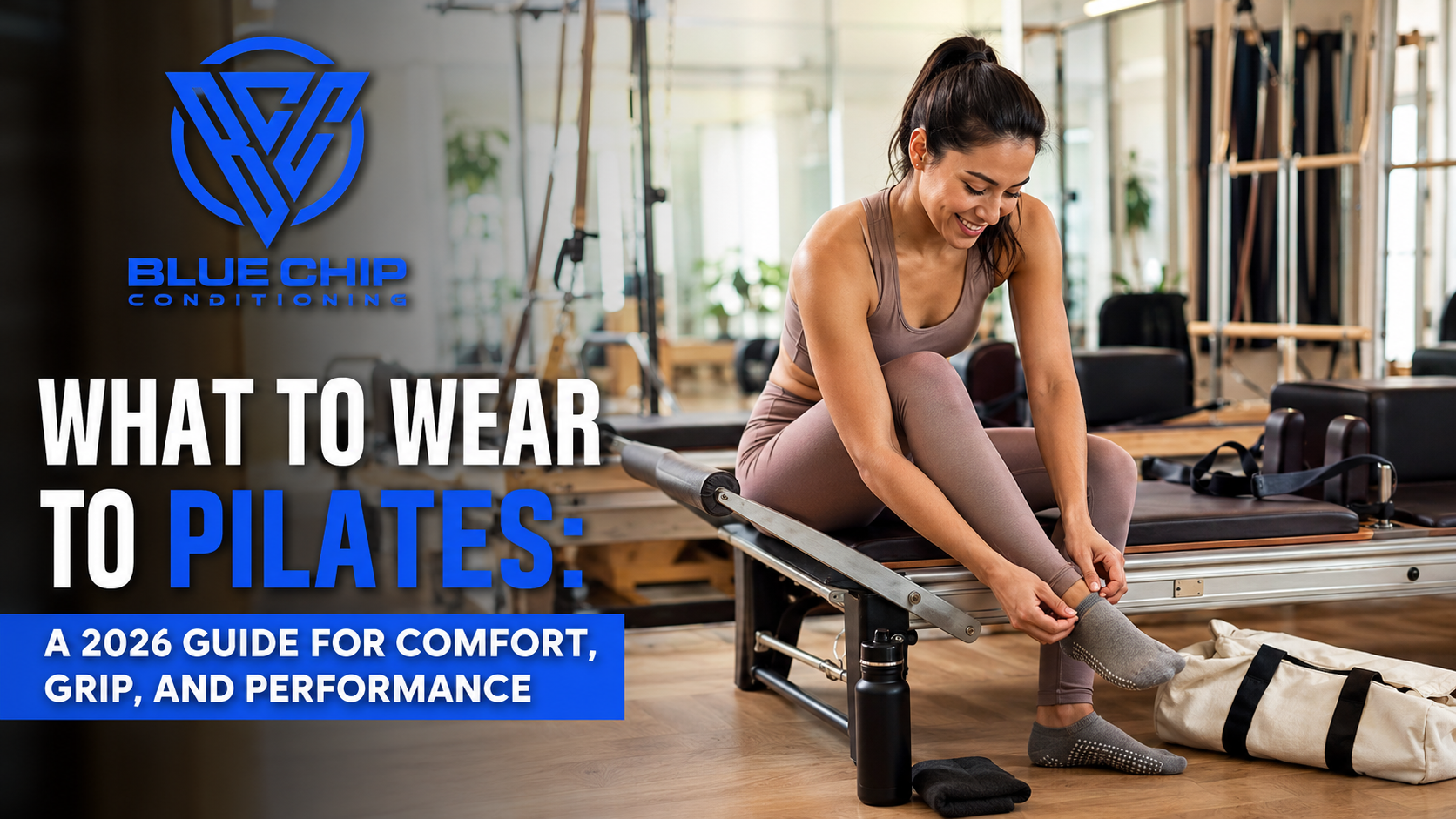
A lot of people ask what to wear to pilates and forget that the feet matter too. On reformers, grip socks are often recommended or required because they improve traction and help with safety and cleanliness. Some studios allow barefoot work in certain settings, but many reformer spaces prefer socks with rubber grips.
If you are going to a premium or boutique studio, check the class policy before you arrive. That small step prevents awkward surprises at the front desk and helps you walk in ready to train instead of scrambling for gear. In practice, what to wear to pilates often comes down to one simple detail: does your outfit support control on the equipment?
What not to wear: the most common mistakes
People usually do not fail because they lack good taste. They fail because they pick clothes that fight the workout.
The biggest mistakes are baggy shirts that cover your form, shorts that shift during leg work, and thick seams that dig into your body on the reformer. Jewelry, zippers, and overly loose layers can also become distracting. If you are unsure about what to wear to pilates, choose the outfit that will stay out of your way when you are moving slowly and precisely.
Comparison section: what works best and what usually gets in the way
Here is the easiest way to compare outfits before class.
Fitted leggings or snug shorts: best for alignment, smooth movement, and machine safety.
Loose gym shorts or oversized sweats: best for lounging, not for reformer control.
Supportive top or fitted tank: best for staying in place through roll-downs, planks, and stretches.
Baggy tee or wide crop: best for casual wear, but it can hide posture and shift during class.
This is why what to wear to pilates should be chosen with movement in mind, not just the mirror. The best outfit helps your body feel organized, and that matters even more in focused studios such as a pilates reformer studio las vegas that values precision and coaching.
Why outfit choice affects your performance
Clothing changes how people move. That sounds small, but in Pilates it is huge. If your top rides up, your brain splits attention between form and fixing clothing. your waistband rolls, you lose focus. If your socks slip, your confidence drops.
That is why what to wear to pilates is also a performance decision. Blue Chip Conditioning’s brand message centers on alignment, control, and personalized instruction, which fits a style of training where small distractions matter. In a well-run class, what you wear should support the instructor’s ability to coach and your ability to feel every rep.
Step-by-step: how to choose your outfit before class
Use this simple process before every session.
First-choose a base layer that fits close to the body.
Second-check whether the fabric stretches and breathes well.
Third-make sure the outfit stays secure when you bend, twist, and lift.
Fourth-add grip socks if the studio requires them.
Fifth-remove anything unnecessary.
That process takes less than two minutes, and it makes what to wear to pilates much easier than guessing at the last minute. It also helps you show up with a stronger mindset, which is especially useful in pilates classes in las vegas where studios often blend performance, comfort, and a boutique feel.
Expert insight: what instructors notice right away
Instructors notice two things fast: whether your clothing lets them see your alignment and whether you can move without distraction. They are not judging style. They are checking whether they can coach you properly.
That is one reason what to wear to pilates is more practical than trendy. A good outfit helps the instructor see the position of your ribs, hips, knees, and shoulders so they can cue you better. At a pilates reformer studio las vegas that emphasizes private and semi-private instruction, that clarity is especially valuable.
Myth vs fact
Myth: You need a special expensive Pilates wardrobe to fit in.
Fact: Most studios care more about comfort, coverage, and grip than brand names.
Myth: Loose clothes are always more comfortable.
Fact: Loose clothing can snag, shift, and hide alignment.
Myth: You must be a certain body type to wear fitted clothing.
Fact: What to wear to pilates is about function, not body size. The right fit is the one that helps you move well and feel secure.
Practical use cases
If you are coming straight from work, choose clean, simple activewear that can handle a class without constant fixing. if you are an athlete cross-training, pick pieces that stay close to the body so your core work feels crisp. If you are a beginner, keep the outfit as predictable as possible so you can focus on instruction. This is especially useful in pilates classes in las vegas where studios often blend performance, comfort, and a boutique feel.
For anyone booking pilates classes in las vegas , this is especially helpful because local studios often combine community, performance, and boutique service. That means what to wear to pilates should support both confidence and the pace of a guided class.
When to seek help or ask the studio
Ask the studio in advance if you are unsure about grip socks, dress code, or support needs. That matters even more if you are recovering from an injury, returning after time off, or choosing a first session in a reformer setting.
If you are training at a pilates classes in las vegas location for rehab, mobility, or athletic conditioning, a quick message before class can save stress and help you arrive prepared. In that setting, what to wear to pilates is not just a style question; it is part of how smoothly your session starts.
Local relevance for Las Vegas students
Las Vegas studios often cater to busy professionals, athletes, and clients who want a polished but approachable experience. Blue Chip Conditioning , for example, positions itself around private, semi-private, and group classes with a personalized approach, while other local studios emphasize beginner access, community, and comfort. That mix makes the dress code surprisingly consistent: simple, fitted, clean, and ready to move. It is one reason a pilates reformer studio las vegas can feel more polished than a generic gym.
FAQs
What should I wear to my first Pilates class?
Wear fitted activewear that lets you move freely, such as leggings or secure shorts with a supportive top. Bring grip socks if the studio asks for them. The goal is to feel comfortable without adjusting your clothes during class.
Do I need grip socks for Pilates?
Many reformer studios recommend or require grip socks for safety and stability. They also help with traction on the equipment. Always check the studio policy before you go.
Can I wear shorts to Pilates?
Yes, but tighter-fitting shorts usually work better than loose ones. They stay in place more easily during leg lifts, bridges, and reformer movements.
Is it okay to wear a loose T-shirt?
It is okay in some cases, but fitted tops are usually better because they stay in place and help the instructor see your posture. Loose shirts can shift or cover alignment.
What fabrics are best for Pilates?
Breathable, stretchy, and moisture-wicking fabrics are the easiest choice. They move with your body and help you stay comfortable through repeated transitions.
What should men wear to Pilates?
Men usually do best in fitted athletic shirts or performance tops with secure shorts or leggings-style training gear. The same rule applies: move well, stay covered, and avoid excess fabric.
Can I wear jewelry or accessories?
Small, simple items are usually fine, but bulky jewelry and loose accessories can get in the way. If it distracts you or could catch on equipment, leave it off.
What if I am still unsure about what to wear?
Keep it simple: fitted clothing, breathable fabric, and grip socks if needed. That combination works for most beginner and reformer classes and is the easiest safe starting point.
Conclusion
The best outfit for Pilates is not the trendiest one. It is the one that lets you breathe, move, and stay focused from the first warm-up to the last transition. When you understand what to wear to pilates , the class feels less intimidating and a lot more rewarding.
If you are looking for a supportive place to train in Las Vegas, Blue Chip Conditioning offers a focused, personalized Pilates experience that fits beginners, active adults, and athletes who want better movement and stronger results. For more class-based guidance, visit Blue Chip Conditioning and explore the right fit for your next session.