Do you actually need a room full of gear to start Pilates at home? No, you don’t. Most people buying pilates equipment end up with far more than they use, while the one thing that truly changes results – real coaching – never makes it onto the shopping list. This guide walks through exactly what earns a spot in your home setup, what’s a waste of money, and when a studio class simply beats anything you can buy. By the end, you’ll know precisely where to spend, where to save, and where to skip entirely.
Quick Answer: For most beginners, the only pilates equipment worth buying right away is a supportive mat, a light resistance band, and a small stability ball. Together they cost under $80 and cover the majority of beginner-friendly moves. Everything bigger, like a reformer or tower, only pays off once you’ve built real form under an instructor.
What Pilates Equipment Do Beginners Really Need?
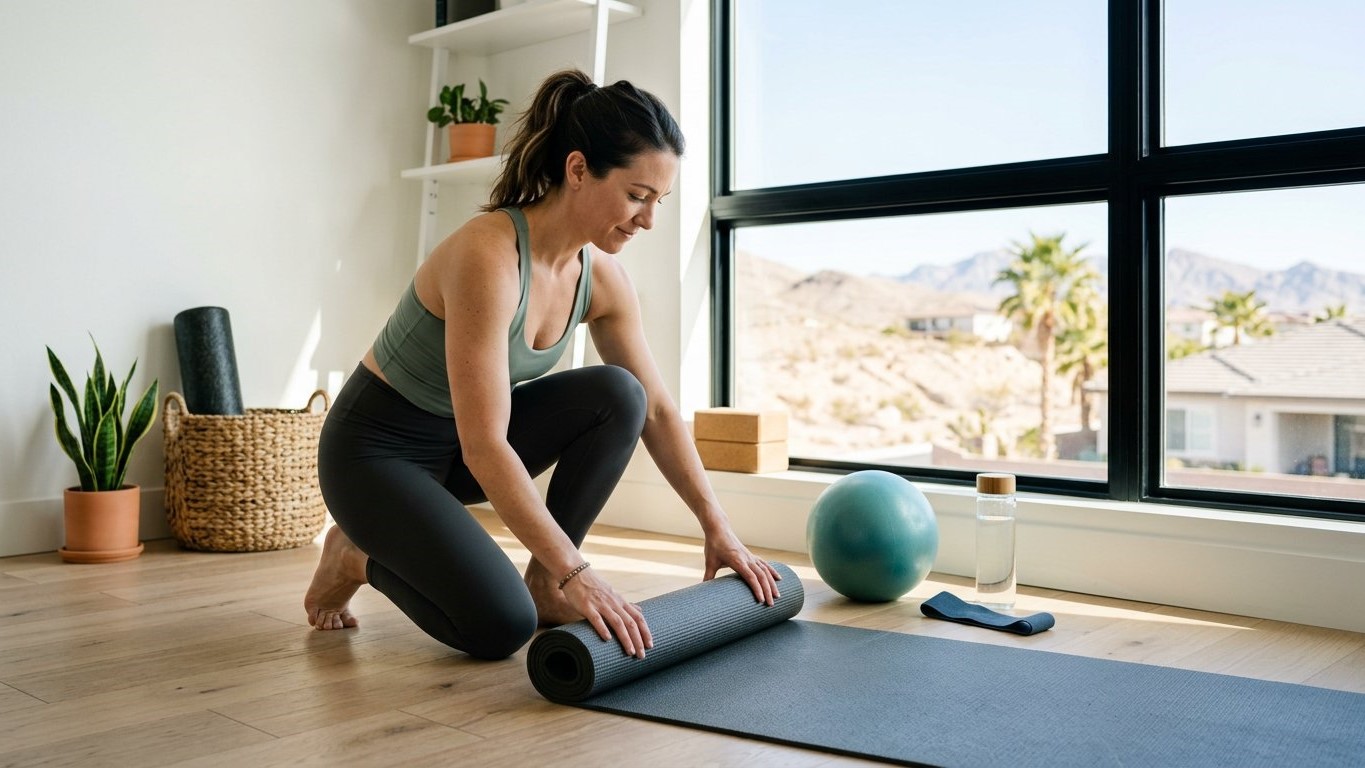
Here’s the short list that covers almost every beginner workout:
- A thick, supportive mat (thicker than a standard yoga mat)
- A light-to-medium resistance band
- A small stability ball, usually 7 to 9 inches wide
- Grip socks, if you plan to try a studio class alongside home practice
That’s it. You don’t need weights, boards, or a machine to get a genuinely effective session. Once you’ve mastered these basics, you’ll have a much clearer sense of whether more advanced pilates equipment is worth the investment.
Why Most Equipment Lists Get This Wrong
Search for pilates equipment online and you’ll find lists pushing towers, chairs, and full reformers at every beginner, regardless of experience. That advice sells products, but it doesn’t build strength any faster. A $2,000 reformer used with sloppy form teaches your body bad habits efficiently. Meanwhile, a coach standing beside you for 45 minutes corrects those same habits before they stick.
Because of this, the gear isn’t the bottleneck for most people. Instruction is. That single fact should guide almost every purchase decision you make, whether you’re spending $30 or $3,000.
The Three Pieces of Pilates Equipment Worth Buying First
A Supportive Mat
Your spine and hip bones spend a lot of time pressed against the floor during Pilates, so a flimsy yoga mat won’t cut it. Look for one with extra cushioning and a non-slip base. A good mat also travels well, so you can bring it along if you ever join a mat-based studio session.
A Resistance Band
A light band mimics spring resistance without the price tag of a reformer. It works for leg circles, arm series, and seated rows, and it packs flat into a drawer. Bands are also forgiving for beginners, since you can adjust tension just by changing your grip.
A Small Stability Ball
This is where a lot of home practitioners get surprised. A small ball forces your deep core muscles to fire in ways flat-floor exercises simply can’t. It’s cheap, light, and genuinely useful – unlike many flashier items marketed as must-have pilates equipment for beginners.
Choosing the Right Ball Size for Your Body
Not every stability ball suits every body, and size matters more than most people expect. A ball that’s too large won’t let you squeeze it properly between your knees or ankles, while one that’s too small won’t create enough resistance to feel the exercise working.
- Under 5’4” tall: a 7-inch ball usually fits best
- 5’4” to 5’9” tall: an 8-inch pilates ball is the standard choice
- Over 5’9” tall: a 9-inch ball gives you enough surface to work with
If you’re unsure, an 8-inch pilates ball is the safest first purchase, since it suits the widest range of body types and exercises.
Pilates Equipment That Sounds Useful But Rarely Gets Used
A few categories get marketed hard, yet rarely earn their price for a home beginner:
- Wall-mounted spring systems – effective, but they usually need professional installation and studio supervision to use safely.
- Ankle and wrist weights – Pilates rewards control, not extra load, so weights often encourage momentum instead of precision.
- All-in-one folding towers – bulky, pricey, and frequently outgrown within a few months.
- Novelty balance boards – fun for a week, then forgotten in a closet.
If a product promises to replace an entire studio, treat that as a warning sign, not a selling point.
Common Mistakes First-Time Buyers Make
Even careful shoppers fall into a few predictable traps. Watch out for these before you check out:
- Buying the biggest item first. A reformer bought before a mat or band gets used far less, since beginners rarely have the form to use it safely right away.
- Chasing brand names over basics. A premium mat won’t teach you anything a $20 mat can’t, at least not while you’re still learning fundamentals.
- Ignoring floor space. Measure your room before buying anything with moving parts, since a folding frame still needs clearance to extend fully.
- Skipping instruction entirely. Gear without guidance often stalls progress within a month, simply because nobody catches the small errors that compound over time.
Avoiding these mistakes saves money and, more importantly, saves you from building habits you’ll later have to unlearn.
Setting a Pilates at Home Equipment Budget: $50 vs. $500 vs. $2,000+
Your pilates at home equipment budget should match how often you actually plan to train, not how much a website recommends you spend. Here’s a realistic breakdown:
| Budget | What It Buys | Best For |
| $50 | Mat, resistance band, small stability ball | Absolute beginners testing the method |
| $500 | Everything above, plus a firmer ball, hand weights, a resistance ring, and storage | Consistent home practitioners supplementing studio classes |
| $2,000+ | An entry-level home reformer plus accessories | Advanced practitioners with prior instructor-led training |
Notice that cost scales with commitment, not with results. A beginner who trains consistently with a modest pilates at home equipment setup and a weekly class will usually outpace someone training alone with a $2,000 machine.
Building a Home Pilates Setup Step by Step
Follow this order if you’re starting completely from zero:
- Buy a supportive mat and a resistance band first. Spend a week getting comfortable with basic footwork and core moves.
- Add a small stability ball once the basics feel natural. Use it for bridges, seated holds, and simple core drills.
- Book at least one guided class so an instructor can check your form before habits set in. A single session in a Group Reformer Class often reveals adjustments you’d never catch on your own.
- Only after a few weeks of consistent practice, decide whether a portable pilates reformer or larger equipment makes sense for your goals.
- Keep your setup small and tidy. A cluttered corner gets abandoned faster than an empty one gets used.
Is a Portable Pilates Reformer Worth Adding Later?
A portable pilates reformer can extend your practice once you already know proper form, but it isn’t the right starting point for most beginners. These machines fold for storage and cost far less than studio-grade equipment, yet they also use shorter carriage travel and lighter springs. That’s a fair trade for convenience, but it limits how far your training can progress on the machine alone.
If you already train with an instructor and want extra reps between sessions, a portable pilates reformer is a reasonable supplement. If you’ve never used a reformer at all, skip it and start where the feedback lives. Many clients wait a few months before buying one. By then, they already know what proper spring tension feels like. That makes it much easier to judge a folding model fairly, instead of guessing.
What Wearing the Right Gear Adds to Your Setup
Equipment isn’t only about mats and bands. What you wear changes how safely and comfortably you move, especially once grip and traction come into play. Loose clothing can catch on straps, and the wrong socks can turn a simple footwork drill into a slipping hazard. Our full guide to what to wear for Pilates covers fitted clothing, sock choices, and layering so nothing you own works against your form.
Home Practice vs. Studio Training: What Actually Changes Results
Even a well-chosen pile of pilates equipment can’t watch your shoulders creep up during footwork or notice your hips shifting during the hundred. A coach catches that instantly, often before you even feel it happening. Studio machines are also built differently – smoother glide, tighter calibration, and frames designed for daily heavy use rather than occasional home sessions.
That said, home practice isn’t wasted effort. It builds consistency between classes and reinforces what you learned during a session. Think of it this way: your mat and band are the practice, while the studio is where the coaching happens. The two work best together, not as substitutes for one another. One client of ours put it simply after her first month: the equipment kept her moving daily, but the weekly class was where she actually got stronger.
If cost is part of your decision, our current pricing page breaks down class packages so you can compare a hybrid approach against buying gear alone. Many clients start with a small pilates at home equipment setup and one weekly class, then adjust once they see which format fits their schedule and their budget.
Ready to see how quickly proper coaching speeds things up? Book an intro class and feel the difference for yourself before you spend more on equipment.
What a Realistic First Month Looks Like
Week one is simple. Unroll your mat. Learn basic breathing and footwork. Keep sessions short, maybe 15 to 20 minutes.
Week two adds the resistance band. Your core starts to wake up. Soreness fades faster than most beginners expect.
Week three brings in the stability ball. Balance work gets harder, but it also gets more interesting. This is usually when people book their first class, simply to check their form against someone who knows what to look for.
By week four, most beginners have a clear sense of what they enjoy and what feels awkward. That’s exactly the point where smarter equipment decisions get easier, because you’re buying based on real experience instead of guesswork.
The Bottom Line on Pilates Equipment
You don’t need a garage of gear to start seeing results. The right pilates equipment for a beginner fits in a small drawer, costs less than a nice dinner out, and works best alongside real instruction rather than instead of it. Start simple, add pieces only when your practice genuinely calls for them, and let a coach fill in the gaps equipment never can.
Curious how much faster you’d progress with expert guidance? Book your first Group Reformer Class at Blue Chip Conditioning and find out.
Frequently Asked Questions
Do I need a reformer to start Pilates at home?
No. A mat, a band, and a small stability ball cover most beginner workouts. A reformer only becomes useful once your form is solid.
What’s the cheapest way to build a home Pilates setup?
A mat, resistance band, and small stability ball together usually cost under $80 and handle the bulk of beginner training.
Is a portable pilates reformer as good as a studio machine?
Not quite. Portable models trade carriage length and spring strength for lower cost and easy storage, which limits advanced work.
How much space do I need for basic pilates equipment?
A clear area of roughly 6 by 8 feet is enough for mat-based training. A folding reformer needs more, plus room for the carriage to extend fully.
Do grip socks count as essential pilates equipment?
They aren’t required for mat work at home, but they matter the moment you use equipment with a moving carriage or a smooth studio floor.
Can I get real results without ever visiting a studio?
You can build a habit and basic strength at home, but hands-on correction speeds up progress and prevents form mistakes from becoming permanent.
What size pilates ball should a beginner buy?
An 8-inch ball fits most body types and works for the majority of beginner core and bridge exercises.
How do I know when I’ve outgrown my starter setup?
If basic moves feel easy and your form holds steady through a full session, that’s usually the sign to add resistance or book more guided classes.