What to Expect From Your First Private Pilates Training in Las Vegas
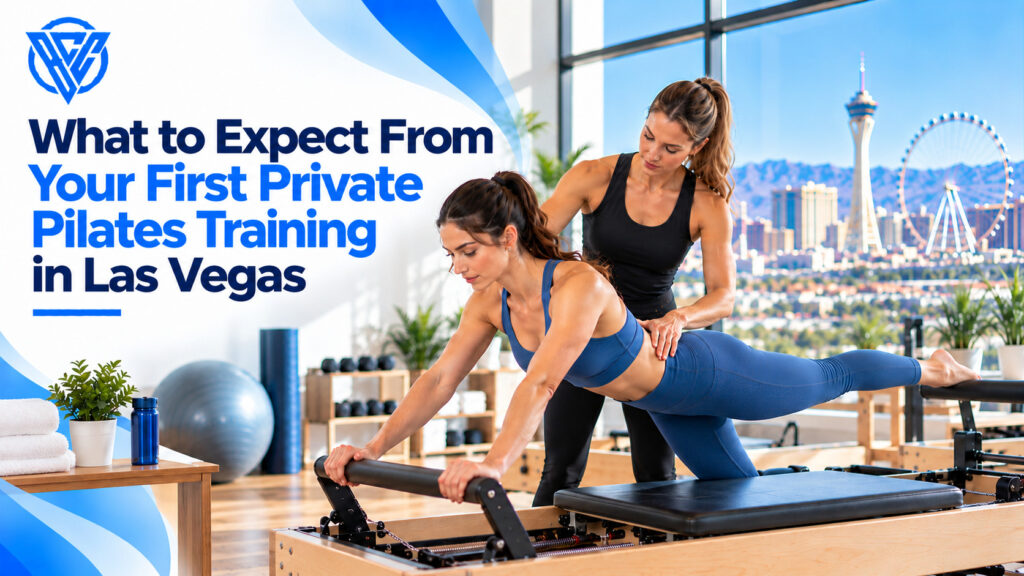
Personal Pilates training gives you an instructor’s undivided attention and a program built around your body, goals, and history. This guide to personal Pilates training explains what happens from the moment you arrive for a private session. It covers the initial assessment, the exercises you might do, how coaching works, how to prepare, and how to keep improving after your first visit. What Is Personal Pilates Training? Personal Pilates training is a one-to-one format in which a qualified instructor designs and leads each session for a single client. Unlike group classes, which follow a general plan for everyone in the room, personal Pilates training adapts in real time to how you move, what you feel, and what you want to achieve. The method itself, Pilates, was developed by Joseph Pilates as a system of controlled movement focused on core strength, alignment, breathing, and flexibility. Many people use personal Pilates training to recover from injury, improve posture, support athletic performance, or simply learn the method correctly from the start. How One-on-One Pilates Training Differs From Group Classes In a group, the instructor watches several bodies at once and gives general cues. In one-on-one Pilates training, every cue, spring setting, and exercise choice is made for you. The instructor can notice that your left hip lifts slightly during a leg circle, or that your shoulders tense during footwork, and correct it immediately. That level of detail is the main reason personal Pilates training often produces faster technical progress than group sessions, especially for beginners. Before Your First Personal Pilates Training Session Preparation helps you get the most from your first private Pilates session. Keep these practical points in mind: If you have a medical condition or are recovering from an injury, it is sensible to check with your healthcare provider before starting personal Pilates training or any new exercise program. What Happens During Personal Pilates Training: Your First Session Every personal Pilates training instructor works a little differently, but most first sessions follow a recognizable flow. Step 1: Conversation and Goal Setting Personal Pilates training starts with a conversation. Your instructor will ask why you came, what you want to change, and what has or hasn’t worked for you before. Goals can be broad, such as feeling stronger, or specific, such as reducing lower back discomfort while sitting at work. This conversation shapes the rest of your personalized Pilates coaching, so be honest and specific. Step 2: Movement Assessment Next, the instructor will usually watch you move. This may include standing posture, simple squats, rolling down through the spine, or basic movements on the mat or reformer. They are looking for patterns such as: The assessment is not a test you can fail. It is simply information that helps the instructor design individual Pilates sessions that fit your body. In personal Pilates training, the assessment is also revisited over time to track your progress. Step 3: Learning the Fundamentals Your first private Pilates session will likely focus on fundamentals rather than advanced choreography. Expect to learn the foundation of all personal Pilates training: Step 4: Guided Exercises Once the basics are in place, the instructor will guide you through a short series of exercises chosen for your goals. These might include footwork on the reformer, bridging, gentle spinal articulation, or arm work with light springs. This is where personal Pilates training starts to feel very different from a class, because each exercise is refined with hands-on or verbal cues for your body. Step 5: Review and Next Steps At the end of your first private Pilates session, your instructor will usually summarize what they noticed and suggest a plan. This may include how often to train, what to focus on, and whether to continue with one-on-one Pilates training or eventually add group or semi-private classes. Personal Pilates Training vs Group Classes: Which Fits Your Goals? The comparison below can help you decide whether personal Pilates training is the right format for you right now. Factor Personal Pilates Training Group Pilates Classes Instructor attention Full, individual focus Shared among participants Program design Built around your goals and body General plan by class level Pace of technical learning Usually faster Usually more gradual Injury or condition support Highly adaptable Limited modifications Social environment Private, focused Energetic, community-based Relative cost Higher per session Lower per session Benefits of Personalized Pilates Coaching Personalized Pilates coaching offers advantages that are difficult to replicate in a crowded class. Precision and Safety Because personal Pilates training means the instructor is watching only you, small errors are caught early. This reduces the risk of building poor habits and helps you move with confidence. Goal-Specific Programming Personalized Pilates coaching lets your sessions target what matters to you. A golfer may focus on rotation and hip stability. A desk worker may prioritize posture and thoracic mobility. Someone returning after pregnancy may focus on gradual core restoration, guided by their healthcare provider. Adaptability Some days you will feel strong, and some days you will feel tired or sore. Personal Pilates training adjusts to that reality, which helps you stay consistent over time. Accountability Booked individual Pilates sessions create a commitment. Knowing an instructor is expecting you makes it easier to stay consistent. How to Get Real Results From Personal Pilates Training Results from individual Pilates sessions come from consistency and engagement, not from a single workout. To get the most from your training: Common Mistakes in Personal Pilates Training Even motivated beginners can slow their progress. Avoid these common mistakes: Who Benefits Most From Personal Pilates Training? Personal Pilates training can suit almost anyone, but it is especially valuable for: If you see yourself in any of these groups, a private Pilates session in Las Vegas is a practical way to start. Finding Personal Pilates Training in Las Vegas When choosing where to book a private Pilates session in Las Vegas, look beyond convenience alone. Consider: Blue Chip Conditioning offers personal Pilates training with an emphasis on technique, conditioning, and individual goals,
2026 Guide: Pilates Wall Exercises for Home Workouts and Alignment
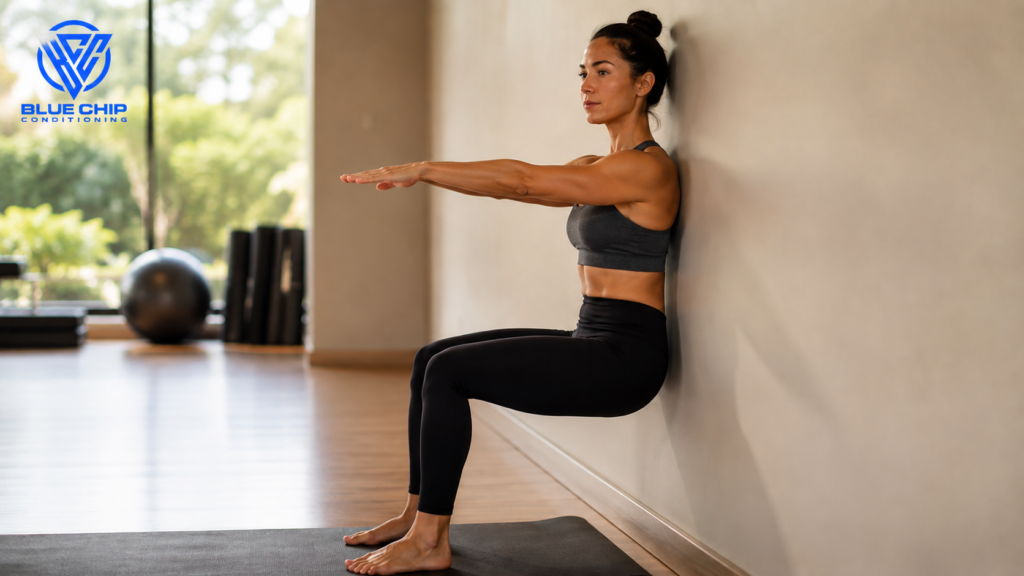
A blank wall might be the most underused piece of fitness equipment in your home. Pilates wall exercises turn that flat surface into a coach, a support, and a built-in alignment check. You get instant feedback on your posture, and you train strength and control at the same time. Wall-based Pilates blew up across social feeds over the past year, and the hype is mostly fair. The moves are simple, the barrier to entry is low, and the wall gently corrects your form as you go. In this 2026 guide, I will show you exactly how to use it, which moves earn their place, and where home practice ends and expert coaching begins. Quick Answer Pilates wall exercises use a wall for support, resistance, and alignment feedback while you perform controlled Pilates movements. They build core strength, improve posture, and make tricky moves more accessible, all with zero equipment. Beginners and experienced movers alike can practice them safely at home. Why the Wall Is Such a Smart Training Partner The wall does three jobs at once, and that is what makes it special. First, it supports you, so you can hold positions you could not manage in open space. Second, it adds gentle resistance when you press into it. Third, and best of all, it tells the truth about your alignment. Stand with your back to a wall and you instantly feel where your body drifts. Maybe your lower back arches away. Maybe one shoulder sits higher than the other. The wall reveals these habits without a single mirror or coach. As a result, you fix them in real time. Great for Tight Spaces and Busy Days You do not need a studio full of machines to train well. A clear stretch of wall and a yoga mat will do. That makes Pilates wall exercises perfect for apartments, hotel rooms, and quick sessions between meetings. When time is short, the wall keeps you moving. Why 2026 Is the Year to Try Wall Pilates Home fitness keeps shifting toward smarter, lower-impact training, and Pilates wall exercises sit right in that sweet spot. They demand no pricey gear, no large room, and no prior experience. That accessibility is exactly why so many people made the wall their go-to this year. There is also a growing focus on posture and longevity rather than quick aesthetic fixes. People want to move well at fifty and sixty, not just look a certain way at thirty. Pilates wall exercises support that goal beautifully, since they train alignment and control that pay off for decades. If you have been meaning to start, this is a good moment. Begin at home with the routine below, and consider a visit to a Pilates studio Las Vegas trainers run when you want to refine your technique. The combination keeps your progress steady and your form honest. What You Need Before You Start The setup is refreshingly simple. Gather these few things and you are ready to go. That is the whole list. No springs, no straps, no subscription. Just a wall and your willingness to move with control. The Best Pilates Wall Exercises to Try This Year These moves cover strength, mobility, and alignment. Start with the gentler options, then layer in the harder ones as your control improves. Wall Roll-Down Stand with your back against the wall and slowly peel your spine away, one vertebra at a time. This loosens a stiff back and teaches smooth spinal articulation. Roll back up just as slowly to finish. Wall Sit With Core Brace Slide down into a seated position against the wall, thighs parallel to the floor. Then draw your belly in and breathe. Your legs burn, your core braces, and your posture stays tall. It is deceptively tough. Wall Push-Up Face the wall, place your hands at shoulder height, and lower your chest toward it. This joint-friendly push-up builds arm and chest strength while the wall keeps your spine honest. Great for beginners and recovery days alike. Standing Leg Lifts With one side against the wall for balance, lift the outer leg in slow, controlled arcs. The wall removes the wobble, so you can focus purely on the working muscles. Switch sides and repeat. Cycle through these Pilates wall exercises two or three times a week. Consistency beats intensity here every single time. Want a coach to refine your alignment in person? Visit our Pilates studio in Las Vegas for sessions that build on the same wall-based principles. A 12-Minute Wall Routine You Can Follow Today Short on time? This quick flow hits posture, strength, and balance in one tidy session. Move slowly and breathe with each rep. Repeat the circuit twice if you have the time. New to mat work in general? Our at-home Pilates starter guide covers the fundamentals before you build up. Alignment: The Real Reason to Train Against a Wall Strength is great, but alignment is the quiet superpower of wall work. Most of us carry small postural quirks we cannot even feel. A forward head here, a tilted pelvis there. Over years, those quirks turn into aches. The wall acts like a level. Press your back, hips, and shoulders against it and you immediately sense what is out of line. Then you practice holding the corrected position. Bit by bit, your body learns the new pattern and carries it into daily life. A Simple Wall Posture Check Stand with your heels a few inches from the wall and lean back. Ideally, your hips, upper back, and the back of your head all touch lightly. If your head cannot reach without straining, that is a sign of forward-head posture worth working on. Pilates wall exercises gradually close that gap. Mistakes That Sneak Into Wall Workouts The wall is forgiving, but a few habits still hold people back. Keep an eye out for these. Home Wall Work vs. Studio Coaching Home practice wins on convenience and cost. You can roll out a mat any time and
Pilates Ab Exercises Explained: A Smarter Core Training Guide
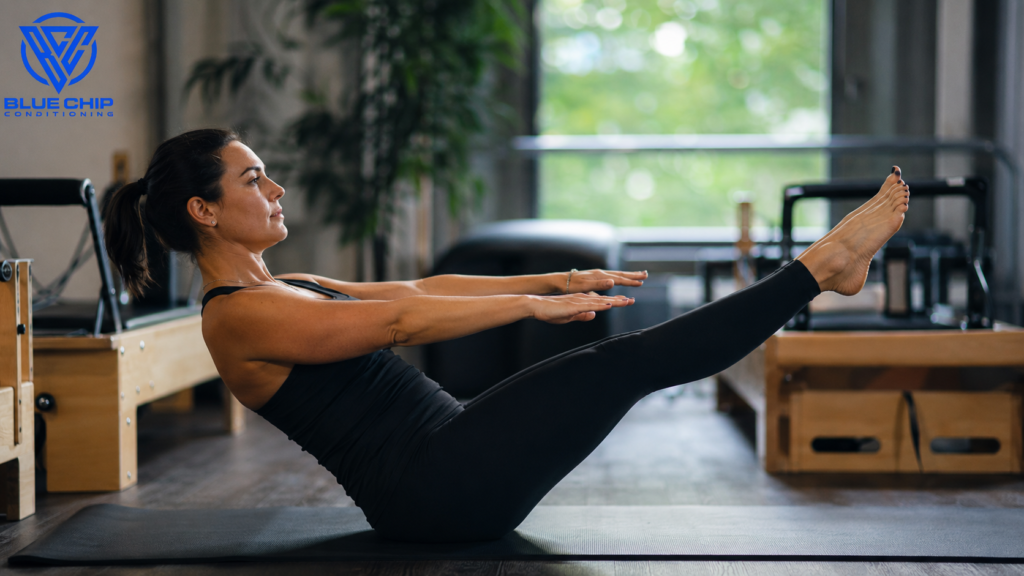
Endless crunches promise flat abs and rarely deliver. Pilates ab exercises take a smarter path. They train your core as a full system, deep muscles and all, so you build real stability instead of surface-level soreness. The payoff is a stronger, flatter midsection that actually supports your spine. I spent years doing crunches before I understood this. My abs got tired, sure, but my back still ached and my posture stayed sloppy. Once I switched to a Pilates-based approach, everything clicked. This guide explains why that shift works and how you can make it yourself, step by step. Quick Answer Pilates ab exercises are controlled, low-impact movements that strengthen the entire core, including the deep transverse abdominis and the muscles around the spine. Unlike crunches, they emphasize stability, breathing, and control. The result is better posture, a flatter stomach, and a back that feels protected during everyday movement. Your Core Is Not Just a Six-Pack Most people picture the front abs when they think core. That view is far too narrow. Your core wraps around your whole midsection like a natural corset, and it includes muscles you cannot even see. Crunches mostly hit one of those muscles, the rectus abdominis. Meanwhile, the deeper layers stay weak. That imbalance is why so many crunch-heavy routines lead to nagging back pain. Pilates fixes the gap by training the whole unit together. The Muscles That Matter Strong, balanced versions of all four create true core strength. That is the foundation every good set of Pilates ab exercises is built on. 7 Pilates Ab Exercises That Actually Build Core Strength These moves need nothing but a mat. Start slow, focus on control, and stop the moment your form breaks down. Quality always beats quantity here. Run through three to five of these per session. Even five focused minutes of Pilates ab exercises beat twenty minutes of mindless crunches. Prefer guided practice? Our Las Vegas Pilates classes walk you through each of these moves with hands-on coaching. How This Differs From a Typical Gym Ab Day Walk into most gyms and the ab routine looks the same: fast crunches, a few sit-ups, maybe a plank held until the arms shake. That style chases fatigue. Pilates ab exercises chase control instead, and the difference shows up in how your body feels later. Speed and momentum let gravity do half the work in a crunch. Slow, deliberate Pilates ab exercises remove that shortcut. Your muscles stay under steady tension, so they work harder even though the movement looks gentler. That is the quiet trick behind the whole method. There is also the breathing piece. Gym ab work rarely mentions it, yet breath is what switches on your deepest core layer. When you tie each rep to an exhale, you train the muscle that protects your spine, not just the one you see in the mirror. Build Your Core in 4 Progressive Weeks Jumping straight to advanced moves is a fast track to frustration. So follow this gradual plan instead. Each week adds a little challenge once the previous one feels solid. By the end of the month, you will own a routine that scales with you for years. If you want a head start on the basics, our core strength tips for beginners cover the groundwork in plain language. Form Cues That Change Everything Small details separate effective Pilates ab exercises from a wasted effort. Keep these cues front of mind on every rep. Zip Up Your Deep Core Before you move, gently draw your belly button toward your spine. This activates the transverse abdominis and gives every move a stable base. Think of zipping up a tight pair of jeans, not sucking in your gut. Exhale on the Effort Breathe out as you contract, and your deep core engages automatically. Hold your breath instead, and you lose that natural support. Breathing is the rhythm that ties the whole practice together. Press the Lower Back Down During floor moves, keep your lower spine in contact with the mat. The moment it arches, your hip flexors take over and the abs check out. So move only as far as you can while staying flat. Scale the Moves to Your Level One reason Pilates ab exercises suit nearly everyone is that each move bends to your ability. You never have to choose between too easy and too hard. Instead, you adjust the lever. Make It Easier Bend your knees, keep your feet down, or shorten the range. For the Hundred, rest your head and lift only your arms. These small tweaks keep your form clean while you build the strength to progress. Make It Harder Straighten your legs, lower them closer to the floor, or slow the tempo even further. A longer lever and a slower count turn gentle Pilates ab exercises into a serious challenge, no extra equipment required. Because the moves scale so smoothly, a beginner and a seasoned athlete can do the same exercise side by side, each working at the right intensity. That flexibility is what keeps the routine useful for years rather than weeks. Mistakes That Quietly Stall Your Progress Even committed people fall into these traps. Catch them early and your results speed up. Mat or Reformer for Your Abs? Both tools work, and neither is wrong. Mat practice is accessible and free, so it is the perfect place to begin. You learn control with nothing but your bodyweight and gravity. The reformer, however, adds adjustable spring resistance. That lets you load the core in ways the mat simply cannot match, and it offers support for tricky moves. Many members blend the two, building a base on the mat and then progressing on the machine. Our reformer Pilates program is a natural next step once your form feels dialed in. A Quick Honest Comparison Not sure which to pick? Use this quick rundown to decide where to start and when to level up. Who Benefits Most From This Approach Honestly, almost everyone.
How Pilates Arm Exercises Build Lean Strength and Better Posture
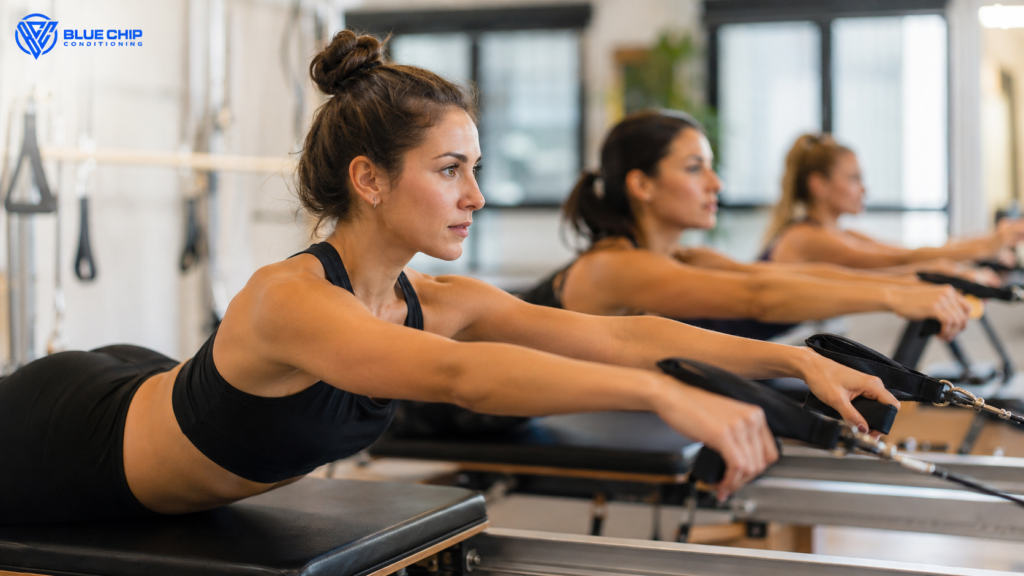
Strong, sculpted arms rarely come from chasing heavier dumbbells. Instead, Pilates arm exercises train your shoulders, upper back, and deep core to move as one connected unit. That teamwork is what creates a lean, capable look without bulk. I have coached clients who could press a heavy weight yet still slumped at their desk by noon. So we shifted the focus. We started using slow, controlled arm work rooted in Pilates, and their posture changed within weeks. This guide walks you through the why and the how, with practical moves you can try at home today. Here is the part most people miss, though. Pilates arm exercises are never really about the arms alone. They link the upper body to a stable, breathing core, so the strength you build actually holds up in real movement. That is a different goal than chasing a pump, and the results last longer too. Quick Answer Pilates arm exercises are low-impact movements that strengthen the arms, shoulders, and upper back while keeping the core engaged. They build lean muscle, sharpen posture, and improve shoulder stability. Because they use light resistance and high control, almost anyone can start them safely at home or in a studio. Why Pilates Arm Exercises Work So Well Traditional weight training often isolates one muscle at a time. Pilates takes a different route. Every move asks your shoulders, arms, and trunk to cooperate, so you build strength that actually transfers to daily life. You reach, carry, and push with more ease. Control matters more than load here. When you slow a movement down, your muscles stay under tension longer. As a result, you feel the burn with far less weight. That is why a simple set of light dumbbells, or even no equipment at all, can leave your arms shaking by the final rep. There is also a posture payoff. Many of these moves strengthen the small stabilizers around the shoulder blades. Consequently, your shoulders sit back instead of rolling forward. Over time, that single shift makes you look taller and more confident. It also takes pressure off your neck, which is a welcome bonus if you spend long hours at a screen. Lean Strength Without the Bulk Pilates arm exercises favor higher repetitions with steady tempo. Because of that approach, you develop endurance and tone rather than sheer mass. If your goal is defined arms that look athletic in a tank top, this style fits perfectly. For a deeper foundation, our reformer Pilates sessions add spring resistance that takes the same principles even further. 8 Pilates Arm Exercises You Can Do at Home You only need a mat, a little floor space, and optional light weights. Grab a pair of one to three pound dumbbells, or fill two water bottles if you are improvising. Then move through the list below at a slow, deliberate pace. Each of these Pilates arm exercises rewards quality over speed. Aim for 10 to 15 slow reps, and rest just enough to keep your form sharp. A Simple 10-Minute Routine to Try Today If you want structure, follow this short flow. It moves logically from warm-up to challenge, so your shoulders stay safe throughout. Do this routine three times a week, and you will likely notice steadier shoulders and better posture within a month. New to mat work? Our beginner Pilates guide breaks down the basics before you progress. Want hands-on coaching for your form? Explore our Pilates classes in Las Vegas and let a coach fine-tune every rep. Common Mistakes That Hold Your Progress Back Even great moves lose their value with sloppy execution. After years on the studio floor, I see the same slip-ups again and again. Watch for these. Rushing the Reps Speed feels productive, yet it steals tension from the muscle. Slow down. A controlled three-count lift and lower will outwork a fast, jerky set every time. Shrugging the Shoulders When the weight feels heavy, the shoulders creep toward the ears. That habit strains the neck and skips the muscles you actually want to train. Keep the shoulder blades gently down and back instead. Ignoring the Core Your arms work best when your trunk is stable. Therefore, brace your midsection on every rep. A strong center turns ordinary Pilates arm exercises into full-body work. How These Moves Improve Posture Modern life pulls us forward. We hunch over phones, keyboards, and steering wheels for hours. Pilates arm exercises push back against that pattern by strengthening the muscles between your shoulder blades. Picture two ropes running across your upper back. When those muscles are weak, the ropes go slack and your shoulders round. When they are strong, the ropes pull your shoulders into a tall, open line. Moves like chest expansion and the serve-the-platter drill train exactly those fibers. The change is not only cosmetic, either. Better posture eases tension headaches, reduces neck strain, and helps you breathe more fully. In short, the upside reaches well beyond the mirror. Which Muscles You Actually Train It helps to know what you are working when you move. Pilates arm exercises mostly target the deltoids, biceps, and triceps, but they also recruit smaller helpers that ordinary gym lifts often skip. Because the routine hits stabilizers and prime movers together, you build balanced strength. That balance protects your shoulders, which is exactly why so many physical therapists fold these moves into recovery plans. Pair Your Reps With Smart Breathing Breathing is the quiet engine behind every Pilates movement. When you exhale on the effort, your deep core switches on and your arms find a stronger base. Try it on a bicep curl. Inhale as you lower, exhale as you lift, and feel how much more controlled the rep becomes. Hold your breath instead, and your shoulders tense while your form falls apart. So treat the breath as part of the exercise, not an afterthought. This single habit turns basic Pilates arm exercises into a calmer, more connected practice. Beyond strength, steady breathing lowers stress and
Types of Pilates: Which Style Fits Your Body, Routine, and Fitness Level?
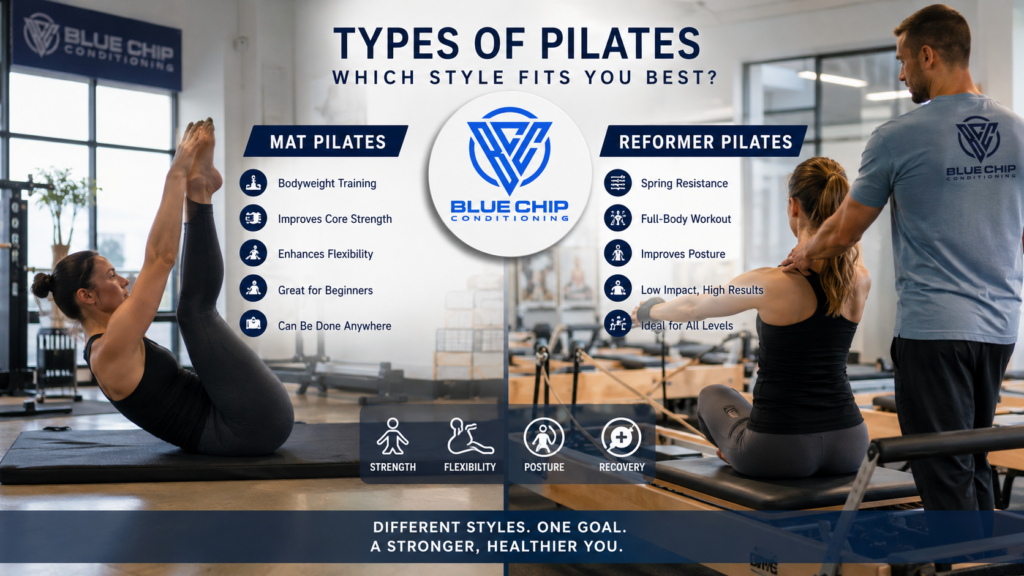
Introduction Types of Pilates can feel surprisingly personal. One person wants a gentle way to build strength. Another wants a smarter cross-training tool. Someone else needs support after an injury or wants a class that fits a packed schedule. The good news is that the right choice is usually obvious once you match the style to the goal. That is the real value of Pilates styles: each style solves a slightly different problem. Blue Chip Conditioning in Las Vegas leans into private, semi-private, and group Pilates with a strong emphasis on athletic enhancement, rehabilitation, and personalized instruction, so this topic fits its audience especially well. Quick Answer Section Types of Pilates are different ways of practicing the same core method. The best match depends on whether you want mat-based control, machine-assisted support, traditional sequencing, modern modifications, or rehab-focused coaching. For many readers, the choice comes down to fitness level, injury history, and whether they prefer solo practice or studio guidance. Key Takeaways What are the main options? When people search for Types of Pilates, they usually want one thing: clarity. They want to know which style is safest, which one feels hardest, and which one fits their life. That is a smart question, because the answer changes based on body type, training history, and whether you are building confidence or chasing performance. The most common Types of Pilates are mat, reformer, classical, contemporary, and clinical styles. Mat Pilates Mat Pilates is often the most approachable place to start. It uses bodyweight, breath control, and precise movement to build core strength, posture improvement, and control and alignment. For many beginners, it is the clearest way to learn the method before adding equipment. This is also why many instructors treat mat work as the foundation of the method. Reformer Pilates Reformer Pilates uses springs, straps, and a moving carriage to add resistance and support. It can feel smoother than people expect, but it still challenges the body in a serious way. For clients who want guided movement, stronger feedback, and more progression, reformer pilates las vegas is often a very good fit. That is one reason reformer pilates las vegas is such a strong local search phrase for studios like Blue Chip Conditioning. Classical Pilates Classical Pilates follows the original exercise order and principles more closely. It emphasizes precision, flow, and a consistent sequence, which many experienced students appreciate because it teaches discipline and body awareness. If you like structure and measurable progress, this style can feel very grounding. Contemporary Pilates Contemporary Pilates keeps the core ideas but often updates the movement selection, teaching style, or equipment use. Many modern studios use these adaptations to serve a wider range of bodies, especially people who need modifications, recovery support, or progressive coaching. This style is often the easiest to scale for mixed-level groups. Clinical Pilates Clinical Pilates is usually the most tailored option. It is often used in rehabilitation settings or under highly specific supervision because the exercises are adjusted to the person, not the other way around. That makes it especially useful when someone is managing pain, returning from injury, or rebuilding movement confidence. Blue Chip Conditioning’s service mix clearly leans into that personalized approach. Comparison: which style fits which goal? If you want a simple comparison, think of it this way. Mat work is best for learning control. Reformer work is best for feedback and resistance. Classical work is best for structure. Contemporary work is best for flexibility in programming. Clinical work is best for careful adaptation. That is the practical lens most people miss when they compare types of pilates too quickly. For a busy adult looking for local Pilates classes, the decision usually comes down to convenience and coaching. If you want a class you can repeat weekly without overthinking, reformer-based group work is often the easiest path. If you want private attention, semi-private sessions may be a better entry point because the instructor can adjust the plan as you go. Blue Chip Conditioning offers exactly that kind of format, including private, semi-private, and group sessions. Why the right style matters more than the “hardest” class A common mistake is assuming the hardest option is automatically the best. It is not. The best style is the one that improves consistency, protects form, and keeps you engaged long enough to see results. Pilates is a low-impact, full-body workout that can improve strength, flexibility, and posture without needing to feel punishing every session. That matters for athletes, too. Blue Chip Conditioning presents Pilates as part of athletic enhancement and rehabilitation, which matches what many sports-minded clients need: strong hips, better trunk control, cleaner movement, and recovery-friendly training. For that audience, reformer pilates las vegas is less about trendiness and more about useful, repeatable training. A simple step-by-step way to choose your style Here is an easy process. Real-life examples people relate to A runner who wants better hip stability may do well with reformer sessions because the springs give feedback while still allowing controlled loading. A desk worker dealing with stiffness may prefer mat Pilates because it is easy to repeat at home and reinforces breathing and alignment. Someone returning from an old injury may benefit most from clinical work or a private session where the plan is adjusted carefully. These are exactly the kinds of situations where Types of Pilates stop being theory and start becoming practical. Mistakes to avoid The biggest mistake is choosing a class based only on popularity. Another mistake is assuming reformer training is only for advanced students. A third is skipping instructor guidance when your body needs modification. Many new clients also jump into harder classes before they have learned breath control, control and alignment, or the basic rhythm of the method. That usually makes the experience feel more confusing than it needs to be. Myth vs fact Myth: Pilates is only for flexible people. Fact: Pilates is often used to build flexibility, control, and strength at the same time, which is why it
Why Pilates Training Is Becoming Popular in Las Vegas Fitness Studios
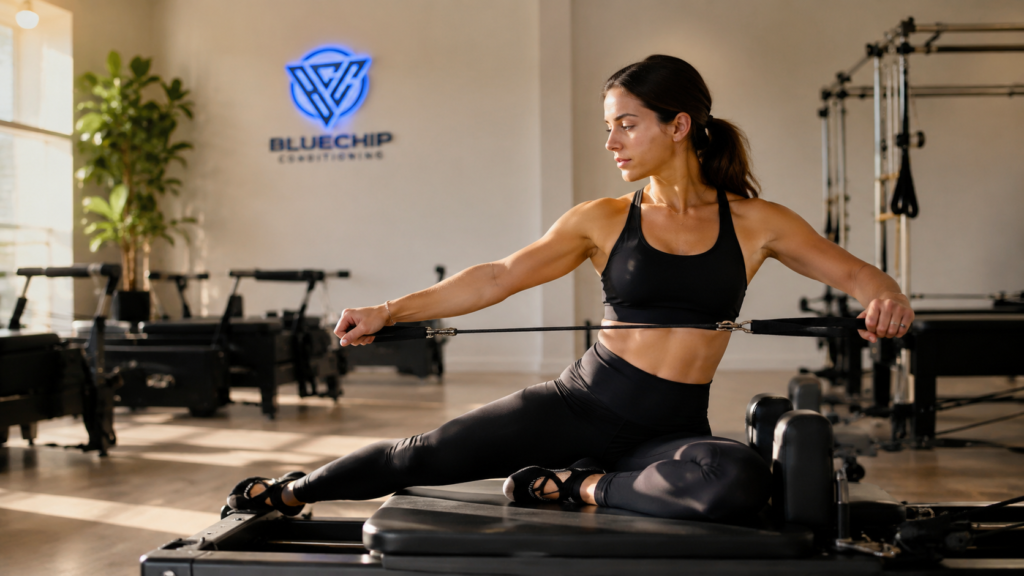
Pilates training is showing up everywhere in Las Vegas because people want workouts that feel effective without being punishing. In a city where busy schedules are the norm, the appeal is simple: stronger movement, better posture, and a lower-impact way to train that still delivers real results. At Blue Chip Conditioning, the demand makes sense. The studio’s focus on athletic enhancement, rehabilitation, and overall physical fitness fits the kind of results Las Vegas clients actually ask for: more control, better mobility, and a program that works for different bodies and goals. The Blue Chip Conditioning website emphasizes personalized coaching, hands-on corrections, and support, which builds trust. This article explains why the trend keeps growing and what today’s clients want. Why the Las Vegas market is responding to Pilates training Las Vegas fitness culture has changed. People still want intensity, but they are also more aware of recovery, injury prevention, and movement quality. That shift is one reason this method has moved from being seen as a niche option to a practical choice for a wide range of clients. The first reason is simplicity.Many people do not want a workout that leaves them wiped out for the rest of the day. They want something structured, guided, and useful. Pilates training gives them that. It builds core strength, improves alignment, and helps the body move with less compensation. For people who sit most of the day or stand for long hours, that matters. The second reason is versatility.A single studio can serve beginners, athletes, dancers, and people returning from injury. That is a big advantage in a city as diverse as Las Vegas. For people comparing pilates classes in las vegas, the appeal is usually the same: coaching, convenience, and a class style that feels manageable. Some clients are looking for mobility. Others are looking for conditioning that supports another sport. Others just want to feel less stiff after work. The same training system can serve all three without feeling watered down. A third reason is trust.People are more likely to stay with a routine when they see that the instructors pay attention to form. Blue Chip Conditioning emphasizes hands-on corrections, proper alignment, and personalized support, which makes the experience feel intentional rather than mass-produced. That level of attention helps explain why more people search for pilates classes in las vegas when they want something that feels guided and professional. What makes Pilates training different from a standard gym routine? Many people compare this method with traditional strength training and immediately notice one major difference: the focus is not just on effort. It is on control. Instead of rushing through reps, you learn how to move with precision, breathing, and consistency. That often leads to better body awareness, which is useful whether your goal is athletic performance or everyday comfort. Is Pilates only for beginners?No. It works for beginners, experienced exercisers, and athletes who need better control, stability, and recovery support. The method is also joint-friendly. That does not mean easy. It means the challenge comes from alignment, resistance, and concentration rather than repeated impact. For many people, especially those dealing with stiffness or old injuries, that makes it easier to stay consistent. Consistency is what creates long-term improvement. There is also a psychological reason people stick with it. Standard gym routines can feel repetitive if they are built only around machines and numbers. Pilates training feels more connected to how the body actually moves. That is important for anyone who wants to feel stronger in daily life, not just during a workout. When hard workouts are not helping A common problem is this:people train hard, but they still feel unbalanced, tight, or unstable. The solution is not always more intensity. Sometimes it is better movement quality. Pilates training helps close the gap by improving core engagement, posture, and control so the body starts working together instead of fighting itself. Another common problem is inconsistency. People quit routines that feel painful, confusing, or too aggressive. A structured studio environment solves that by giving people coaching, rhythm, and progress they can actually feel. That is one reason modern fitness studios in Las Vegas are leaning into this style of training. Why reformer-based classes are getting so much attention If there is one format driving a lot of the buzz, it is reformer-based work. The machine adds spring resistance, support, and range, which changes the experience in a very useful way. The machine assists where needed, challenges where needed, and gives the instructor more ways to scale difficulty. That is a big reason reformer pilates las vegas has become such a common search term. It also explains why reformer pilates las vegas is often the format people remember after the first trial class. People want a class that feels sophisticated but still approachable. They want structure, small class sizes, and visible feedback. also want to know the class is not just random exercise on a machine. They want a system with purpose. At Blue Chip Conditioning, reformer sessions are part of a wider service model that includes private Pilates, semi-private sessions, group reformer classes, Pilates for dancers, elite athlete development training, and studio rental. That mix matters because different clients need different levels of attention. Someone returning to movement after time away may want more support. A competitive athlete may want targeted work that supports speed, balance, and injury prevention. A dancer may need flexibility plus strength. Reformer work can be adapted for each of those needs, which is why reformer pilates las vegas remains such a practical choice. Here is the practical difference many clients notice after a few sessions: better control in the hips and trunk, smoother transitions, and less wasted movement. Those changes may seem small at first, but they carry over into sports, work, and daily life. That is why reformer classes often feel more valuable than a workout that only burns energy. For many people, reformer pilates las vegas feels more useful than a generic studio workout because