
Elite athlete development is no longer just about lifting heavier weights or running faster intervals. It is about building a body that can produce force, absorb stress, recover quickly, and stay dependable across a full season of training and competition. For athletes who want more than short bursts of performance, this approach creates a foundation that supports speed, power, mobility, and resilience together.
The best programs do not chase one quality at the expense of another. They connect strength, movement efficiency, recovery, and sport-specific preparation in a way that makes progress more sustainable. That is why elite athlete development has become a serious advantage for coaches, parents, and athletes who want measurable performance without paying for it through avoidable injuries.
What elite athlete development actually means
This training model is a structured performance system built around the real demands of sport. It is not a random mix of workouts. It is a process that strengthens the muscles, joints, connective tissue, nervous system, and movement patterns that athletes use under pressure. The goal is simple: raise performance while lowering breakdown.
A strong program usually starts with assessment. That may include movement screening, strength testing, mobility checks, landing mechanics, sprint mechanics, or position-specific needs. From there, training becomes more intentional. A sprinter does not need the same workload as a soccer player. A youth athlete does not need the same volume as a college competitor. The best plans reflect that reality.
At its core, the model is about preparing the body to do three things well: generate force, transfer force, and repeat that process without losing quality. That is where many traditional fitness plans fall short. They may improve general conditioning, but they rarely build the exact movement efficiency and durability that sport demands.
Is this approach only for professional athletes?
No. It is useful for young athletes, high school competitors, college players, and adults who train at a serious level.
Why stronger does not always mean better
Many athletes think the path to better performance is always more intensity. In practice, that can create the opposite result. More intensity without structure often leads to stiffness, fatigue, and poor movement quality. That is where the real value of this method shows up. It balances stress and adaptation instead of stacking hard sessions until the body starts resisting progress.
The goal is not to make athletes tired. The goal is to make them capable. Stronger athletes usually move with better control, more stability through the trunk and hips, and more efficient force production in the lower body. Faster athletes usually do not just have powerful legs; they also have better mechanics, cleaner timing, and a body that can keep position at speed. Injury-resistant athletes are rarely the ones who train the hardest every day. They are usually the ones who train with the most precision.
Problem → Solution:
When athletes only train for output, they often lose mobility and movement quality. The solution is to combine strength work with controlled mobility, landing practice, deceleration work, and recovery-based training that protects performance over time.
The performance pillars that matter most
A credible program usually stands on several pillars that work together instead of competing with each other. These are not trendy ideas. They are the basics that experienced coaches keep returning to because they produce reliable results.
1. Strength that transfers to sport
General strength is useful, but transferable strength matters more. Athletes need force that can be used while moving, cutting, jumping, changing direction, and absorbing contact. This is why split squats, hinges, carries, sled work, and rotational training matter so much. They train the body to stay organized while producing power.
Strength also helps protect joints. When the hips, trunk, and legs are able to share load well, the body does not dump stress into one weak area. Over time, that can reduce wear on the knees, hamstrings, ankles, and lower back. It is one reason the best programs are often built around compound movements rather than isolated effort alone.
2. Speed with control
In elite athlete development, speed is not only about moving quickly in a straight line. It includes acceleration, deceleration, body position, rhythm, and direction change. A fast athlete who cannot stop or redirect well is still vulnerable. True speed training improves mechanics first, then layers on intensity.
This is where quality coaching matters. Good technical work teaches the athlete how to project force into the ground, keep posture under load, and maintain alignment when fatigue rises. That attention to detail creates a much stronger base for game speed.
3. Mobility that supports output
Mobility is often misunderstood. It is not about being loose for the sake of it. It is about having usable range of motion where the sport requires it. Hips, ankles, thoracic spine, and shoulders must all contribute to clean movement. Without that range, power leaks into compensations.
Athletes who build mobility the right way usually move with less strain and better control. That is one reason many programs pair strength development with movement work that reinforces position, not just flexibility.
4. Recovery that protects adaptation
In elite athlete development, recovery is not a luxury. It is part of training. Sleep, hydration, tissue work, breathing, downregulation, and intelligent session design all affect whether the body actually adapts. A poorly recovered athlete may still sweat through a workout, but the session often produces less benefit and more hidden fatigue.
Simple recovery habits can have a large effect over a full training cycle. More consistent sleep can improve reaction time, decision-making, and tissue repair. Better nutrition can support output and reduce breakdown. Recovery is where training becomes usable.
How elite athlete development reduces injury risk
Injury prevention is not about promising that nothing will ever happen. That is unrealistic in sport. It is about lowering exposure to avoidable risk and improving the body’s ability to tolerate repeated demands. When people talk about injury-resistant athletes, they usually mean athletes who can absorb stress, recover, and keep performing without constant setbacks.
One major factor is movement quality. When an athlete lands poorly, turns with poor control, or repeatedly loads one side of the body, stress concentrates in the wrong places. Over time, that increases risk. Proper training addresses these patterns early.
Another factor is tissue capacity. Muscles and tendons need graded loading before they can handle bigger demands. When that process is rushed, strains and overuse problems become more likely. Gradual progression is not glamorous, but it works.
A third factor is fatigue management. A lot of injuries happen when athletes are simply too tired to move well. That is why smart scheduling matters. Training should build capacity, not drain it to the point that technique disappears.
What is the biggest reason athletes get hurt in training?
Repeated overload combined with poor movement quality and inadequate recovery.
Where reformer and movement-based training fit in
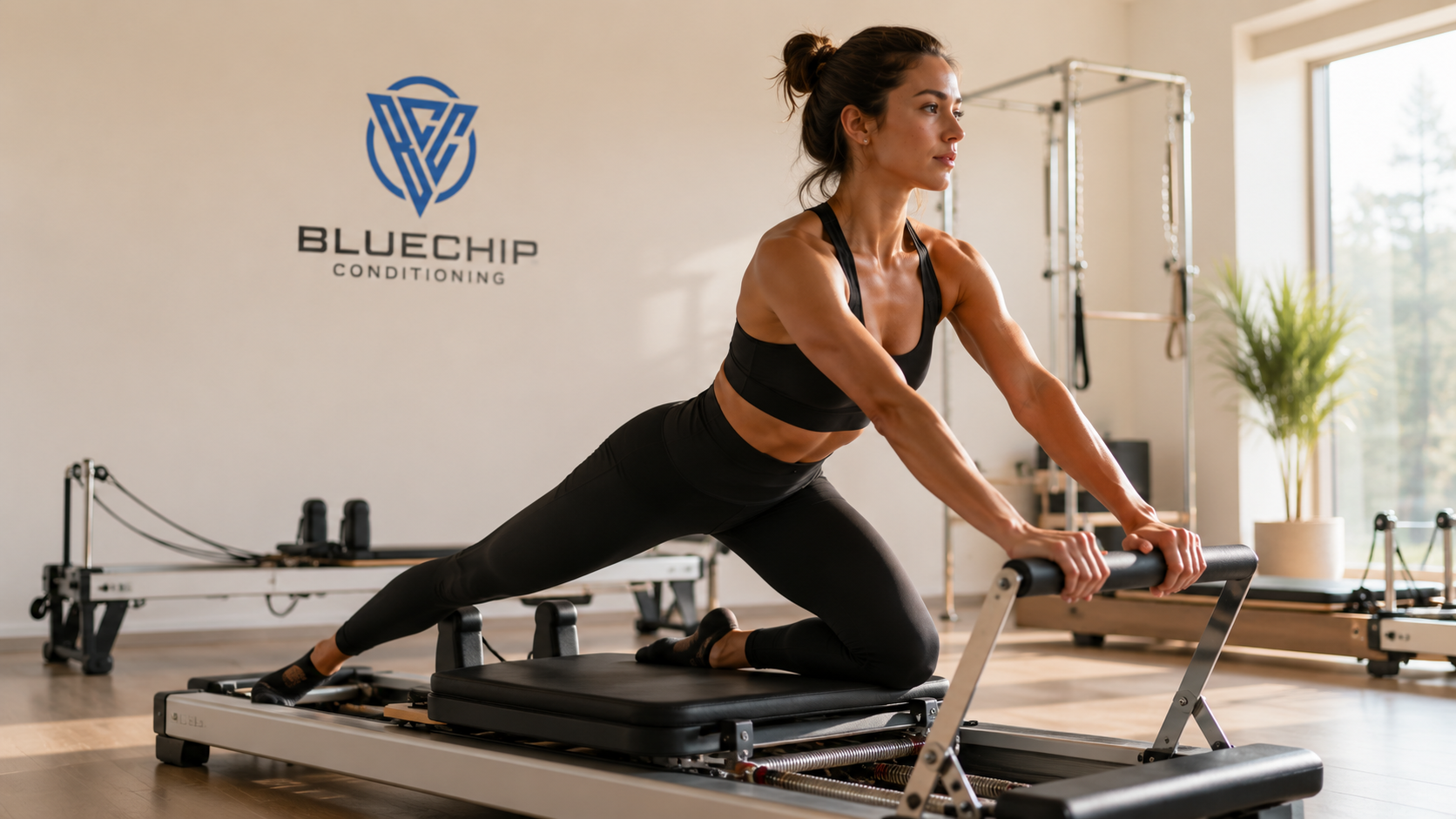
Not every athlete needs the same tools, but some methods support the broader performance model especially well because they build control, core integrity, and joint organization. That is where movement-based training can become valuable. In many programs, controlled resistance, posture awareness, and precise movement patterns help athletes improve how they stabilize under load.
For athletes in Nevada, reformer pilates las vegas has become a practical search term because it reflects a growing interest in lower-impact performance support. It is not a replacement for sport training. It can, however, complement it by improving alignment, trunk control, and the ability to move with more precision. When used correctly, it helps athletes who need strength without extra joint stress.
The same logic applies when people look for best pilates instructors. Technique matters, and best pilates instructors are usually the ones who understand how to connect form, breathing, and athletic intent. For athletic development, the quality of instruction can influence whether the work transfers into better movement or simply feels challenging for the moment.
A simple comparison of training styles
| Training style | Main benefit | Main limitation | Best use case |
| Traditional gym training | Strength and conditioning | Can be too generic for sport | Building a base |
| Pure conditioning | Work capacity and endurance | May ignore movement quality | Off-season fitness |
| Skill-only practice | Sport execution | May not correct physical weak points | Technical rehearsal |
| Elite athlete development | Performance, durability, and transfer | Requires thoughtful programming | Long-term athletic growth |
In elite athlete development, the comparison is simple. General training can help, but this approach is more complete because it connects physical qualities to sport demands. That difference is often what separates short-term effort from long-term progress.
What elite athlete development looks like in real use
Different athletes need different applications, but the same framework can serve several goals.
A soccer player may need repeated sprint ability, deceleration control, hip stability, and tissue resilience for constant direction changes. A basketball player may need jump mechanics, ankle stiffness, trunk control, and landing strength. A baseball player may need rotational power, shoulder health, and lower-body force transfer. A field athlete may need all of those qualities in different proportions.
This is where intelligent programming matters most. One athlete may need more eccentric strength. Another may need more single-leg stability. Another may need breathing and mobility work because force leaks when the body gets tight. The best systems do not guess. They evaluate, then build from the athlete’s actual needs.
In that sense, the model is less about generic “fitness” and more about solving performance problems. That is a major reason serious athletes respond better to targeted systems than to one-size-fits-all plans.
Why the best coaches think in systems
A coach who only thinks about the next workout often misses the bigger picture. A coach who thinks in systems considers how the athlete trains, recovers, adapts, and performs across weeks and months. That kind of thinking creates consistency.
For example, if a player has a heavy competition week, the training plan should not chase soreness. It should preserve sharpness. If an athlete has limited ankle mobility, the program should not ignore it. If a sprinter is powerful but leaks energy through the trunk, the plan should address that weakness directly.
The strongest elite athlete development systems usually include:
- improve output
- reduce unnecessary stress
- reinforce movement quality
- maintain recovery
- build sport-specific transfer
That is the practical side of this approach. It is not flashy, but it works because it respects how the body actually adapts.
The role of coaching quality
Athletes do not just need hard work. They need feedback that improves the quality of their work. That is where coaching makes the biggest difference.
The best pilates instructors and performance coaches have one thing in common: they know how to see small movement errors before those errors become bigger problems. how an athlete breathes, stabilizes, rotates, lands, and shifts weight. They do not just count reps. They guide execution.
When coaching quality rises, several things usually improve:
- movement becomes cleaner
- effort becomes more productive
- the athlete learns faster
- compensation patterns shrink
- confidence increases
That is why this work depends so much on expertise. The same exercise can produce very different results depending on who is teaching it and why it is being used.
How to build a better athletic base
The most effective programs usually follow a clear process rather than chasing random intensity. A simple version looks like this:
- Assess the athlete’s movement, strengths, and weak points.
- Set one or two main priorities for the training block.
- Build strength and mechanics before pushing volume too far.
- Add speed, power, and sport-specific work once the base is stable.
- Review recovery, soreness, and performance markers every week.
This step-based approach keeps the athlete from doing too much too soon. It also helps coaches adjust the plan before minor issues turn into lost training time. If an athlete is already training through a site like Bluechip Conditioning, the same logic applies: the value comes from a clear system, not from random exercise selection.
The problem with chasing only short-term gains
Short-term gains can be misleading. An athlete may feel stronger after a few intense weeks, yet their movement quality, sleep, or recovery may quietly decline. That creates a hidden cost. After enough time, the body starts to push back.
The smarter approach is to build in phases. One phase may emphasize base strength. Another may focus on power. Another may reduce volume and sharpen speed. This is how the model avoids the common trap of training hard without a long view.
When athletes understand that progress is cumulative, they stop expecting every session to feel maximal. That mindset shift alone can improve consistency, and consistency is usually where the real performance gain happens.
Use case: preparing an athlete for a demanding season
Imagine an athlete entering a long competitive season with limited off-season time. The goal is not to make them exhausted. The goal is to make them ready.
In that situation, the program may focus on three things: preserving strength, improving movement quality, and keeping fatigue manageable. Heavy lifting might be reduced slightly, while speed mechanics and controlled power work stay in the plan. Mobility and recovery become even more important because the athlete needs to stay available, not just strong on paper.
This is also where lower-impact support work can be valuable. Some athletes use reformer pilates las vegas sessions or similar controlled movement training to reinforce core stability and joint control without adding unnecessary pounding. The right blend can make the athlete feel more prepared, not more drained.
What sets a high-performing program apart
A high-performing plan is not necessarily the most aggressive one. It is the one that can be repeated, adapted, and improved over time. That means the details matter.
The strongest elite athlete development systems usually include:
- measurable progression
- movement quality checks
- smart load management
- recovery support
- sport-specific transfer
These are the ingredients that help the program produce results that last beyond a single training cycle. They also explain why many athletes plateau in generic programs and improve again when training becomes more personalized.
The reason is straightforward. The body adapts best when the stimulus is specific, progressive, and recoverable. No single workout can do everything. A well-designed system does the right work at the right time.
Why this matters for long-term athletic careers
For younger athletes, performance development is not just about the next game. It is also about the next year, and the year after that. For adults competing at a high level, the same principle applies. Longevity matters.
Athletes who train intelligently often keep more options open. They can continue competing longer, recover faster between sessions, and bounce back from hard weeks with less disruption. They also tend to understand their bodies better, which helps them make smarter decisions during training and competition.
That is one of the understated strengths of this approach. It does not only build a stronger athlete today. It builds a more reliable athlete over time.
Why trusted instruction changes the outcome
The quality of the coach, instructor, or performance team changes how well the method works. It is not enough to know exercises. The person guiding the athlete must know when to progress, when to hold back, and when to correct movement. That is where experienced instructors often add a major advantage, especially when they understand performance goals.
In practical terms, the athlete needs three things from the support team: honest feedback, clear direction, and consistent standards. When those are in place, improvement becomes easier to track and easier to sustain.
That is also why many serious athletes search for the right environment rather than the loudest program. The environment shapes habits. And habits shape performance. For some, reformer pilates las vegas is part of that environment because it supports controlled strength work. Athletes often return to reformer pilates las vegas when they want low-impact quality work that still feels performance-driven.
elite Athlete Development for athletes who want more than fitness
elite Athlete Development works best when it is treated as a performance strategy, not a trend. It brings together strength, speed, movement control, and recovery in a way that supports the athlete’s actual demands. That combination is what makes athletes stronger, faster, and more durable without forcing them into unnecessary wear and tear.
For teams and individuals who want a smarter long-term approach, the most useful next step is often not to do more. It is to do the right work with better structure. That is the kind of approach that aligns well with the philosophy behind Bluechip Conditioning and with athlete-centered training that values quality as much as effort. In elite athlete development, that balance is often what keeps progress steady.
Frequently Asked Questions
What is elite athlete development in simple terms?
It is a structured training approach that improves strength, speed, movement quality, and recovery at the same time.
The focus is on making athletes perform better while lowering avoidable injury risk.
How does elite athlete development help prevent injuries?
It improves mechanics, builds tissue capacity, and manages fatigue more intelligently.
That reduces the chance of overload, poor landing patterns, and repeated stress in the same weak areas.
Is reformer pilates useful for athletes?
Yes, when it is used as support work rather than a replacement for sport training.
It can improve core control, alignment, and movement precision, which helps many athletes train better.
Why do the best pilates instructors matter for performance training?
Because coaching quality affects execution.
A skilled instructor can spot movement errors, improve control, and help the work transfer into better athletic movement.
Can younger athletes benefit from this type of program?
Absolutely. Younger athletes often gain the most because they are building habits and movement patterns early.
A good system can improve confidence, coordination, and long-term durability.
How often should athletes train for performance development?
That depends on the sport, season, and individual needs.
Most athletes benefit from a plan that balances hard sessions with recovery so performance can stay consistent.
What makes this approach different from a normal gym program?
A normal gym program often focuses on general fitness.
This approach is more specific and ties every part of training to the demands of sport.