
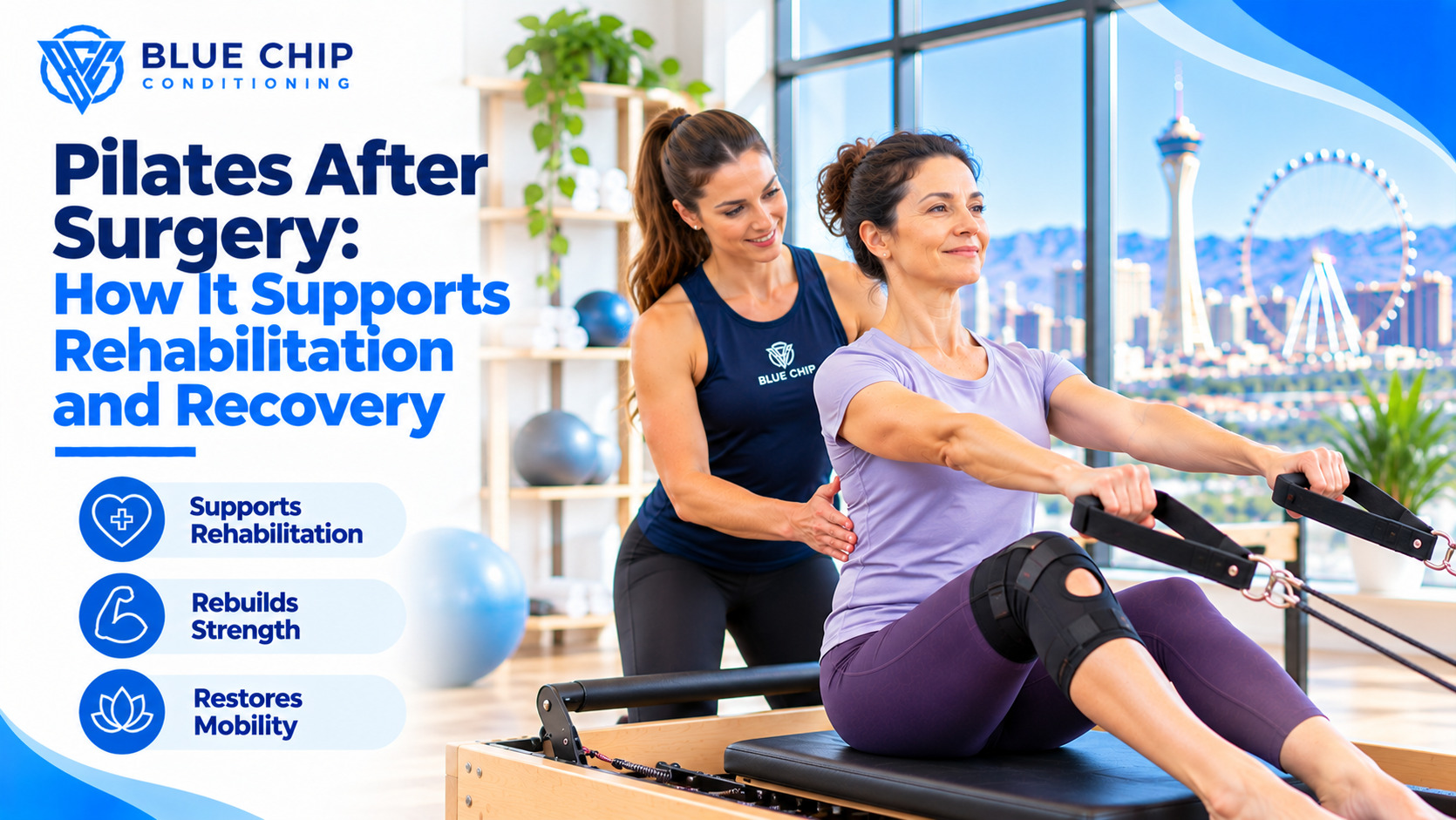
Returning to exercise after an operation can feel daunting, and Pilates after surgery is one of the most controlled, adaptable ways to rebuild strength and confidence once your medical team gives you the green light. Its low-impact, spring-supported movements let you work around restrictions while still training the whole body. This guide explains when Pilates after surgery is appropriate, how it supports rehabilitation, which exercises suit each phase, what a first session looks like, the warning signs to watch for and how to choose the right instructor.
Why Pilates After Surgery Fits Rehabilitation
Pilates has roots in rehabilitation. According to the history of Pilates, Joseph Pilates developed early versions of his apparatus while working with injured and bedridden people, attaching springs to beds so they could exercise against gentle resistance. That idea still shapes post-surgical Pilates today.
Several features make it especially useful:
- Adjustable resistance: Reformer springs can assist a movement or add light load, so exercises start very easy and progress gradually.
- Low impact: There is no jumping or pounding, which protects healing joints and tissues.
- Precision and symmetry: Single-sided work helps rebuild an operated limb that has weakened compared with the other side.
- Breath and core control: Coordinated breathing and deep abdominal engagement support the spine and help reduce guarding.
- Whole-body training: You can keep unaffected areas strong while the surgical site heals.
When Can You Start Pilates After Surgery?
There is no single timeline. The right moment for Pilates after surgery depends on the procedure, your health, how healing is progressing and your surgeon’s protocol. A minor arthroscopy and a spinal fusion, for example, follow very different paths, so comparing your schedule with someone else’s is rarely helpful.
The non-negotiable rule is clearance. Ask your surgeon or physical therapist directly whether you can begin structured exercise, which movements to avoid and whether any precautions apply, such as weight-bearing limits, range-of-motion restrictions or lifting limits. Bring those restrictions to your first session in writing if possible.
Pilates and Physical Therapy: Working Together
Pilates and physical therapy play different but complementary roles. Your physical therapist diagnoses, treats and supervises the early clinical phase. Pilates after surgery then extends that work, turning short post-operative rehabilitation exercises into a sustainable routine that keeps building strength after discharge.
| Recovery Phase | Who Leads | Main Goal | Pilates Role |
| Early post-op | Surgeon and physical therapist | Protect the repair, manage pain and swelling | Usually none, or breathing and gentle movement if approved |
| Clinical rehab | Physical therapist | Restore basic range and function | Optional private sessions that reinforce therapy, with approval |
| Transition | Therapist and Pilates instructor | Rebuild strength and confidence | Private or semi-private reformer work within restrictions |
| Return to activity | Pilates instructor | Full strength, mobility and resilience | Progressive sessions, eventually small group classes |
Keeping Pilates and physical therapy aligned is the safest way to progress. Share your therapist’s notes with your instructor, and ask your therapist to review any new movements if you are unsure.
How Pilates After Surgery Supports Recovery
Pilates for Mobility
Surgery and the inactivity that follows often leave joints stiff. Pilates for mobility restores range through slow, controlled movements, with springs supporting the limb so you can explore range without forcing it. Pilates for mobility also includes the spine and hips, which often stiffen when one area is protected.
Pilates for Rebuilding Strength
Muscles around a surgical site weaken quickly. Pilates for rebuilding strength uses progressive spring resistance to load those muscles gradually, often one side at a time, so the operated side catches up with the other. Pilates for rebuilding strength also trains the core and hips that support every movement.
Reformer Pilates for Rehabilitation
Reformer Pilates for rehabilitation is particularly valuable because the carriage and springs allow lying-down and supported positions. Footwork lying on your back, for instance, can strengthen the legs before you are ready to load them in standing. Reformer Pilates for rehabilitation then progresses to kneeling and standing work as healing allows, which is where sessions start to feel like real training again.
Confidence and Body Awareness
Many people feel nervous about moving after an operation. Pilates rebuilds trust in the body through small, successful movements, and the focus on alignment helps you notice and correct the compensations that often develop while protecting a painful area.
Benefits Beyond the Surgical Site
Recovery affects more than the operated area. Weeks of reduced activity can lead to general deconditioning, tight hips from extended sitting and a loss of overall stamina. Pilates keeps the rest of the body working while the repair heals, so you are not starting from zero once full clearance arrives. Many people also find that the calm, breath-focused structure of Pilates helps them feel more in control during a period that can be physically and emotionally tiring.
Considerations by Type of Surgery
Every surgery carries its own precautions, so these are general considerations rather than instructions:
- Knee surgery: Footwork and bridging are common early choices, while deep knee bending and kneeling may be limited at first. Familiar post-operative rehabilitation exercises such as quad and glute activation translate naturally to the reformer.
- Hip replacement: Some surgical approaches come with precautions on hip bending, crossing the legs or rotation. Your instructor must know which apply to you.
- Spinal surgery: Early phases often limit spinal flexion, twisting and lifting, so neutral-spine core work and breathing come first.
- Shoulder surgery: Range is usually restored in stages, with supported arm work long before loaded or overhead movement.
- Abdominal surgery or C-section: Rebuild deep core control gradually and watch for doming of the abdomen during exercise.
Safe Exercises After Surgery: Where to Begin
Once you are cleared, safe exercises after surgery usually share the same qualities: supported positions, light resistance, small ranges and slow tempo. Typical starting points include diaphragmatic breathing, pelvic tilts, gentle bridging, supine leg slides, supported footwork on the reformer and scapular setting for the upper body.
These are not glamorous, but they lay the foundation. Pilates after surgery is about building good movement patterns first and intensity later. As tolerance improves, your instructor adds springs, range and complexity, always within your provider’s guidance. Choosing safe exercises after surgery also means respecting how you feel the next day, not only during the session.
A Typical Progression for Pilates After Surgery
Progress is individual, but most well-planned programs follow a similar arc. Early sessions focus on breathing, posture and gentle activation in lying positions. Middle sessions introduce light spring resistance, single-sided strength work and a larger range of motion. Later sessions add standing balance, kneeling exercises and more complex full-body movements, eventually preparing you for small group classes.
Your instructor should explain why each step is added and what signs show you are ready for the next one. If an exercise causes increased pain or swelling, the program steps back rather than pushing through.
What to Expect in Your First Session
A first session of Pilates after surgery should feel careful and unhurried. Your instructor reviews your surgery, date, restrictions and current symptoms, then checks comfortable range and basic strength. You will learn breathing and core engagement before any loaded movement, and you will be asked for feedback throughout. Expect mild muscle fatigue, not increased pain, and share how you felt the following day at your next appointment. Keeping a short note of each session helps both you and your instructor see how Pilates after surgery is progressing from week to week.
Warning Signs to Stop and Call Your Provider
Pilates after surgery should never cause sharp or increasing pain. Stop and contact your medical team if you notice:
- Increasing pain, swelling, warmth or redness around the incision or joint
- Fever, drainage or changes in the wound
- New numbness, tingling or weakness
- Calf pain or swelling, chest pain or shortness of breath, which need urgent medical attention
Choosing the Right Studio
Pilates for post-surgery recovery is only as good as the coaching behind it. Look for instructors with comprehensive certification and experience with post-surgical clients, a studio that offers private and semi-private sessions, and a willingness to work within your provider’s restrictions. At Blue Chip Conditioning in Las Vegas, Pilates for post-surgery recovery typically begins one-on-one, with group classes capped at eight people once you are ready to progress.
Before booking with any studio, ask these questions:
- Has the instructor worked with clients recovering from your type of procedure?
- Will sessions follow your surgeon’s and therapist’s written restrictions?
- Are private sessions available for the early transition phase?
- How will progress be tracked and communicated?
Why Guided Instruction Makes a Difference
After an operation, the body compensates almost automatically, and that is the biggest obstacle to a full recovery. Without feedback, many people favor the unaffected side, hold their breath or brace through the neck and back, which can slow healing and create new strain elsewhere. Hands-on cues help you feel the difference between protecting an area and genuinely using it again.
At Blue Chip Conditioning in Las Vegas, instructors emphasize hands-on corrections and tailor each session to the client’s goals, history and restrictions. In semi-private sessions, an instructor can adjust springs and positions in real time, while group reformer classes let you keep training alongside others once you are ready for less individual attention. For condition-specific guidance, read Pilates for Hip Pain in Las Vegas and Pilates for Shoulder Rehab in Las Vegas, which explain how the studio adapts reformer work to two of the most common surgical recoveries.
Frequently Asked Questions
Is Pilates good after surgery?
Yes, Pilates after surgery can be very effective once your surgeon or physical therapist clears you for exercise. It is low impact, uses adjustable spring resistance and can be adapted around restrictions. It helps restore mobility, rebuild strength and improve confidence, especially when it complements formal physical therapy.
How soon can I start Pilates after surgery?
It depends entirely on the procedure, your healing and your surgeon’s protocol. Some people begin gentle, approved movement within weeks, while others wait months. Never set the timeline yourself. Ask your surgeon or physical therapist when structured exercise is safe and which movements to avoid.
Can Pilates replace physical therapy after surgery?
No. Physical therapy provides clinical assessment, treatment and supervision that a Pilates instructor cannot. Pilates after surgery works best alongside or after therapy, reinforcing your post-operative rehabilitation exercises and continuing progress once you are discharged. Keep both your therapist and instructor informed.
Is reformer Pilates safe after knee or hip replacement?
Reformer Pilates can be safe after knee or hip replacement when your surgeon approves it and your instructor follows your precautions. Supported footwork and bridging are common early exercises. Certain hip positions may be restricted depending on the surgical approach, so share your precautions before the first session.
What are the safest Pilates exercises after surgery?
Safe early exercises usually include diaphragmatic breathing, pelvic tilts, gentle bridging, leg slides and supported reformer footwork. They use small ranges, light resistance and supported positions. Your provider’s restrictions always take priority, and an instructor should adapt each exercise to your specific procedure.
Should I do private or group Pilates after surgery?
Private sessions are usually best at first, because an instructor can tailor every movement and watch for compensation. Once you have built strength and understand your limits, semi-private sessions and then small group classes are a natural progression for Pilates for post-surgery recovery.
What should I tell my Pilates instructor after surgery?
Share the type and date of surgery, your surgeon’s and therapist’s restrictions, current symptoms, medications that affect balance or energy, and your goals. Written notes from your provider help. This information allows your instructor to plan sessions safely and progress at the right pace.
Conclusion
Recovery does not end when the stitches come out or therapy finishes. Pilates after surgery offers a controlled, adaptable bridge from clinical rehabilitation back to full strength, combining mobility, progressive resistance and careful technique. The essentials are simple: get clearance, start in a supported setting, communicate openly and progress steadily. Done this way, Pilates after surgery can help you return stronger and more confident than before.
If your surgeon or therapist has cleared you for exercise and you are in Las Vegas, start with a private session so an instructor can review your restrictions and goals before planning Pilates after surgery around them. Book a session with Blue Chip Conditioning or call (702) 848-2583 to discuss a safe starting point for your recovery.