
Introduction
Lower body training has changed a lot in the last few years. People no longer want workouts that only leave them tired; they want sessions that improve control, movement quality, and visible performance at the same time. That is where pilates moves for legs stand out. The method focuses on precision, posture, and deep muscular engagement, which makes it a serious option for anyone looking to build a stronger and more functional lower body.
Traditional gym routines can still be useful, but they often rely on heavier load, repetitive effort, and isolated force. Pilates works differently. It teaches the body how to move with intention, how to stay stable under tension, and how to use smaller support muscles that often get ignored. That difference is why pilates moves for legs can feel more complete, especially for people who want results that carry over into daily movement, not just the gym floor.
Why Lower Body Training Needs a Smarter Approach
Leg training is often treated like a numbers game. More weight, more reps, more fatigue. But the body does not always respond best to that formula, especially when movement quality is already limited by sitting, stress, or old compensation patterns. Strong legs are important, but controlled legs are what keep the hips, knees, and ankles working properly.
Pilates changes the equation by asking the muscles to work in a more organized way. When a movement is done with control, alignment, and breath, the body begins to recruit the right muscles more efficiently. That is a big reason pilates moves for legs are useful for people who want balance as much as strength. The lower body learns to stabilize, not just push. That is one of the clearest ways pilates moves for legs separate themselves from simple leg-burning routines.
This approach also helps people who feel tight, disconnected, or uneven from side to side. A workout that improves awareness can reveal weaknesses that a standard gym routine may miss. Over time, that awareness becomes part of the training result itself.
How Pilates Builds Stronger Legs Without Excess Strain
A lot of leg programs create stress first and improvement later. Pilates is different because it builds strength through repeated control rather than brute force. That makes it particularly appealing for people who want lower-body development without unnecessary joint pressure. The muscles work hard, but the pattern is clean and deliberate. In many cases, pilates moves for legs create more carryover than a workout that only chases fatigue.
With pilates moves for legs, the body is asked to stay centered while the limbs move through space. That creates a better connection between the core and the lower body. When that connection improves, force travels more efficiently through the hips and legs. The result is not just stronger muscles, but better mechanics. That is the practical promise of pilates moves for legs when they are used with consistency.
This is one reason people often notice an improved “feel” in movement before they notice visible changes. Walking, stair climbing, squatting, and standing for long periods can all become easier when the legs know how to support the body properly. Pilates develops that kind of usable strength.
Core Qualities That Make the Method Different
Pilates is not only about the legs. It is about how the legs connect to the pelvis, trunk, and feet. That whole-chain approach is one of the biggest reasons the method works so well. It improves the mechanics behind strength, which is often where true progress starts.
1) Better alignment
Alignment is one of the biggest hidden factors in lower-body performance. If the hips tilt, the knees collapse inward, or the feet lose contact with the floor, the legs cannot work efficiently. Pilates moves for legs help the body stay stacked and organized, which gives every repetition more value.
2) Controlled range of motion
Moving through a full range is useful only when the body can control that range. Pilates teaches the muscles to stay active in both shortened and lengthened positions. That is why pilates leg exercises often feel challenging even when they do not use heavy resistance.
3) Better balance under load
Balance is not just about standing on one foot. It is about controlling small shifts in pressure through the body. Pilates trains that skill in a very practical way. Over time, the legs become more reliable because the body learns how to adjust without losing form.
4) Joint-friendly intensity
Many people need a lower-impact training method they can repeat consistently. Pilates offers that. The work is still demanding, but it usually avoids the sharp impact and excessive compression that can come with other forms of leg training. That helps build consistency, and consistency drives results.
What Happens During Pilates Leg Work
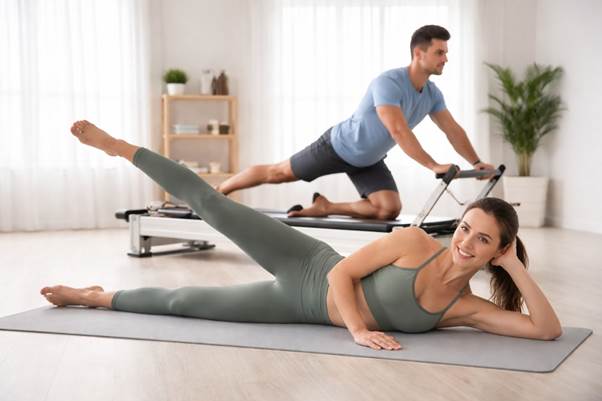
When the lower body is trained through pilates moves for legs, the muscles are not simply pushed to exhaustion. They are trained to stay attentive. That difference matters. Attention improves quality. Quality improves efficiency. Efficiency leads to better movement.
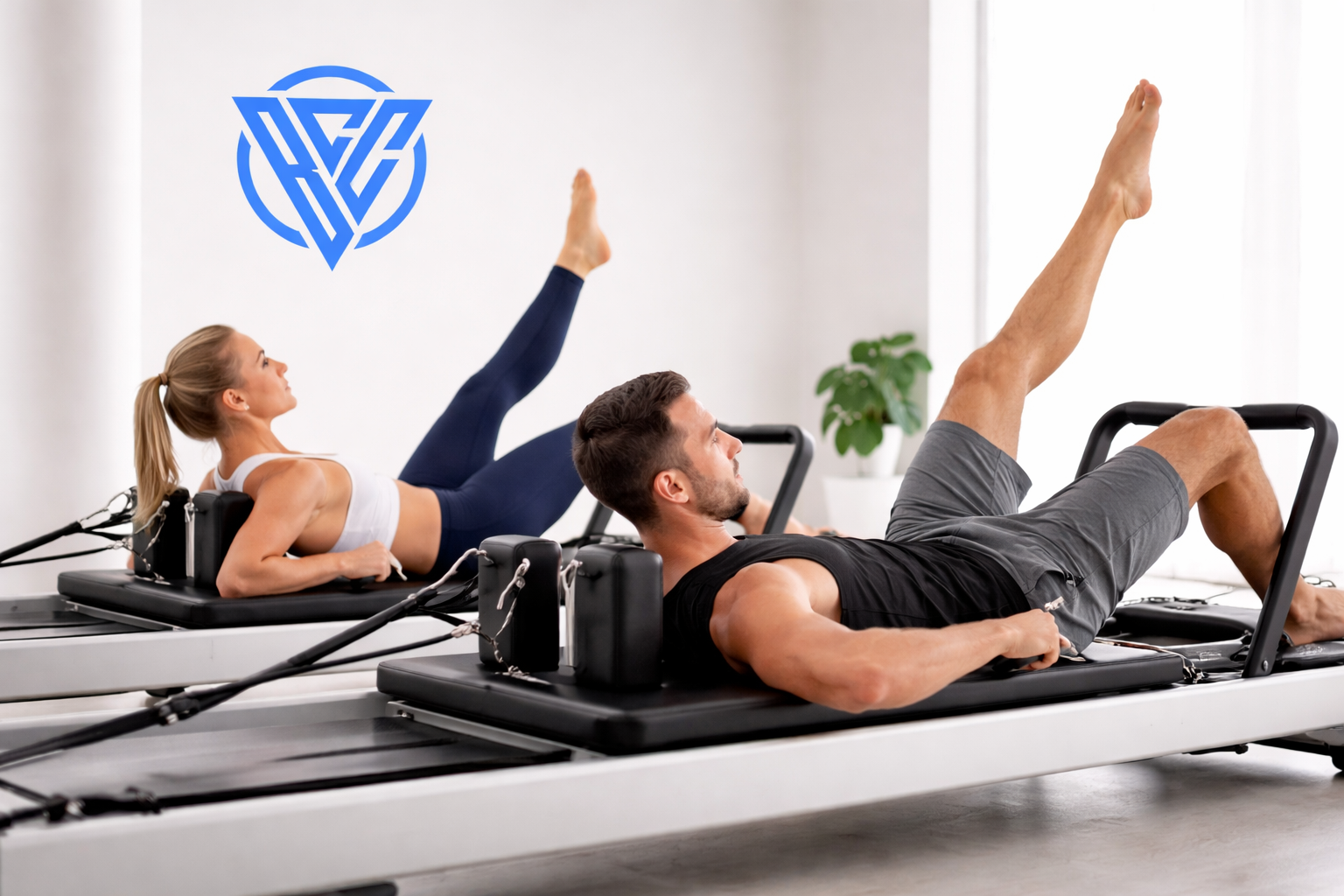
A typical Pilates-based leg session may ask the inner thighs to stabilize, the glutes to support the pelvis, the hamstrings to control motion, and the calves to assist with balance. At the same time, the core stays engaged so the body does not wobble through the task. That whole-body participation is what makes the work feel deeper than a basic leg circuit.
The exercises may look simple from the outside, but they often demand more control than people expect. That is also why the method can expose weak links quickly. If one side is stronger than the other, or if the pelvis shifts during movement, the body usually tells on itself fast. That feedback is useful because it helps people improve before poor mechanics become routine.
Why the Results Often Show Up Faster
Results are not only about muscle size. They are also about how quickly the body moves better. Pilates is effective because it creates meaningful change in both areas. When the nervous system learns a cleaner movement pattern, the body often starts to feel better almost immediately. That early improvement creates momentum.
Pilates also supports repeat training. Since the sessions are generally lower impact, many people can train more often without being overly sore or worn down. That matters more than many people realize. A method that can be repeated consistently usually beats a method that feels heroic once and impossible twice. Pilates moves for legs fit that model very well.
Another reason the results can feel faster is that Pilates tends to tighten the gap between weakness and awareness. A person may realize one hip is not stabilizing well, or one leg is not tracking cleanly. Once that is corrected, movement changes quickly. It is not magic. It is precision.
Practical Benefits for Strength, Balance, and Flexibility
The value of Pilates becomes clearer when you break it into practical outcomes. Strength is important, but so is how that strength behaves in the body. A lower body that is strong but rigid is not as useful as one that is strong and adaptable.
- Strength: Pilates builds endurance in the glutes, thighs, and stabilizers without depending on heavy external load.
- Balance: The method teaches the body how to remain steady during shifting positions, which helps in both training and daily movement.
- Flexibility: Muscles become more usable at their end range, which supports smoother, less restricted motion.
- Coordination: The legs, core, and feet learn to work together instead of competing for control.
That combination is why pilates moves for legs can be such an efficient training tool. They do not isolate the lower body from the rest of the system. They improve the entire movement chain.
Why Pilates Can Outperform Standard Leg Days for Many People
A traditional gym leg day can be excellent for building force, but it often emphasizes output more than quality. That works for some goals, yet it can be too aggressive for people who need better movement mechanics, more recovery, or a smarter approach to consistency. Pilates fills that gap.
Pilates leg training is especially effective for people who sit a lot, train inconsistently, or have felt stiffness in the hips and knees. It gives the body room to correct bad habits while still building visible lower-body conditioning. That is where pilates leg exercises become especially valuable. They improve the way the muscles work together instead of just exhausting them separately.
There is also a long-term advantage. When movement quality improves, workouts start to feel more productive. The body wastes less energy fighting itself. Over time, that can mean better performance in other training styles too. Pilates is not only a standalone method; it can also support almost every other fitness approach.
How to Get More From Pilates Leg Training
Getting better results is not about doing everything faster. It is about doing the right things with enough control and repetition for the body to adapt. The details matter. Breathing, posture, foot placement, and tempo all influence how well the lower body responds.
One useful way to think about pilates moves for legs is that each repetition should create a signal, not just a burn. The signal tells the body how to organize itself. When that signal is repeated consistently, the muscles become more coordinated and responsive. That is why small technical improvements can lead to big changes over time.
The same idea applies when using pilates performer workout styles in a structured program. The goal is not to rush through the session or chase exhaustion. The goal is to train with enough concentration that the body learns something from every movement. That mindset is what separates casual exercise from useful conditioning.
Smart ways to improve the session
- Keep the pelvis steady so the legs do the work cleanly.
- Use slower tempo when the goal is control and deeper activation.
- Pay attention to the standing foot and how pressure shifts.
- Stop chasing momentum; make the muscles stay present through every phase.
These small adjustments may seem simple, but they improve the value of each session. In Pilates, simple rarely means easy.
Where This Fits in a Modern Fitness Plan
A good fitness plan should make the body more capable, not just more tired. That is why Pilates has become such a strong addition to modern training. It helps fill the gaps left by higher-load work, faster-paced cardio, and movement habits that often ignore alignment. Pilates moves for legs are useful because they improve the quality of lower-body work without demanding a full recovery cycle every time.
For athletes, this can support performance by improving control, foot stability, and hip mechanics.For general clients, it can improve everyday movement and reduce that tight, compressed feeling that so many people carry in their lower body.For people recovering from poor training habits, it can be the bridge back to better movement confidence.
This is where pilates performer workout style sessions can also add value. They create a more athletic feel without losing the precision that makes Pilates unique. When combined properly, the body gets both coordination and challenge. That is a strong one for long-term conditioning. For many clients, pilates moves for legs become the part of training that keeps everything else performing better.
What Makes the Experience Feel Different
Many workouts focus on effort in the moment. Pilates focuses on quality during the moment and benefit after it. That difference changes how the body reacts. Instead of leaving the session feeling crushed, many people leave feeling longer, lighter, and more connected. The legs may still be tired, but the fatigue has a different quality. It feels controlled rather than chaotic.
This is one reason pilates leg exercises are often recommended for people who want practical strength with less wear and tear. They do not remove challenge. They refine it. The lower body still has to work. It simply works in a more intelligent way. That is a powerful distinction, especially for people who have done enough random hard training and want something that finally feels structured.
The emotional benefit matters too. When a workout feels organized, people are more likely to stay with it. That leads to consistency, and consistency is where transformation actually happens. Strength, balance, and flexibility improve most when the work can be repeated with focus.
Conclusion
Pilates offers a modern answer to lower-body training because it respects how the body actually works. It does not treat the legs as separate machines to exhaust. It trains them as part of a connected system that includes the core, hips, feet, and posture. That is why pilates moves for legs can transform strength, balance, and flexibility in a way many traditional gym workouts do not. In practice, pilates moves for legs often give the body a cleaner training signal than rushed, high-volume routines.
The value is not just in looking stronger. It is in moving better, recovering better, and building a body that feels more capable in real life. When training is precise, the results often become more durable. That is exactly the kind of approach supported atBlueChip Conditioning, where the focus stays on smart conditioning, better movement, and practical performance outcomes. For anyone who wants a lower-body routine that is efficient, controlled, and genuinely useful, this method deserves serious attention.
FAQs
1. Are pilates moves for legs good for beginners?
Yes, they work very well for beginners because the movements can be scaled easily. The focus is on control, posture, and clean execution, so new clients are not forced into heavy impact or advanced loading right away. That makes the learning curve manageable and productive.
2. How often should I train legs with Pilates?
For most people, two to four sessions per week is a practical range. That gives the body enough repetition to adapt without overwhelming recovery. Consistency matters more than intensity, especially when the goal is better lower-body control and strength.
3. Can Pilates really improve flexibility and balance at the same time?
Yes, and that is one of its biggest strengths. The exercises ask the muscles to stay active while moving through range, so flexibility becomes more usable instead of passive. Balance improves because the body learns to stabilize during those controlled transitions.
4. Is Pilates enough on its own for leg strength?
It can be enough for many people, depending on their goals. Pilates develops endurance, stability, and functional strength very well. More advanced athletes may still combine it with other training, but Pilates adds a quality layer that is often missing in traditional routines.
5. What is the difference between Pilates and a regular gym leg workout?
A gym leg workout often emphasizes load, repetition, and fatigue. Pilates emphasizes alignment, control, and connection between the lower body and core. Both have value, but Pilates usually gives the body a more organized movement pattern and less joint stress.
6. Why do people feel Pilates in their legs so deeply?
Because the movements ask the smaller stabilizing muscles to stay active for longer. Even when the motion looks small, the body is working to control posture, resistance, and balance. That sustained effort creates a deep and very specific kind of lower-body engagement.
7. Can Pilates support other sports or fitness goals?
Absolutely. Pilates improves posture, mobility, and movement efficiency, all of which help other forms of training. Whether the goal is running, lifting, recovery, or general conditioning, the lower body often performs better when these movement patterns are in place.