
Here’s something most beginners never realize: the exercises in a group class and a private session can be nearly identical. The teaching almost never is. That gap is where the best Pilates instructors prove their skill. Same reformer, same moves — but a completely different way of guiding you through them.
Understanding that difference helps you choose the right format. It also helps you spot a truly great teacher from an average one. Because a skilled instructor doesn’t just run a routine. They read the room or the person in front of them, then adjust everything to fit. That’s the real skill behind the best Pilates Vegas studios, and it’s rarer than the marketing suggests.
So let’s break down exactly what changes between the two formats. You’ll see how cueing, corrections, programming, and pacing all shift — and how to tell whether your instructor is really adapting or just running the same script on repeat.
| Quick answer In group classes, the best Pilates instructors use broad, repeatable cues and scan the room to catch big form errors. In private sessions, they use specific, hands-on cues and build the entire workout around one body. The exercises overlap; the coaching depth does not. |
How the Best Pilates Instructors Change Cueing by Format
Cueing is how an instructor tells your body what to do. It’s the heart of good teaching. And it shifts hard between the two formats, because the audience changes.
Group Cues: Broad, Repeatable, Scannable
In a group, one voice guides many bodies. So cues have to work for everyone at once. A good instructor uses clear, simple language that lands across the room. “Draw your ribs down.” “Press evenly through both feet.” These cues are broad on purpose. They’re also repeatable, so the instructor can say them while scanning ten people. The skill here is picking cues that help the most bodies at the same time.
There’s an art to this that’s easy to miss. A great group cue solves the most common error before it spreads. If half the room tends to shrug their shoulders, the instructor calls it out early for everyone. So one smart cue fixes many people at once. Weak instructors, by contrast, just count reps and hope. The difference shows up fast in how the room moves.
Private Cues: Specific, Real-Time, Individualized
A private session flips the script. Now the instructor speaks only to you. So the cues get personal and precise. Instead of a general reminder, you hear exactly what your body needs. “Your left hip is hiking — soften it.” “Drive more through your right heel.” These cues respond to what the instructor sees in real time. That precision is why private work fixes stubborn habits fast.
Private cueing also builds on itself. Once the instructor learns your quirks, they stop repeating fixes you’ve already mastered and move to the next layer. So the coaching keeps advancing week after week. In a group, an instructor can’t track that history for ten people at once. This is the core reason private sessions correct deep, personal habits so much faster than a busy class can.
How Corrections Work Differently in Each Format
Cues tell you what to do. Corrections fix what you’re doing wrong. And the correction method changes completely between a full room and a single client. Both formats need corrections. But how the instructor delivers them looks nothing alike.
Scanning the Room vs. Hands-On Adjustment
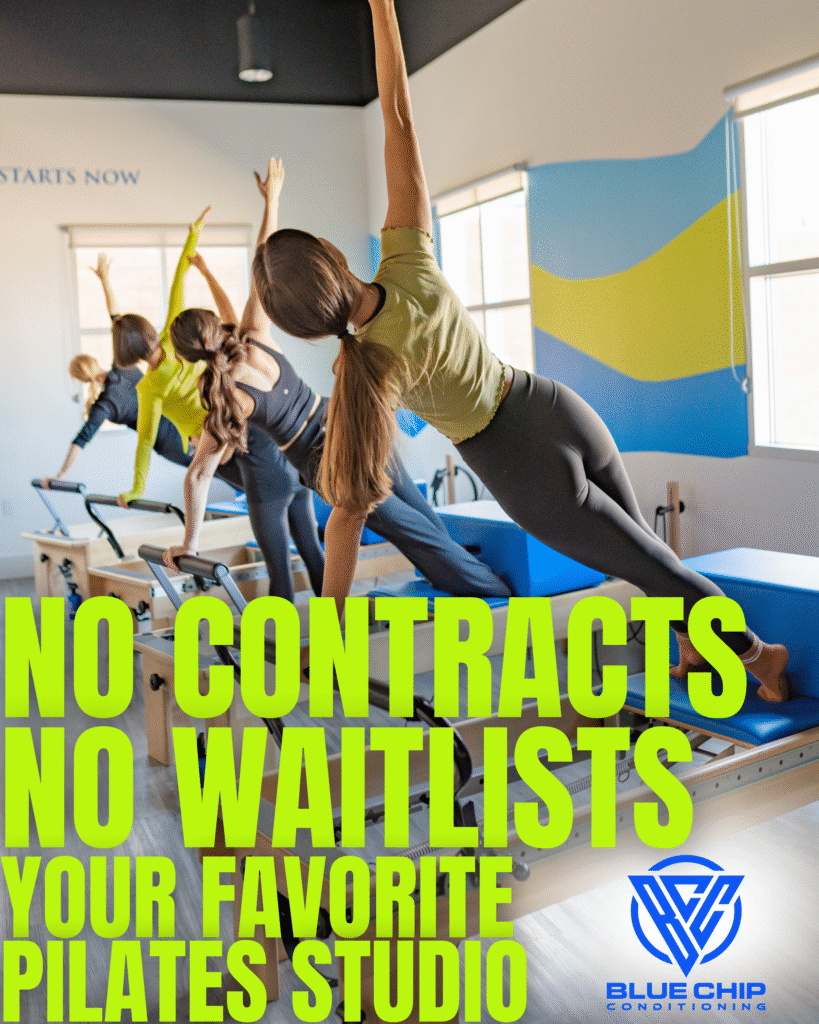
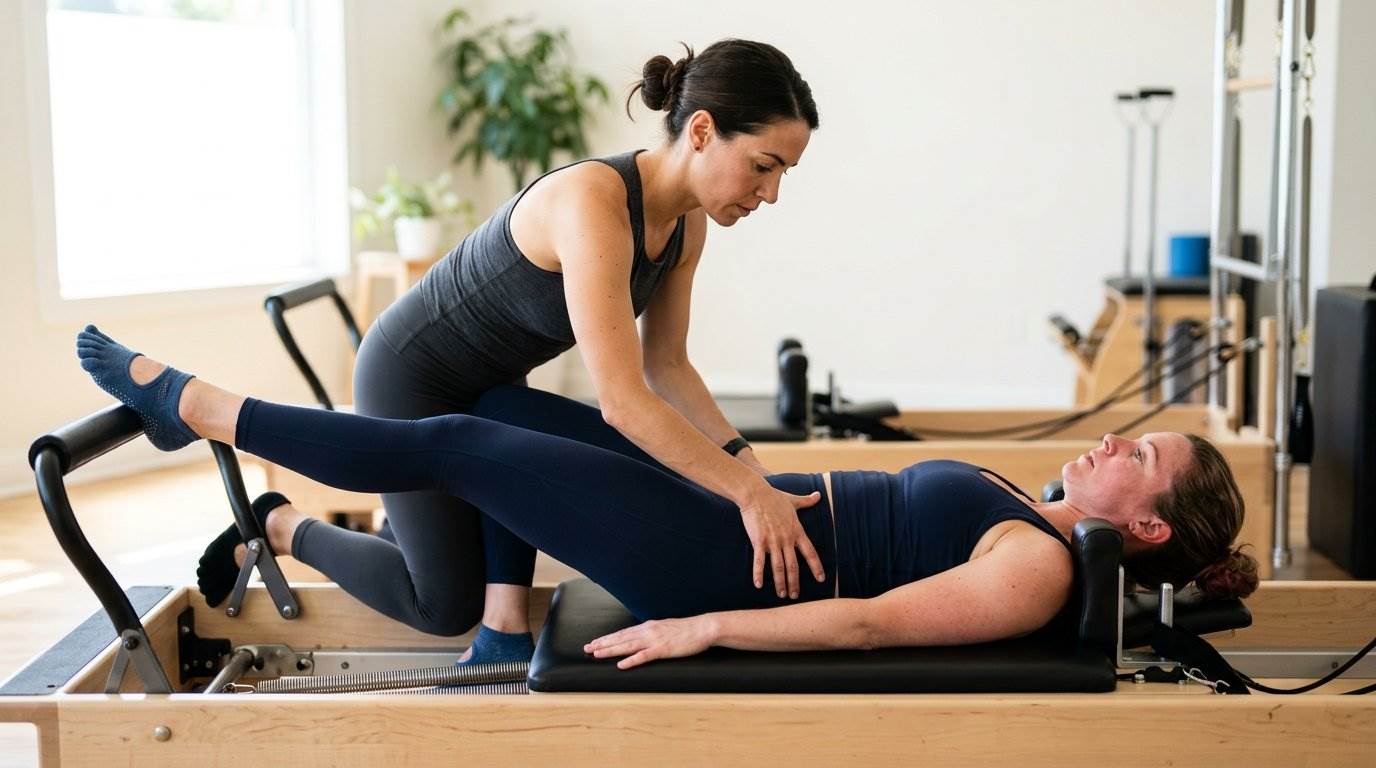
In a group reformer class, the instructor works by scanning. Their eyes move constantly, hunting for the biggest safety issues first. They’ll call out a name or offer a quick verbal fix. In a private session, they can put hands on. A light touch on your shoulder or hip guides the movement far better than words alone. So private clients often correct faster, simply because the feedback is physical.
Touch works because your body understands it instantly. A words-only cue makes you think, then translate, then move. A gentle hand on the right spot skips all that. You just feel where to go. So a single well-placed correction in a private can fix a habit that verbal cues chased for weeks. That’s the quiet power of one-on-one attention.
What Gets Missed in Group Settings – and How Good Instructors Compensate
Let’s be honest: a group setting can’t catch everything. With ten bodies moving, small errors slip by. But strong instructors have tricks to close that gap. They demo the move clearly. They repeat the highest-value cues. They position themselves where they can see the most people. And they build in moments to walk the room. So while group work misses more than private work, a great teacher keeps that gap small.
Smart studios also cap class size for this exact reason. A room of six gets far more attention than a room of fifteen. So when you shop for pilates classes in Las Vegas, ask about the numbers. A smaller group means the instructor can actually see you, correct you, and keep you safe. That single detail often matters more than the studio’s fancy equipment. The best Pilates instructors tend to work where the rooms stay small.
Programming: One Plan for the Room vs. One Plan for the Person
Programming is the workout’s blueprint. It decides which exercises you do, in what order, at what intensity. This is where the two formats split most sharply.
How Group Programming Is Built to Scale
A group plan has to fit many bodies at once. So the best instructors design pilates classes in Las Vegas with built-in options. Every exercise gets an easier version and a harder one. A beginner and an advanced client can do the same move at different levels. That flexible design keeps the whole room challenged and safe. It takes real skill to build a plan that scales that cleanly.
The sequencing matters too. A good group plan flows logically, warming the body before it asks for hard work. It balances push and pull, and it leaves the room feeling worked but not wrecked. So even though one plan serves everyone, a thoughtful instructor makes it feel purposeful. The best group classes never feel random. They feel designed, because they are.
How Private Sessions Are Built Around One Body’s Needs
A private plan starts from a blank page. The instructor asks about your goals, your injuries, and your history. Then they build a session that targets exactly what you need. Got a tight lower back? The whole plan works around it. Training for a sport? Every move ties to that. Nothing is generic. This is why private sessions feel so tailored — because they are.
The plan also changes session to session. If last week revealed a weak left side, this week hammers it. If your back finally loosened up, the plan moves on. So a private client never repeats the same tired routine. Each hour builds on the last. That steady, personalized progression is hard to match in a room built to serve everyone at once.
Pacing and Energy Management in Each Format
Pacing is the rhythm of a session. Too fast and people break form. Too slow and they lose focus. Managing that flow is an underrated instructor skill. And like everything else, it changes depending on how many people the instructor is guiding.
Reading a Room vs. Reading One Person
A group has a collective energy. A good instructor feels it. If the room is flagging, they add a beat of rest or a quick cue of encouragement. If it’s fired up, they push a little harder. A private session is different. Here, the instructor tracks one person’s breath, focus, and fatigue. So they can slow down the instant you tire, or add work the moment you find your groove. Both take skill — just different kinds.
Get the pacing wrong and the whole session suffers. Rush a tired room and form falls apart. Drag out a fired-up one and people check out. So a strong instructor is constantly adjusting the tempo, almost without you noticing. In a private, that tuning is even finer, because they only have to read one person. This quiet rhythm control is one of the most underrated instructor skills there is, and it separates the best Pilates instructors in Pilates Vegas rooms from the clock-watchers.
What This Means for Beginners Choosing Between Formats
So which should you pick? It depends on your body, your goals, and your confidence. There’s no universally “better” option — only the one that fits where you are right now. Here’s a simple way to decide.
Signs You’d Benefit From a Private Session First
Some people should start one-on-one. Consider a private start if any of these fit you:
- You’re recovering from an injury or managing chronic pain.
- You’ve never done Pilates and feel nervous about the reformer.
- You have a specific goal, like sport performance or post-surgery rehab.
- You learn best with direct, hands-on feedback.
Signs You’re Ready for Group Classes
Others can jump straight into a group. You’re likely ready if these sound like you:
- You’re generally healthy with no major injuries.
- You already understand basic Pilates form and reformer setup.
- You enjoy the energy and motivation of working out with others.
- You want a lower cost per session than private work.
Still unsure? A semi-private session splits the difference. You get personal attention with a small group and a friendlier price. Many people in pilates Vegas studios use it as the perfect bridge between private and full group classes.
How to Tell If Your Instructor Is Actually Adjusting – Or Running the Same Script
Not every teacher adapts. Some just press play on the same routine every week. So watch for the signs of real coaching. A great instructor changes cues based on what they see. They correct you by name. They tweak the plan when your body needs it. If you never get a personal cue or correction, that’s a warning sign. For a deeper check, this list of 7 non-negotiables before your first Pilates class helps you judge instructor quality fast.
Here’s a quick test you can run in any class. Did the instructor say your name? Did they give you a cue meant only for you? Did the plan shift when someone struggled? If yes, you’ve found a real coach. If the session felt identical to last week’s, with zero personal feedback, you’re just following a recording with a live face. The best pilates classes in Las Vegas always leave you feeling seen. Great teaching leaves fingerprints. Look for them.
The Format Matters Less Than the Teacher
Here’s the real takeaway. Group and private classes both work. The exercises may even match. What separates a good workout from a great one is the instructor’s ability to adjust — to cue, correct, program, and pace for the people in front of them. So when you compare pilates classes in Las Vegas, don’t just chase a format. Chase skilled teaching.
Want to feel that difference for yourself? Book a session with the Blue Chip Conditioning team and see how real, responsive coaching changes your results.
FAQ: Group vs. Private Pilates Instruction
Is private Pilates more effective than group classes?
It’s more personalized, so it fixes form and targets specific goals faster. Group classes, though, are highly effective too and cost less. The best choice depends on your goals and budget.
Do the same instructors teach both formats?
Often, yes. Skilled instructors teach both, but they shift their cueing, corrections, and pacing to fit each setting. At most Pilates Vegas studios, the teaching style changes even when the teacher doesn’t.
How do I know if I need private instruction first?
Start private if you have an injury, a specific goal, or first-time nerves. If you’re healthy and comfortable moving, a beginner-friendly group class works fine.
Can I switch between formats later?
Absolutely. Many people start with a few private sessions to learn the basics, then move into group classes. Others mix both every week.
What’s the benefit of a semi-private session?
It blends personal attention with a small-group price. You get more correction than a full class but pay less than a one-on-one private. For many people, it’s the ideal middle step — personal enough to fix your form, affordable enough to attend often.