
The Pilates vs Lagree question comes down to intensity and intent. Both use spring-loaded machines and controlled movement, but Pilates prioritizes precision, alignment and adaptability, while Lagree is built around sustained, high-intensity muscular fatigue. This article explains where the two methods overlap, how their tempo, equipment and muscle focus differ, which is better suited to injury recovery or athletic performance, and how to choose the right fit in Las Vegas.
Same roots, different intensity
Pilates was developed by Joseph Pilates in the early twentieth century. The method centers on breath, core control, precision and flowing movement, and it was designed to be adapted to almost any body, including people recovering from injury. Today it is practiced on the mat and on apparatus such as the reformer, tower, chair and barrel.
The Lagree Method is much newer. Fitness trainer Sebastien Lagree developed it in Los Angeles in the 2000s, along with its signature machine, the Megaformer. He drew on elements of Pilates and combined them with ideas from strength and cardiovascular training, aiming for a workout that is low impact but extremely intense. Here is the Lagree method explained in one sentence: slow, controlled movements performed with minimal rest, designed to take muscles to fatigue without jumping or pounding.
That shared ancestry is why many people ask, is Lagree Pilates? The short answer is no. Lagree borrows some ideas and uses a machine that resembles a reformer, but it follows its own programming principles and its own instructor certification. Understanding the difference between Pilates and Lagree starts with recognizing that they are related, not interchangeable.
In any Pilates vs Lagree comparison, it helps to think of Pilates as a broad movement system and Lagree as one specific high-intensity format.
How the workouts differ
The clearest way to see the Lagree vs Pilates contrast is to look at three elements: tempo, equipment and muscle focus. Each shapes how a session feels and who it suits best.
Tempo and time under tension
Lagree is known for very slow repetitions, often several seconds each, with little rest between exercises. The goal is to keep muscles under continuous tension until they fatigue, which many people experience as shaking in the working muscles. Transitions are quick, so heart rate tends to stay elevated.
Pilates tempo varies with the exercise and the client. Some movements are slow and deliberate, others are rhythmic and flowing, and instructors pause to adjust setup or correct alignment. On tempo, the Pilates vs Lagree gap is clear: Pilates spends more time on quality of movement, while Lagree prioritizes accumulated tension.
Equipment: reformer versus megaformer
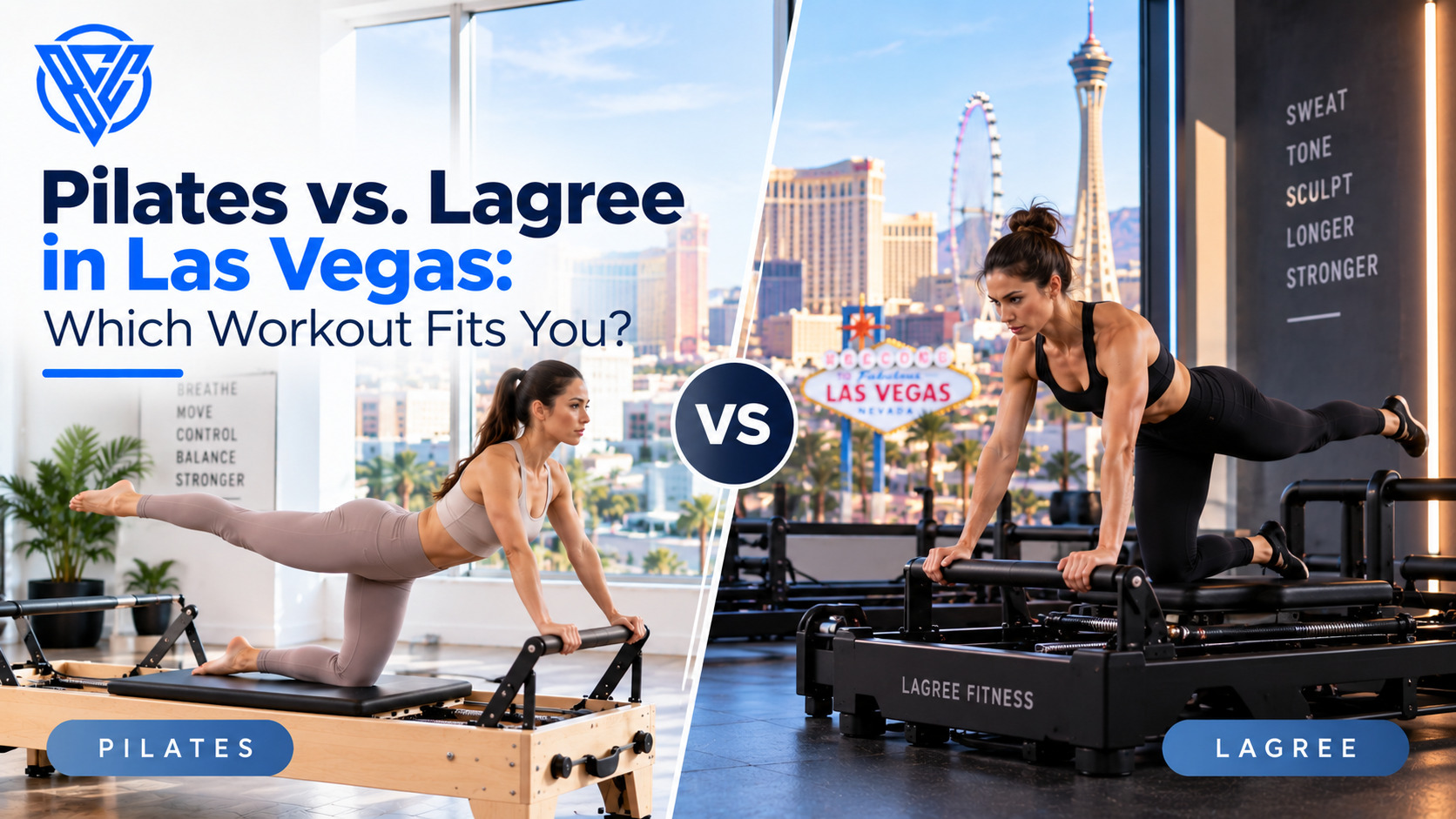
The Pilates reformer has a sliding carriage, foot bar, straps and springs. The Megaformer, built specifically for Lagree, has a longer frame with platforms at both ends, plus handles and cables that allow many exercises to be performed standing or moving across the machine. In a megaformer vs reformer comparison, the Megaformer is designed for continuous, high-output sequences, while the reformer supports a wider range of individualized work, from gentle rehab exercises to advanced repertoire.
Pilates studios also use apparatus such as the tower, chair and barrel, which give instructors more ways to address a specific limitation or muscle imbalance.
Muscle focus
On muscle focus, Pilates vs Lagree differs again. Lagree classes tend to emphasize large muscle groups in the legs, glutes and core, working them to fatigue. Pilates trains the whole body, with particular attention to deep stabilizing muscles, spinal mobility, posture and balanced strength on both sides of the body.
Lagree vs Reformer Pilates at a Glance
| Factor | Reformer Pilates | Lagree |
| Origin | Joseph Pilates, early 20th century | Sebastien Lagree, 2000s |
| Machine | Reformer, plus tower, chair and barrel | Megaformer |
| Tempo | Varies; controlled and flowing | Very slow, continuous tension |
| Rest | Pauses for setup and correction | Minimal rest between exercises |
| Primary focus | Precision, core stability, mobility, alignment | Muscular endurance and fatigue |
| Adaptability | Highly adaptable for injuries and all levels | Modifiable, but intensity is central |
| Best suited for | Rehab, posture, athletes, general fitness | Fit clients wanting an intense, low-impact session |
Anyone weighing Lagree vs reformer Pilates should notice that the biggest difference is not the machine itself but the intent behind each session.
Which is better for injury recovery
For most people returning from injury, Pilates is the more suitable starting point in the Pilates vs Lagree decision. Springs can assist rather than only resist, exercises can be performed lying down with reduced load, and instructors typically progress slowly while monitoring form. This is one reason many physical therapists use Pilates-based exercise in rehabilitation.
Lagree is low impact, but its defining feature, working to muscular fatigue, can be a poor match for tissue that is still healing. As muscles tire, movement patterns change, which can place extra strain on an injured joint.
If you are deciding between Pilates or Lagree for injury recovery, consider the following:
- Get medical clearance first, and ask your physician or physical therapist which movements to avoid.
- Choose individual attention; semi-private or private sessions let an instructor build a program around your injury rather than modifying a group class on the fly.
- Prioritize load control, so resistance and range of motion can be reduced easily, which reformer Pilates does well.
- Avoid a common mistake: returning to high-intensity classes too early because they feel low impact. Impact and intensity are not the same thing.
Once you have recovered and built a stable foundation, Lagree may become an option if you enjoy intense training. Choosing Pilates or Lagree for injury recovery is not permanent; the right answer depends on where you are in the healing process.
Which is better for athletic performance
In the Pilates vs Lagree debate, both methods can support athletes, but in different ways. Lagree builds muscular endurance and mental toughness under sustained load. Pilates develops core stability, mobility, balance and body awareness, qualities that carry over to jumping, sprinting, rotating and landing well.
Athletes often benefit most from Pilates programming that is specific to their sport. A golfer, tennis player and dancer each have distinct demands, and a skilled instructor can target asymmetries and weak links. Blue Chip Conditioning’s elite athlete development training is built around that principle. For athletes, the Pilates vs Lagree choice often favors Pilates for customization, with Lagree as an occasional conditioning supplement.
What Athletes Should Consider
- Sport-specific needs: rotational athletes benefit from mobility and oblique control, while jumpers need hip strength and stable landings.
- Recovery load: intense sessions add fatigue that must fit around practice and competition.
- Imbalance correction: single-side Pilates work can reveal and address differences between limbs.
- Season timing: higher-intensity conditioning may suit the off-season, while precision work supports in-season maintenance.
Finding the right fit in Las Vegas
Las Vegas has studios dedicated to both methods, so the Pilates vs Lagree choice is easy to test locally. If you are comparing Lagree Las Vegas studios with reformer Pilates options, try a class of each and notice how your body responds over the following days, not just during the session.
Blue Chip Conditioning is a reformer Pilates studio rather than a Lagree studio. It offers group reformer classes, semi-private and private sessions, and programs for dancers and athletes, with instructors who emphasize hands-on correction. To understand the megaformer vs reformer difference from the reformer side, a private session is an easy way to learn the machine before joining a group.
A Quick Way to Decide Pilates vs Lagree
- Choose Pilates if you are recovering from injury, want better posture and mobility, prefer personalized coaching, or are new to exercise.
- Choose Lagree if you are already fit and injury-free and want a fast-paced, intense, low-impact workout.
- Consider both if you enjoy variety; some people use Pilates for technique and recovery and Lagree for conditioning.
When you price Lagree Las Vegas classes, compare them against reformer memberships and intro offers, which at Blue Chip Conditioning include a $20 first group class for new clients. For more on how the Lagree vs Pilates choice fits alongside mat and private training, see our guide to reformer, mat and private Pilates classes.
Frequently asked questions
Is Lagree Pilates?
No. Lagree is a separate method created by Sebastien Lagree that draws on some Pilates principles but adds strength and cardio concepts, slower tempos and minimal rest. It uses its own machine, the Megaformer, and its own instructor certification, so it is not considered a style of Pilates.
What is the difference between Pilates and Lagree?
The main difference between Pilates and Lagree is intensity and intent. Pilates emphasizes precision, alignment, mobility and core control with varied tempo. Lagree uses very slow, continuous movements with minimal rest to push muscles to fatigue. Pilates is generally more adaptable for rehab, while Lagree focuses on endurance conditioning.
What is the Lagree method?
With the Lagree method explained simply, it is a high-intensity, low-impact workout performed on a Megaformer. Clients move slowly through exercises with little rest, keeping muscles under constant tension until they fatigue. Sessions typically emphasize the legs, glutes and core, and they tend to feel demanding even for fit clients.
Is a Megaformer the same as a reformer?
No. In a megaformer vs reformer comparison, the Megaformer is longer, has platforms at both ends and is designed for Lagree’s standing and transitional exercises. The Pilates reformer has a foot bar, straps and a sliding carriage built for a broad, adaptable repertoire. Both machines use springs for resistance.
Which is better for injury recovery, Pilates or Lagree?
In a Pilates vs Lagree comparison for rehab, Pilates is usually the better choice because springs can assist movement and exercises are easily modified. When choosing Pilates or Lagree for injury recovery, get clearance from your doctor or physical therapist first, and consider private or semi-private Pilates sessions for programming built around your specific injury.
Does Lagree burn more calories than Pilates?
In Pilates vs Lagree calorie comparisons, it depends on the class and the person. Lagree keeps heart rate elevated with minimal rest, so it often feels more demanding than a typical Pilates session. However, calorie burn varies with body size, effort and class design. For long-term results, choose the method you will practice consistently.
Can I do both Pilates and Lagree?
Yes. Pilates vs Lagree does not have to be an either-or choice. Many people combine them, using Pilates for technique, mobility and recovery and Lagree for high-intensity conditioning. Allow recovery time between intense sessions and let your instructors know about your routine. When balancing Lagree vs reformer Pilates, the right mix depends on your goals.
Conclusion
The Pilates vs Lagree decision is less about which method is better overall and more about what your body needs right now. Pilates offers precision, adaptability and whole-body control, making it the stronger choice for injury recovery, posture and sport-specific athletic work. Lagree offers intense, low-impact conditioning for clients who are already fit and injury-free. Is Lagree Pilates? No, but the two can complement each other well. With the Lagree method explained and the Lagree vs Pilates differences clear, the practical step is to try each, notice how you recover, and choose the one you will stick with. If you are exploring Lagree Las Vegas options, give reformer Pilates a fair comparison too. If you are still weighing Pilates vs Lagree and want a personalized starting point, Blue Chip Conditioning offers group reformer classes, semi-private and private sessions, and athlete-focused programs in southwest Las Vegas. Book an intro class or call 702-848-2583 to discuss which format suits your goals.