Most people picture athlete training as grunting, heavy weights, and loud music. A real Elite Athlete Development session looks nothing like that. It’s quiet, precise, and personal. So here’s the whole thing, start to finish, with no jargon – exactly what an athlete moves through when they train the smart way.
The goal isn’t to exhaust you. The goal is to make your body work better for your sport. That means less wasted motion, more usable power, and fewer injuries down the line.
At Blue Chip Conditioning, these sessions blend Pilates precision with sport-specific strength. As a pilates reformer studio Las Vegas athletes rely on, every hour is built around one athlete’s real needs that day. Let’s walk through it.
| Quick answer An Elite Athlete Development session is a personalized reformer-based workout that improves sport-specific strength, mobility, and control. A coach reads your body that day, adjusts spring resistance and exercises in real time, and finishes with recovery tools – all mapped to a longer performance plan. |
Before the Session Starts: The Check-In That Shapes Everything
Nothing begins until the coach knows how you feel. This check-in isn’t small talk. It’s the most important part of the hour, because it decides how hard you’ll push and where.
How Instructors Read Your Body That Day
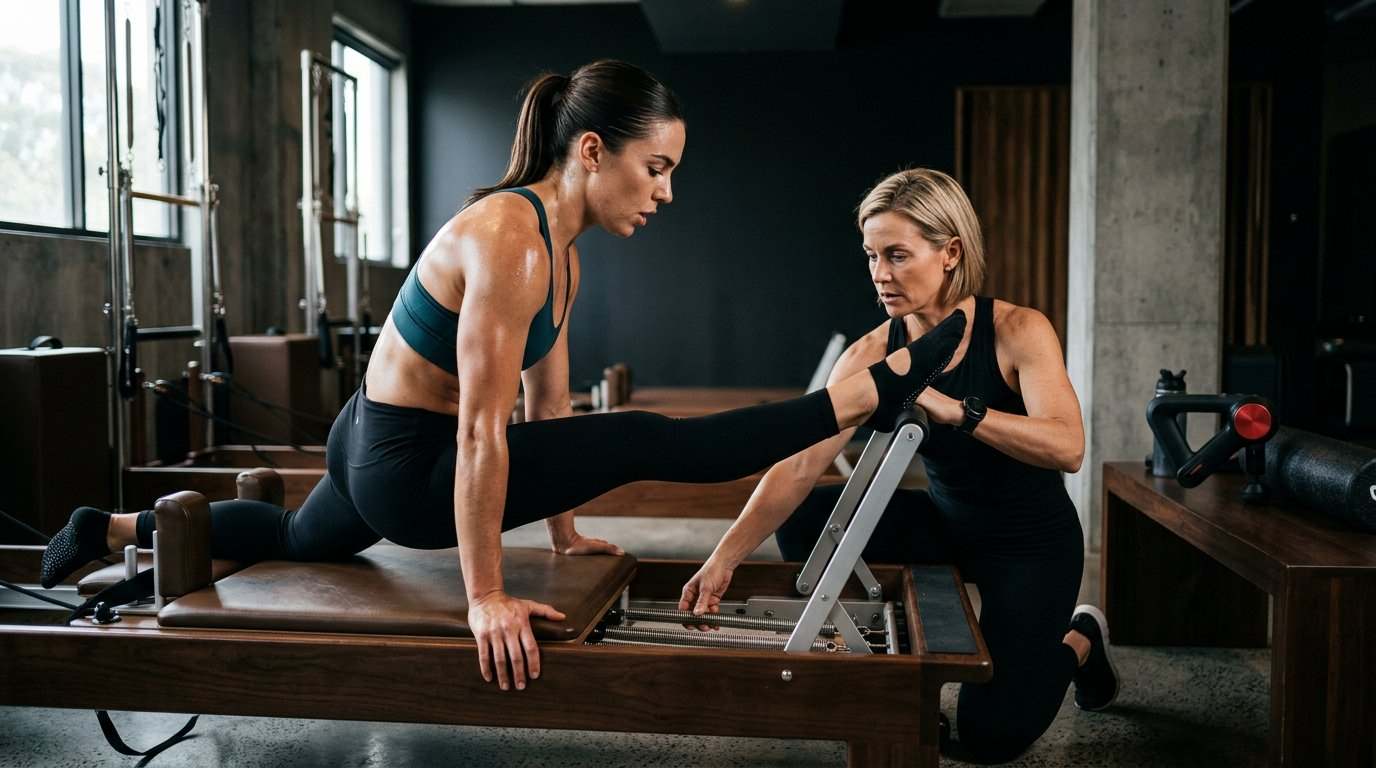
A skilled coach reads more than your words. They watch how you walk in. They notice tight shoulders, a guarded hip, or a heavy step. Then they ask direct questions. How did you sleep? Any lingering soreness? Any pain from your last game? Those answers shape the plan on the spot. So no two sessions look the same, even for the same athlete.
This matters because athletes often push through warning signs. They’re wired to ignore pain. A good coach catches what the athlete tries to hide. Maybe the left knee is stiffer today. Maybe last night’s game left the hips locked. Once the coach spots it, they route the session around it. So a small problem stays small instead of turning into a torn something.
Adjusting the Plan for Fatigue, Soreness, or an Upcoming Competition
Timing matters as much as effort. If a big competition sits three days away, the coach pulls back load and sharpens movement instead. If you’re fresh and rested, they push. And if you’re beat up from a hard week, the session shifts toward mobility and recovery. This is where a real coach earns their keep. They train the athlete in front of them, not a plan on paper.
This flexibility protects performance. A tired athlete who trains hard anyway often shows up flat on game day. So a smart coach trades one hard session for a lighter, sharper one when the schedule demands it. That’s not going easy. It’s timing effort so the athlete peaks when it counts. Knowing when to hold back is just as skilled as knowing when to push.
The Warm-Up: Waking Up the Muscles Sport Has Turned Off
Sports create imbalances. They overwork some muscles and quietly shut others down. The warm-up fixes that before real work begins.
Why Athlete Warm-Ups Look Different From a Standard Class
A general class warms the whole body evenly. An athlete warm-up is targeted. For a runner, the coach might wake up sleepy glutes and deep core. For a thrower, they’ll open the shoulder and fire the mid-back. The reformer helps here, because its springs let the coach isolate one weak link at a time. So by the time the main work starts, the right muscles are already online.
Here’s why that order matters. If a weak muscle stays asleep, a stronger one takes over its job. Over months, that swap creates imbalances and injuries. The warm-up flips those sleepy muscles back on first. So the athlete trains the pattern they actually want, not the compensation their body defaulted to. It’s slow, unglamorous work. But at Blue Chip Conditioning, it’s non-negotiable, because it prevents the injuries that end seasons.
The Core Work: Sport-Specific Training on the Reformer
Now the real session begins. This is where a pilates reformer studio Las Vegas athletes trust does its best work. Every exercise ties back to how you actually move in your sport.
General fitness builds a body that looks strong. Sport-specific work builds a body that performs. Those are not the same goal. So instead of chasing a burn or a pump, the coach hunts for the exact movements that make you faster, more stable, or more powerful in competition. Every rep has a job. Nothing is filler. That focus is what turns training time into an edge on game day.
How Spring Resistance and Exercises Are Chosen Per Athlete
The springs are the secret. Lighter springs demand more control and challenge stability. Heavier springs build raw strength through a full range. A coach picks the setting for the goal, not for ego. Then they choose movements that copy your sport’s demands. So the load, the angle, and the tempo all serve one purpose: better performance where it counts.
This is very different from a fixed weight machine. A dumbbell only loads you at the bottom of a lift. The reformer’s springs can load the whole path of a movement, which matches how athletes actually generate power. So the coach can train a golf backswing or a sprint push through its full range. That specificity is why the reformer earns its spot in serious training.
A Golfer’s Session vs. a Sprinter’s Session
Compare two athletes to see how far this goes. A golfer needs rotational power and a stable spine, so the coach loads controlled twists and single-side work. A sprinter needs explosive hip drive and a rigid core, so the session leans into powerful pushing patterns and anti-rotation holds. Same machine, same coach – two completely different hours. That’s the whole point of personalization.
Even the tempo changes between them. The golfer might train slow, controlled rotations to groove a stable swing. The sprinter might train fast, snappy drives to build explosive speed. So the coach tunes not just the exercise but the speed and rhythm of every rep. A generic class can’t do that. A session built around one athlete can.
How Instructors Adjust in Real Time, Rep by Rep
A written plan is only a starting point. The best coaching happens live, between the reps, as the body reveals what it can handle that day.
Reading Fatigue Before It Shows
Good coaches spot fatigue early. They watch for a dropped hip, a shaky knee, or a shoulder creeping toward the ear. Those are signs the form is about to break. So the coach steps in before a clean rep turns sloppy. That habit protects you from the small breakdowns that cause big injuries.
They also read the small stuff. A change in breathing. A slight loss of speed. A tiny hesitation before a rep. To an untrained eye, none of that registers. To a sharp coach, it’s a clear signal. So they adjust before the athlete even feels the drop-off. That early read is exactly what solo training can’t give you, no matter how motivated you are.
When to Push Load and When to Pull Back
Progress lives on a knife’s edge. Push too little and you stall. Push too much and you break down. A sharp coach reads that line rep by rep. If your movement stays crisp, they add a spring or a rep. If it frays, they cut back and reset. This constant tuning is why coached sessions beat solo training for serious athletes.
Athletes on their own almost always guess wrong here. They either coast when they could grow or grind themselves into the ground. A coach removes that guesswork. So every rep lands in the useful zone, where the body is challenged but still moving well. Over a season, that precision adds up to real, measurable gains that random effort simply can’t match.
Cool-Down and the Recovery Tools Built Into the Session
The work isn’t done when the last rep ends. Recovery is part of the session, not an afterthought bolted on later.
Massage Guns, Vibrating Rollers, and Why Recovery Isn’t an Afterthought
A real cool-down uses real tools. Massage guns release tight tissue fast. Vibrating rollers calm overworked muscles and boost circulation. Guided breathing shifts the body out of stress mode. Together, these steps speed recovery and cut next-day soreness. A well-run pilates reformer studio Las Vegas athletes trust treats this recovery block as part of the training, not a bonus. So you leave ready for your next training day, not wrecked for it. Here’s a simple version of that recovery flow:
- Slow, controlled breathing to lower the heart rate.
- Targeted massage-gun work on the muscles you just trained.
- Vibrating-roller release for tight hips, backs, or shoulders.
- Gentle mobility to lock in your new range of motion.
Athletes used to treat recovery as optional. That thinking is gone. The body adapts and grows during rest, not during the work itself. So a session that skips recovery leaves gains on the table. By building these tools into the hour, the coach makes sure the athlete actually absorbs the training. It’s a small block of time that pays off for days afterward.
How One Session Connects to the Bigger Development Plan
No single session works in isolation. Each one is a piece of a longer map. A coach tracks your progress week to week and adjusts the plan around your season. So a hard strength block might give way to a lighter sharpening phase before competition. If you want to see how those pieces fit together, our private training options build that full arc around your sport.
Choosing the right home for this work matters too. A strong guide to picking a Las Vegas Pilates studio and its credentials can help you judge quality before you commit. The coaching, not the equipment, is what turns effort into results.
The plan also flexes with the calendar. Off-season, the focus tilts toward building raw strength and fixing weak links. As competition nears, the work sharpens and lightens to keep the athlete fresh. After a big event, recovery leads. So each session isn’t random. It sits in a clear phase, and every phase points toward a peak. That long view is what separates real development from a good workout.
Train Smarter, Not Just Harder
So a real Elite Athlete Development session isn’t about surviving a brutal hour. It’s about precise, personal work that makes your body better at your sport. The check-in, the reformer work, the live adjustments, the recovery – each piece serves that single goal. That’s the Blue Chip Conditioning approach, and it’s why athletes keep coming back.
Curious how this would look for your sport and your body? Reach out to Bluechip Conditioning and we’ll map a plan built around your goals.
FAQ: Elite Athlete Development Sessions
How long is a typical session?
Most sessions run 50 to 60 minutes. That’s enough time for a proper check-in, targeted work, and full recovery without overloading the athlete.
Do I need prior Pilates experience to start?
No. A good coach scales every movement to your level. Athletes with no Pilates background can start right away and progress quickly.
Which sports benefit most from this training?
Nearly all of them. Golfers, runners, tennis players, dancers, and team-sport athletes all gain from better core control, mobility, and injury resistance.
How many sessions per week is ideal?
Two to three sessions a week works well for most athletes. In-season schedules often drop to one or two to protect fresh legs for competition. Your coach will set the exact number based on your sport, your training load, and where you sit in your season.
Is this the same as a regular reformer class?
No. A group class follows one plan for the room. An Elite Athlete Development session is built entirely around your body, your sport, and your training calendar. So while a reformer class is a great general workout, this training is a targeted tool for athletes who want a real competitive edge.