
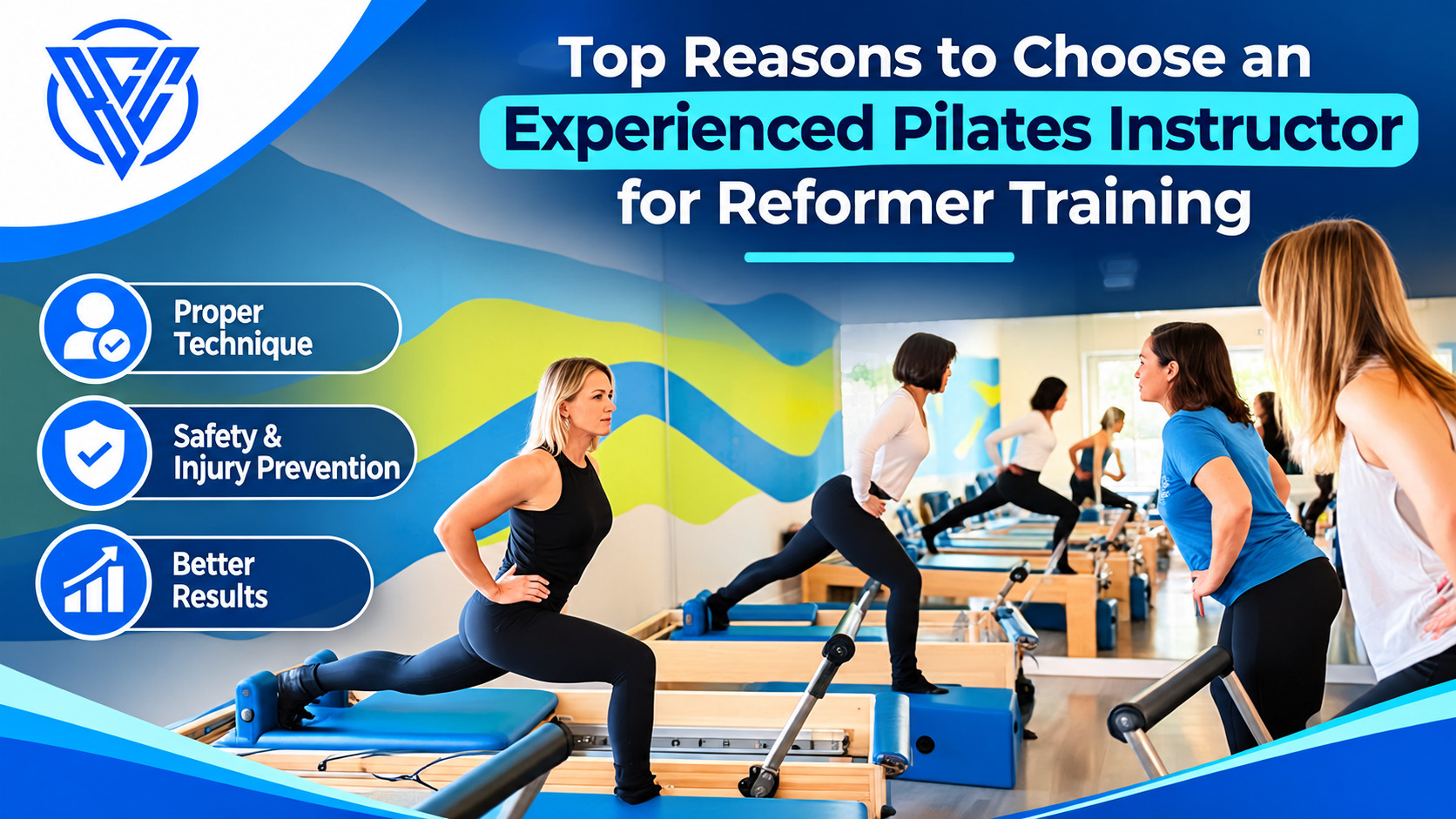
Finding the best Pilates instructor is less about a title and more about how well someone teaches your body. Training, hands-on correction, program design and communication all shape your results and your safety on the reformer. This guide explains what separates strong instructors from average ones, what credentials do and do not tell you, and which questions to ask before you book.
What Makes the Best Pilates Instructor?
The best Pilates instructor combines three things: solid training, the ability to see what your body is doing and the skill to adjust the work to you. Technical knowledge matters, but so does communication. An instructor who can explain why an exercise is set up a certain way, and who notices when your alignment drifts, will teach you more than one who only demonstrates.
Experience also changes how an instructor handles variety. A beginner, a former dancer and a runner returning from time off need different cues and different spring settings. The best Pilates instructor adapts without making you feel judged, and keeps your goals at the center of every session.
Why It Matters on the Reformer
The reformer’s springs, carriage and straps are forgiving in some ways and demanding in others. Poor setup or rushed progressions can shift effort to the wrong muscles. An experienced instructor sets the springs for you, watches each repetition and progresses the exercises in a sensible order.
Why Experience Matters for the Best Pilates Instructor
Experience does not guarantee quality, but it often shows in small, practical ways. An experienced instructor anticipates where a movement tends to go wrong and corrects it before it becomes a habit. They have worked with many body types, so they can offer a modification without breaking the flow of the session. They also know when a question belongs with a physician or physical therapist rather than a Pilates studio. For clients, that judgment is part of what makes the best Pilates instructor valuable. It is also why reading instructor bios, asking about teaching history and trying a session matter more than any single credential.
Certified Pilates Instructor: What Certification Does and Does Not Tell You
A certified Pilates instructor has completed a training program in the method. That is a useful baseline, but programs vary in length, depth and focus, so the credential alone does not tell you how well someone teaches. Industry bodies such as the Pilates Method Alliance exist to support the Pilates community, and they are a helpful starting point for understanding professional standards.
When you meet an instructor, ask which program they trained with, whether they completed an apprenticeship or internship, and how long they have taught. Their answers show how much practical teaching sits behind the credential. A certified Pilates instructor who also keeps learning, for example through additional training in movement conditioning, tends to bring more tools to your sessions.
Reformer Pilates Instructor: Skills That Matter on the Equipment
A reformer Pilates instructor needs equipment-specific skills. That includes setting springs, adjusting the footbar and headrest, spotting compensation patterns and modifying movements around sensitive areas. These skills matter most in private sessions, where every minute is built around one person.
Look for a reformer Pilates instructor who asks about injuries and past surgeries before starting, explains the purpose of each movement and checks in on how it feels. If you are returning to exercise after an injury, get clearance from your physician or physical therapist first and share the restrictions with your instructor. Pilates is exercise, not medical treatment.
Professional Pilates Instructor: Communication and Planning
Being a professional Pilates instructor is about more than technique. It shows in how an instructor prepares, listens and plans. A professional Pilates instructor arrives with a plan for your goals, adjusts it as your body responds and explains how each session fits into a longer progression.
Semi-private sessions are a good place to see this in action, because the workout is individualized while an instructor works hands-on with a small number of clients. A professional Pilates instructor also respects your time, keeps the studio environment clean and organized, and communicates clearly about scheduling and policies.
Qualified Pilates Instructor: Matching Experience to Your Goals
A qualified Pilates instructor is not necessarily the right instructor for you. Qualification should match your goals. Someone with a dance background may refine alignment and flexibility with great detail, while an instructor with athletic conditioning experience may suit sport-specific work.
At Blue Chip Conditioning, the team’s published backgrounds vary. Founder Danielle Maas is a DK Body Balancing Master Trainer and a former Nevada Ballet Theatre dancer. Lead Instructor Kristal Daniels earned Pilates equipment and mat certification through DK Balanced Body and holds a Functional Range Conditioning certification. Angela Vennes trained through the Pilates Sports Center program, and Jo Tuazon completed a 500-hour training program. Reading instructor bios like these helps you find a qualified Pilates instructor whose experience fits what you want to achieve, and that fit is what makes the best Pilates instructor for your goals.
Best Pilates Trainer for Specific Goals
The best Pilates trainer for you depends on what you want. An athlete preparing for a season needs sport-specific programming, while someone rebuilding strength after time off may need a gentler progression. Professional athletes, including MLB players, have trained at Blue Chip Conditioning, which shows the range of clients an experienced team can serve.
When searching for the best Pilates trainer, ask how they structure programs across a season or a recovery period. A strong trainer plans ahead, changes emphasis as you progress and tells you honestly when something is not working.
Reformer Pilates Training: What a Good Program Looks Like
Good reformer Pilates training follows a logical progression. You learn the equipment and the fundamentals first, then add resistance, complexity and balance challenges as your control improves. Classes should be small enough for the instructor to see everyone, and it should be easy to move between group, semi-private and private formats as your needs change.
| Quality | Strong sign | Warning sign |
| Credentials | Clear training background and ongoing learning | Vague or unexplained credentials |
| Correction | Hands-on, specific cues | Demonstrating only, rarely correcting |
| Program design | Exercises chosen for your goals and progressed over time | Same routine for every client |
| Communication | Explains the purpose of each movement | Rushed instructions |
| Safety | Asks about injuries and offers modifications | Ignores limitations |
Reformer Pilates training works best when it fits your schedule. Consistency matters more than intensity, and a good instructor helps you build a routine you can keep.
How to Evaluate the Best Pilates Instructor in a First Session
A first session reveals more than any biography. A thoughtful first private session usually starts with a conversation about your goals, schedule and any injuries or surgeries, followed by a short movement assessment and an introduction to how the springs, carriage, straps and footbar work. Your instructor should then design a first program with clear cues and modifications and explain how often to train next. Notice whether you feel heard and whether corrections are specific. If you are comparing the best Pilates instructor options at several studios, take the same notes after each session.
Questions to Ask Before You Book
Questions Worth Asking
These questions help you identify the best Pilates instructor for your situation.
- Training and certification: which program did you complete, and how long have you taught?
- Experience with my goals: have you worked with clients with similar goals, injuries or sports?
- Class size and format: how many clients does each instructor teach at once?
- Progression: how will you adjust the program as I improve?
- Trial options: is there a demo or introductory session so I can see your teaching style?
Advantages and Disadvantages of Working With an Experienced Instructor
Advantages
- Better correction: experienced instructors spot small alignment issues early.
- Smarter progression: exercises advance at a pace that suits you.
- Greater adaptability: programs adjust around injuries, sports and schedules.
- Clearer explanations: you understand why you are doing each movement.
Disadvantages
- Higher cost: private sessions with senior instructors can cost more than group classes.
- Limited availability: popular instructors may have less flexible schedules.
- Style fit still matters: experience does not guarantee that teaching style suits you.
- Not medical treatment: instruction complements, but does not replace, healthcare.
Mistakes to Avoid When Choosing an Instructor
Many people choose on price or schedule alone. Others assume more years of teaching always means better teaching, or they skip a trial session. A better approach is to book a demo, observe how the instructor corrects and communicates, and ask how they will measure your progress. If you do not feel comfortable sharing injuries or goals, keep looking. The best Pilates instructor for you is one you trust.
Frequently Asked Questions
What makes the best Pilates instructor?
The best Pilates instructor combines solid training, careful observation and clear communication. They correct your form, adapt exercises to your goals and injuries, explain the purpose of each movement and progress your program sensibly over time. A trial session helps you judge fit.
How do I find a certified Pilates instructor?
Ask studios about each instructor’s training program, internship experience and years of teaching. Read instructor bios and look for ongoing education. Industry organizations such as the Pilates Method Alliance can help you understand professional standards. A trial session shows how that training translates into teaching.
Is a reformer Pilates instructor different from a mat instructor?
Reformer instruction requires equipment-specific skills, including setting springs, adjusting the footbar and headrest and progressing exercises on the carriage. Many instructors teach both. Ask whether your instructor has training on the reformer, especially for private sessions or if you have injuries.
How many years of experience should a Pilates instructor have?
There is no single right number. Experience matters, but so do training quality, communication and fit with your goals. Ask about the instructor’s background, apprenticeship and work with clients like you, then try a session before committing.
Should I choose a private session or a group class with a new instructor?
Private sessions give the most individual attention, which helps beginners and people returning from injury. Group classes cost less and offer structure. Many clients start privately, then move to semi-private or group sessions once they feel confident with the fundamentals.
Can a Pilates instructor help with injury recovery?
A qualified instructor can adapt exercises around limitations and support your return to activity, but Pilates is not medical treatment. Get clearance from your physician or physical therapist first and share any restrictions so the instructor can modify your program safely.
How do I know if a Pilates instructor is right for me?
You should feel heard, corrected specifically and comfortable asking questions. A good fit explains movements clearly, respects your limits and builds a plan around your goals. A trial or demo session is the best way to confirm that fit before you commit.
Conclusion
The best Pilates instructor is not defined by a single credential. It is someone with solid training, sharp observation, clear communication and the ability to match your goals, whether you are a beginner, an athlete or returning from injury. Experience shows in how an instructor corrects, plans and adapts, and it is worth asking direct questions before you commit.
To see how this works in practice, read the instructor profiles at Blue Chip Conditioning, then book a free 30-minute demo or call (702) 848-2583 to talk through which session format and instructor suit your goals.