
10 Benefits of a 45-Minute Full-Body Pilates Workout
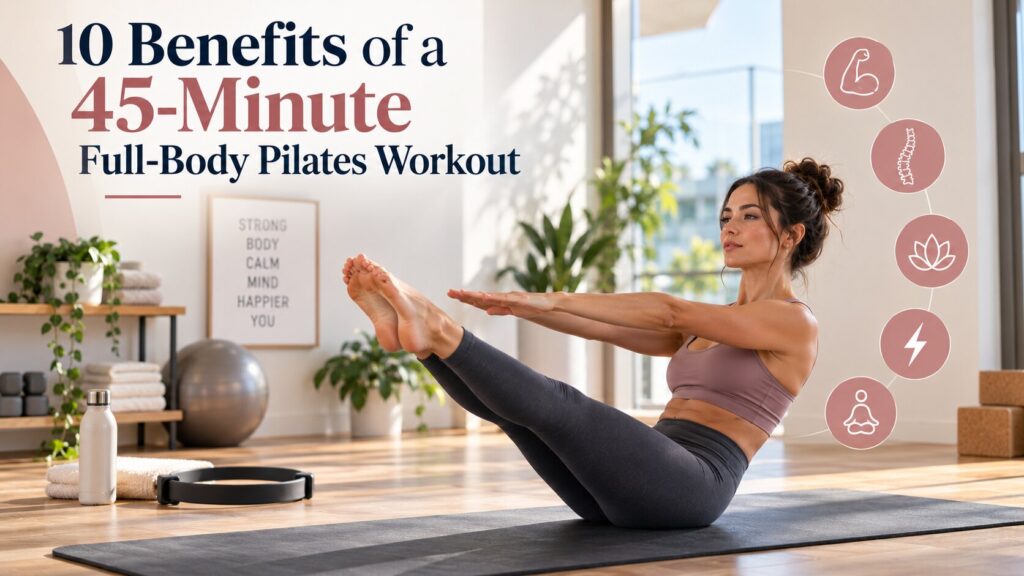
A well-structured Pilates workout can build real strength, improve your posture and leave you feeling more energized, all in under an hour. This guide takes you through a complete 45-minute session, divided into timed blocks, so you know exactly what to do from the first breath of the warm-up to the final stretch. You will also learn why the method works, how to adjust each movement to your level, which mistakes quietly slow progress, and when it makes sense to move from the mat to the reformer. Why a 45-Minute Pilates Workout Works So Well Forty-five minutes gives you time to warm up properly, work every major muscle group with control and cool down without rushing, yet it still fits into a lunch break. The Pilates method, developed by Joseph Pilates in the early twentieth century and originally called Contrology, is built on a few core principles: concentration, control, centering, precision, breath and flowing movement. Rather than chasing exhaustion, a Pilates workout asks you to move with intention, which is why a shorter session can be so effective. How Pilates for Energy Actually Works Many people finish a session feeling alert rather than drained. Pilates for energy works through a combination of moderate muscular effort, deliberate breathing and postural correction. Long hours of sitting tend to round the shoulders, compress the chest and stiffen the spine. Controlled spinal movement and deep, lateral breathing counteract those patterns, which helps you feel more upright and awake. Because the effort is sustained but not punishing, Pilates for energy is a useful strategy on days when you want to move well without depleting yourself. Key Benefits of a Regular Pilates Routine A consistent Pilates routine delivers benefits that build on each other over time: Before You Start Your Pilates Workout Start by learning two foundational positions. Neutral spine means your pelvis is level, with a small natural curve in your lower back. An imprinted spine means you gently draw your lower back toward the mat, which is useful when your legs are lifted and your back needs extra support. Breathing matters just as much. Pilates generally uses lateral breathing: inhale through the nose and feel the ribs widen to the sides, then exhale fully through the mouth while drawing the abdominals in and up. What You Need The 45-Minute Full Body Pilates Workout This full body Pilates workout moves from gentle activation to more demanding integrated exercises before bringing your body back to calm. Here is an overview of the session: Block Time Main Focus Key Pilates Exercises Warm-up 0–5 min Breath and spinal mobility Breathing, pelvic curl, spine twist supine Core activation 5–15 min Deep abdominal strength The Hundred, single-leg stretch, criss-cross, roll-up Lower body 15–25 min Glutes, hips and legs Side-lying leg series, single-leg bridge, clam Upper body and back 25–35 min Posture and shoulder stability Swan prep, swimming, plank, side plank Full-body integration 35–40 min Coordination and control Leg pull front, modified teaser, saw Cool-down 40–45 min Mobility and recovery Spine stretch forward, mermaid, child’s pose Warm-Up (Minutes 0–5) Lie on your back with knees bent and feet flat. Take five slow lateral breaths to connect with your ribs and abdominals. Move into eight pelvic curls, peeling the spine off the mat one vertebra at a time and lowering with the same control. Finish with six supine spine twists, letting both knees drop gently to one side and then the other. Core Activation (Minutes 5–15) Begin with The Hundred: lift your head and shoulders, extend your legs to a comfortable height and pump your arms while breathing in for five counts and out for five, building up to ten sets. Follow with ten single-leg stretches per side and ten criss-cross rotations. Close this block with six slow roll-ups; if a full roll-up is not yet possible, perform a half roll-down from sitting instead. These Pilates exercises set the tone for the session, so prioritize control over speed. Lower Body Strength (Minutes 15–25) Lie on your side with your body in one long line. Perform ten leg lifts, ten small forward-and-back kicks and ten small circles in each direction, then repeat on the other side. Add ten clams per side to target the outer hip. Return to your back for eight single-leg bridges per side, keeping the pelvis level as you lift. Upper Body and Back (Minutes 25–35) Turn onto your stomach for six swan preps, lifting the chest slightly while keeping the neck long. Follow with thirty seconds of swimming, alternating opposite arm and leg lifts with steady breathing. Move into a forearm or high plank for thirty to forty-five seconds, then hold a side plank for twenty to thirty seconds on each side, dropping to the knee if needed. Full-Body Integration (Minutes 35–40) Perform six leg pull fronts from a high plank, lifting one leg at a time without letting your hips sway. Add four modified teasers, balancing with knees bent if necessary, and finish with six saw rotations per side from a seated position. Cool-Down (Minutes 40–45) Sit tall for five spine stretches forward, reaching toward your feet as you round through the back. Perform three mermaid side stretches per side, then rest in child’s pose for several slow breaths. How to Get the Most From Your Pilates Workout Ten precise repetitions will do more for you than twenty rushed ones, so treat every Pilates workout as practice in control. Common Mistakes to Avoid How Often Should You Train? For most people, performing this Pilates routine two to four times a week provides a good balance between progress and recovery. As the movements become familiar, progress by slowing the tempo, adding repetitions or introducing props rather than simply moving faster. Adapting the Pilates Workout to Your Level Every exercise in this plan can be scaled up or down: Mat or Reformer: Where to Take Your Pilates Workout Next The session above is designed for mat work, but many people eventually explore the reformer, a sliding carriage machine with
Pilates Ring Workout: The Smartest Way to Build Real Strength Without Bulking
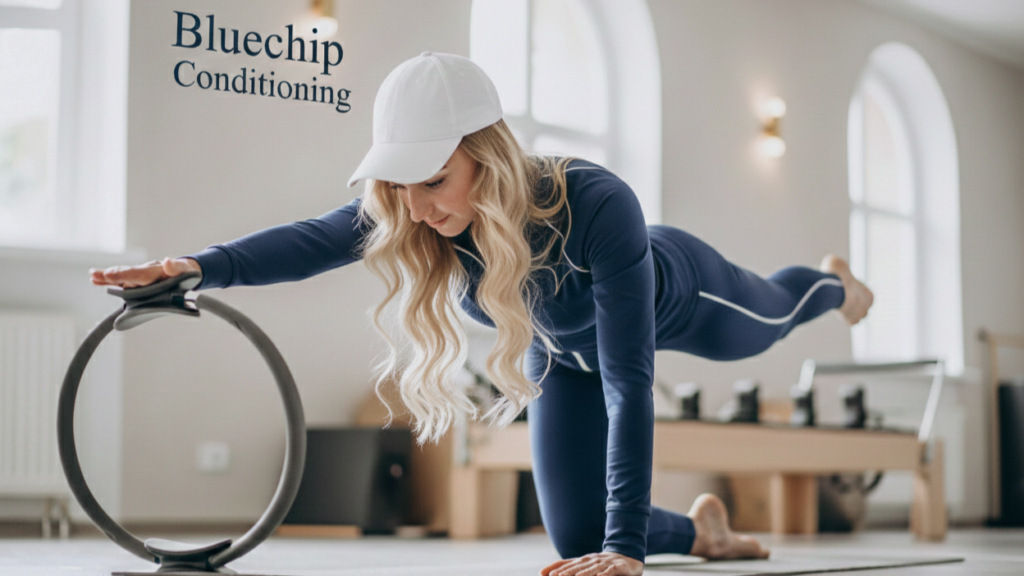
Introduction Walk into any serious training facility today and you’ll notice something interesting. Alongside heavy barbells and high-tech machines, there’s often a simple circular ring quietly sitting in the corner. It doesn’t look intimidating. It doesn’t scream power. Yet athletes, dancers, office professionals, and even older adults are increasingly turning to the Pilates Ring Workout as a powerful tool for strength, mobility, and longevity. What makes this small piece of equipment so effective? The answer lies in intelligent resistance, deep muscle activation, and controlled movement. Unlike traditional gym routines that rely purely on heavy loads, a Pilates Ring Workout challenges stability, coordination, and muscular endurance at the same time. It trains the body as a connected system. And that’s exactly what modern performance demands. Understanding the Power Behind a Pilates Ring Workout A Pilates ring, also known as a magic circle, creates resistance through compression. When you press inward or outward against it, your muscles are forced to engage isometrically. This controlled tension activates deep stabilizing muscles that are often ignored in conventional training.The magic is not in brute force. It is in precision. A properly structured Pilates Ring Workout engages: This is why pilates strength training has become a serious addition to athletic programs worldwide. It builds internal strength, not just surface muscle. The Complete Guide to Training With a Pilates Ring The Pilates ring, also known as a magic circle, is a deceptively simple piece of equipment that delivers serious results. Lightweight and portable, it adds targeted resistance to traditional Pilates movements, helping activate muscles more deeply and intentionally. A pilates ring workout is especially effective for people who want to improve strength, control, and body awareness without adding high-impact stress to their routine. Unlike heavy gym equipment, the ring works by creating inward or outward pressure, which forces stabilizing muscles to engage. This makes every movement more efficient and purposeful. How the Pilates Ring Enhances Movement Deep Muscle Activation The ring’s resistance encourages the use of smaller stabilizing muscles that often get overlooked. By gently squeezing or pressing the ring, the body recruits inner thighs, glutes, chest, shoulders, and deep core muscles. This is why a pilates ring workout often feels challenging even though the movements look subtle. Improved Alignment and Control Because the ring provides constant feedback, it helps improve form and alignment. When the body is properly aligned, muscles work together more effectively, reducing strain on joints and lowering the risk of injury. Over time, this leads to better posture and more balanced movement patterns. Key Benefits of Training With a Pilates Ring Strength Without Bulk One of the standout benefits of ring-based training is the ability to build strength without excessive muscle bulk. The focus remains on lengthening and toning rather than shortening muscles. A consistent pilates ring workout helps create a lean, sculpted look while improving functional strength. Enhanced Mind–Body Connection Pilates emphasizes controlled breathing and intentional movement. Adding the ring increases concentration, as the body must stay engaged throughout each exercise. This heightened awareness improves coordination and helps translate better movement habits into daily life. Joint-Friendly Resistance The ring provides low-impact resistance, making it suitable for people with joint concerns or those recovering from injury. It allows for progressive loading without sudden stress, making it both effective and safe when used correctly. Common Pilates Ring Exercises Inner Thigh and Glute Work Placing the ring between the thighs activates the adductors and pelvic floor muscles. Simple movements like bridges or seated squeezes become far more effective with added resistance. These exercises are foundational in many pilates ring workout routines because they support hip stability and lower-body strength. Upper Body and Posture Exercises The ring can also be used between the hands to strengthen the chest, shoulders, and arms. Pressing the ring forward or overhead encourages engagement of the upper back muscles, which are essential for good posture and spinal support. Core-Focused Movements When used during abdominal exercises, the ring helps maintain tension throughout the movement. This prevents momentum-based motion and ensures the core remains fully engaged, leading to better results and improved spinal control. Who Should Try a Pilates Ring Workout? Beginners Looking for Structure For those new to Pilates, the ring provides guidance and feedback that makes learning proper technique easier. It helps beginners understand which muscles should be working and when. Athletes and Active Individuals Athletes often use ring training to correct muscle imbalances and improve stability. Because it targets supporting muscles, it complements high-intensity training and helps reduce overuse injuries. Anyone Seeking Low-Impact Fitness People who want an effective workout without jumping, heavy lifting, or excessive strain will benefit from this style of training. A pilates ring workout can be adapted for all fitness levels and performed at home or in a studio. Making the Most of Your Pilates Ring Training Consistency is key when working with the ring. Focus on slow, controlled movements rather than rushing through exercises. Proper breathing, alignment, and muscle engagement matter more than repetitions. As strength improves, resistance can be increased by pressing the ring more firmly or holding contractions longer. Discover the Benefits of Pilates for Mind and Body Pilates has become one of the most effective ways to build strength, improve flexibility, and support overall wellness. Whether you’re an athlete, a busy professional, or someone looking to move better, Pilates offers a low-impact yet powerful approach to fitness. Why Pilates Is Perfect for a Busy Lifestyle In a fast-paced city, finding a workout that delivers results without stressing the body is essential. pilates las vegas studios focus on controlled movements, core stability, and proper alignment making sessions efficient and restorative at the same time. Physical and Mental Benefits Pilates strengthens deep core muscles, improves posture, and enhances mobility. Just as important, it reduces stress by encouraging mindful movement and breath control. Many people turn to pilates las vegas classes to balance intense workouts or long workdays. Who Can Benefit From Pilates? From beginners to seasoned athletes, Pilates is adaptable for all levels. With expert