10 Benefits of a 45-Minute Full-Body Pilates Workout
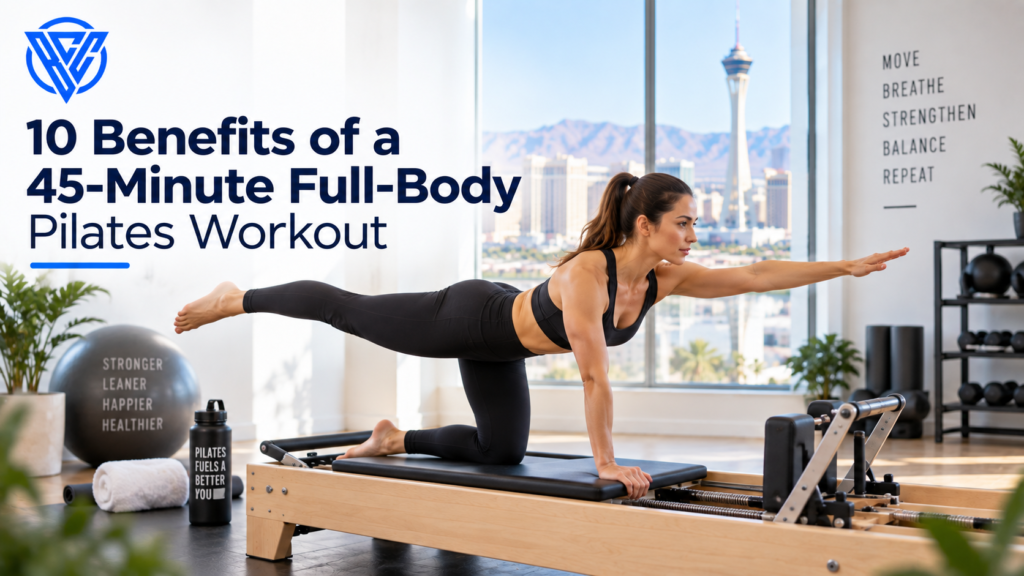
A well-structured Pilates workout can build real strength, improve your posture and leave you feeling more energized, all in under an hour. This guide takes you through a complete 45-minute session, divided into timed blocks, so you know exactly what to do from the first breath of the warm-up to the final stretch. You will also learn why the method works, how to adjust each movement to your level, which mistakes quietly slow progress, and when it makes sense to move from the mat to the reformer. Why a 45-Minute Pilates Workout Works So Well Forty-five minutes gives you time to warm up properly, work every major muscle group with control and cool down without rushing, yet it still fits into a lunch break. The Pilates method, developed by Joseph Pilates in the early twentieth century and originally called Contrology, is built on a few core principles: concentration, control, centering, precision, breath and flowing movement. Rather than chasing exhaustion, a Pilates workout asks you to move with intention, which is why a shorter session can be so effective. How Pilates for Energy Actually Works Many people finish a session feeling alert rather than drained. Pilates for energy works through a combination of moderate muscular effort, deliberate breathing and postural correction. Long hours of sitting tend to round the shoulders, compress the chest and stiffen the spine. Controlled spinal movement and deep, lateral breathing counteract those patterns, which helps you feel more upright and awake. Because the effort is sustained but not punishing, Pilates for energy is a useful strategy on days when you want to move well without depleting yourself. Key Benefits of a Regular Pilates Routine A consistent Pilates routine delivers benefits that build on each other over time: Before You Start Your Pilates Workout Start by learning two foundational positions. Neutral spine means your pelvis is level, with a small natural curve in your lower back. An imprinted spine means you gently draw your lower back toward the mat, which is useful when your legs are lifted and your back needs extra support. Breathing matters just as much. Pilates generally uses lateral breathing: inhale through the nose and feel the ribs widen to the sides, then exhale fully through the mouth while drawing the abdominals in and up. What You Need The 45-Minute Full Body Pilates Workout This full body Pilates workout moves from gentle activation to more demanding integrated exercises before bringing your body back to calm. Here is an overview of the session: Block Time Main Focus Key Pilates Exercises Warm-up 0–5 min Breath and spinal mobility Breathing, pelvic curl, spine twist supine Core activation 5–15 min Deep abdominal strength The Hundred, single-leg stretch, criss-cross, roll-up Lower body 15–25 min Glutes, hips and legs Side-lying leg series, single-leg bridge, clam Upper body and back 25–35 min Posture and shoulder stability Swan prep, swimming, plank, side plank Full-body integration 35–40 min Coordination and control Leg pull front, modified teaser, saw Cool-down 40–45 min Mobility and recovery Spine stretch forward, mermaid, child’s pose Warm-Up (Minutes 0–5) Lie on your back with knees bent and feet flat. Take five slow lateral breaths to connect with your ribs and abdominals. Move into eight pelvic curls, peeling the spine off the mat one vertebra at a time and lowering with the same control. Finish with six supine spine twists, letting both knees drop gently to one side and then the other. Core Activation (Minutes 5–15) Begin with The Hundred: lift your head and shoulders, extend your legs to a comfortable height and pump your arms while breathing in for five counts and out for five, building up to ten sets. Follow with ten single-leg stretches per side and ten criss-cross rotations. Close this block with six slow roll-ups; if a full roll-up is not yet possible, perform a half roll-down from sitting instead. These Pilates exercises set the tone for the session, so prioritize control over speed. Lower Body Strength (Minutes 15–25) Lie on your side with your body in one long line. Perform ten leg lifts, ten small forward-and-back kicks and ten small circles in each direction, then repeat on the other side. Add ten clams per side to target the outer hip. Return to your back for eight single-leg bridges per side, keeping the pelvis level as you lift. Upper Body and Back (Minutes 25–35) Turn onto your stomach for six swan preps, lifting the chest slightly while keeping the neck long. Follow with thirty seconds of swimming, alternating opposite arm and leg lifts with steady breathing. Move into a forearm or high plank for thirty to forty-five seconds, then hold a side plank for twenty to thirty seconds on each side, dropping to the knee if needed. Full-Body Integration (Minutes 35–40) Perform six leg pull fronts from a high plank, lifting one leg at a time without letting your hips sway. Add four modified teasers, balancing with knees bent if necessary, and finish with six saw rotations per side from a seated position. Cool-Down (Minutes 40–45) Sit tall for five spine stretches forward, reaching toward your feet as you round through the back. Perform three mermaid side stretches per side, then rest in child’s pose for several slow breaths. How to Get the Most From Your Pilates Workout Ten precise repetitions will do more for you than twenty rushed ones, so treat every Pilates workout as practice in control. Common Mistakes to Avoid How Often Should You Train? For most people, performing this Pilates routine two to four times a week provides a good balance between progress and recovery. As the movements become familiar, progress by slowing the tempo, adding repetitions or introducing props rather than simply moving faster. Adapting the Pilates Workout to Your Level Every exercise in this plan can be scaled up or down: Mat or Reformer: Where to Take Your Pilates Workout Next The session above is designed for mat work, but many people eventually explore the reformer, a sliding carriage machine with
How Pilates Workout Balls Help Injured Athletes Rebuild Strength, Control, and Confidence
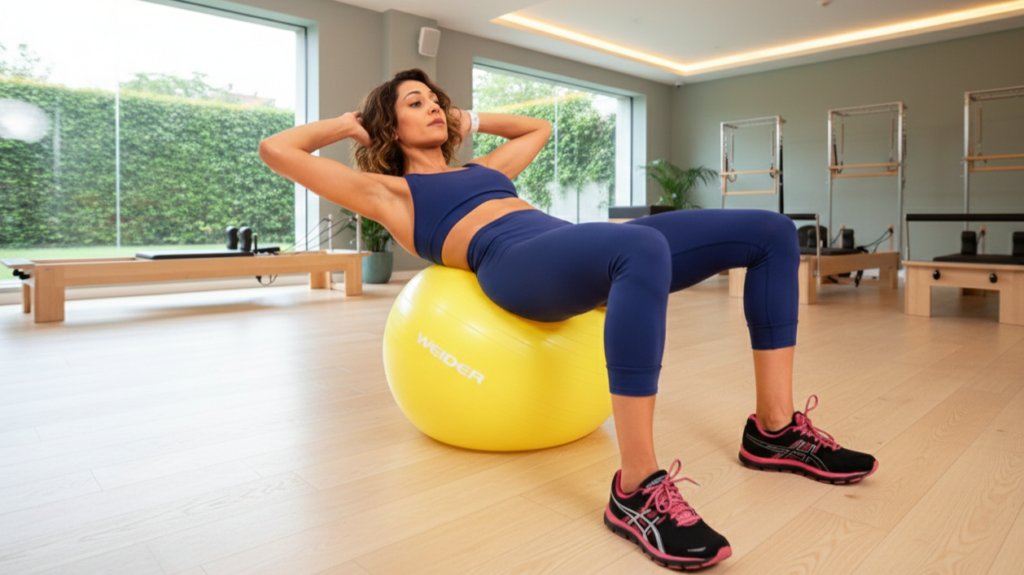
Introduction If you’re an athlete coming back from injury, pilates workout balls might feel like the last thing you need. You miss training hard.You miss sweating.You miss feeling strong and capable. Instead, you’re dealing with tight hips, a stiff back, weak muscles, and that quiet fear of getting hurt again.Your body doesn’t feel like it used to. This is where pilates workout balls quietly change everything. They don’t rush you.They don’t overload you.They help you rebuild control, strength, and trust in your body one steady movement at a time. This article is written for athletes exactly like you. The Hidden Problems Athletes Face Every Day After Injury Injury doesn’t just affect one muscle. It changes how your whole body moves. Many injured athletes deal with: You may look “fine” on the outside.But inside, your body feels disconnected. This is why rushing back to heavy training often leads to new injuries. Your body needs control before power. What Is Pilates Workout Balls and Why It Works Pilates workout balls are small, lightweight balls used during Pilates exercises. They are not for cardio.They are not for speed. They are for awareness. When you use pilates workout balls, your body has to: This is the heart of Body control training. Instead of forcing strength, you rebuild it from the inside out. For injured athletes, this approach is safe, smart, and sustainable. Ball Crunch: A Smarter Way to Build Core Strength After Injury When athletes think about core training, they often picture fast sit-ups or hard floor crunches. But after injury, those movements can feel uncomfortable or risky. That’s where the Ball Crunch comes in. It looks simple, but it teaches your body something far more important than burning abs: control. What Is a Ball Crunch? A Ball Crunch is a core exercise performed using a small Pilates ball placed under your lower or mid-back. Instead of forcing the movement, the ball supports your spine and guides you through a slow, controlled crunch. This turns a basic exercise into Body control training that protects your back and improves awareness. You’re not jerking your body up.You’re lifting with intention. Why Ball Crunch Is Safer for Injured Athletes After injury, your body often avoids certain muscles without you realizing it. The Ball Crunch helps fix that. Because the ball is unstable, your core has to engage evenly to stay balanced.This reduces strain on the neck and lower back. It’s a perfect example of Body control training because the focus stays on quality, not quantity. Slow reps.Steady breathing.Full control. How Ball Crunch Improves Athletic Recovery 1. Rebuilds Deep Core Strength The Ball Crunch activates muscles that support your spine, not just surface abs. This support is essential when returning to running, lifting, or sport-specific movements. 2. Improves Posture Without Stress As you crunch over the ball, your spine moves naturally. This helps undo stiffness caused by injury or protective movement patterns. 3. Trains the Mind-Body Connection Every rep forces you to stay present. That awareness is a key part of Body control training, especially when confidence in movement is low. How to Perform a Ball Crunch Correctly No rushing.No pulling the neck.Just smooth movement. Why Ball Crunch Fits Perfectly Into Pilates-Based Recovery The Ball Crunch blends strength, control, and safety. It’s gentle enough for recovery, yet challenging enough to build real support for athletic movement. When done correctly, it becomes more than an ab exercise it becomes a foundation builder. And for athletes coming back from injury, that foundation matters more than anything. How Pilates Workout Balls Specifically Help Injured Athletes Pilates workout balls are powerful tools during recovery because they create challenge without stress. Here’s how they help: This is core focused strength training done the right way. You’re not chasing fatigue.You’re rebuilding foundation. Why Balance Matters More Than Strength During Recovery Most injuries happen when the body loses control. Not when it’s weak. Pilates workout balls create gentle instability.That instability forces your body to respond intelligently. This turns each session into a Balance and core workout. You’re teaching your body to: That’s what real recovery looks like. Real-Life Scenario: The Runner With a Knee Injury A competitive runner comes in after knee pain stopped their training. They try gym workouts first.Heavy machines.Fast movements. Pain comes back. We slow things down with pilates workout balls. Week by week, they regain control in the hips and core.The knee stops compensating.The body moves as one unit again. That’s Body control training in action. Inner Thigh Squeeze: Small Movement, Big Support for Athletic Recovery After injury, athletes often focus on the obvious areas knees, backs, shoulders. But one important area is usually ignored: the inner thighs. The Inner Thigh Squeeze may look simple, but it plays a powerful role in rebuilding stability and control, especially during recovery. What Is the Inner Thigh Squeeze? The Inner Thigh Squeeze is performed by placing a small Pilates ball or cushion between the thighs and gently squeezing it during controlled movements. This action activates deep muscles that connect the legs, pelvis, and core. It’s a key part of core focused strength training because it trains your body to move as one unit instead of isolated parts. Why Inner Thigh Strength Matters After Injury When inner thigh muscles are weak, the body loses alignment. This can affect: During the Inner Thigh Squeeze, these muscles switch back on in a safe, low-impact way. That’s why it’s often used in core focused strength training programs designed for recovery. How the Inner Thigh Squeeze Supports Athletic Movement 1. Improves Hip and Pelvic Stability Strong inner thighs help stabilize the pelvis during walking, running, and lifting. This reduces unnecessary strain on injured areas. 2. Enhances Core Engagement Naturally The squeeze sends a signal to the deep core muscles to activate. Without forcing effort, the body creates internal support—one of the main goals of core focused strength training. 3. Reduces Compensation Patterns After injury, athletes often shift weight or movement to one side. The Inner Thigh Squeeze encourages