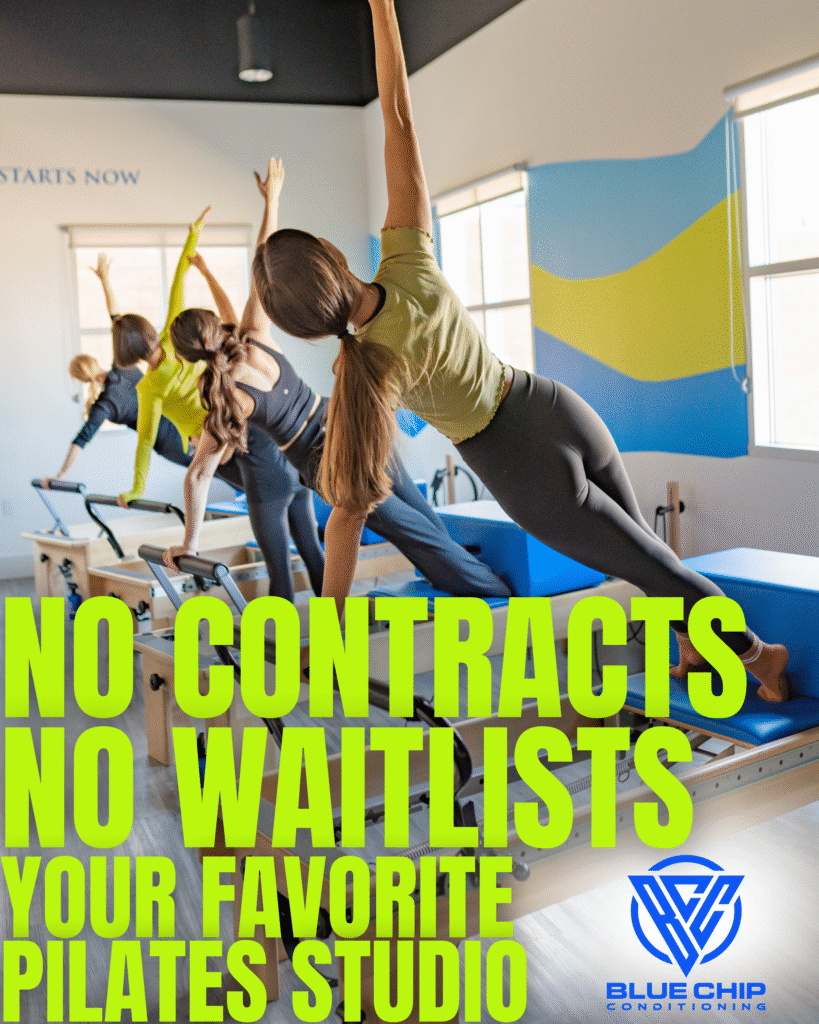

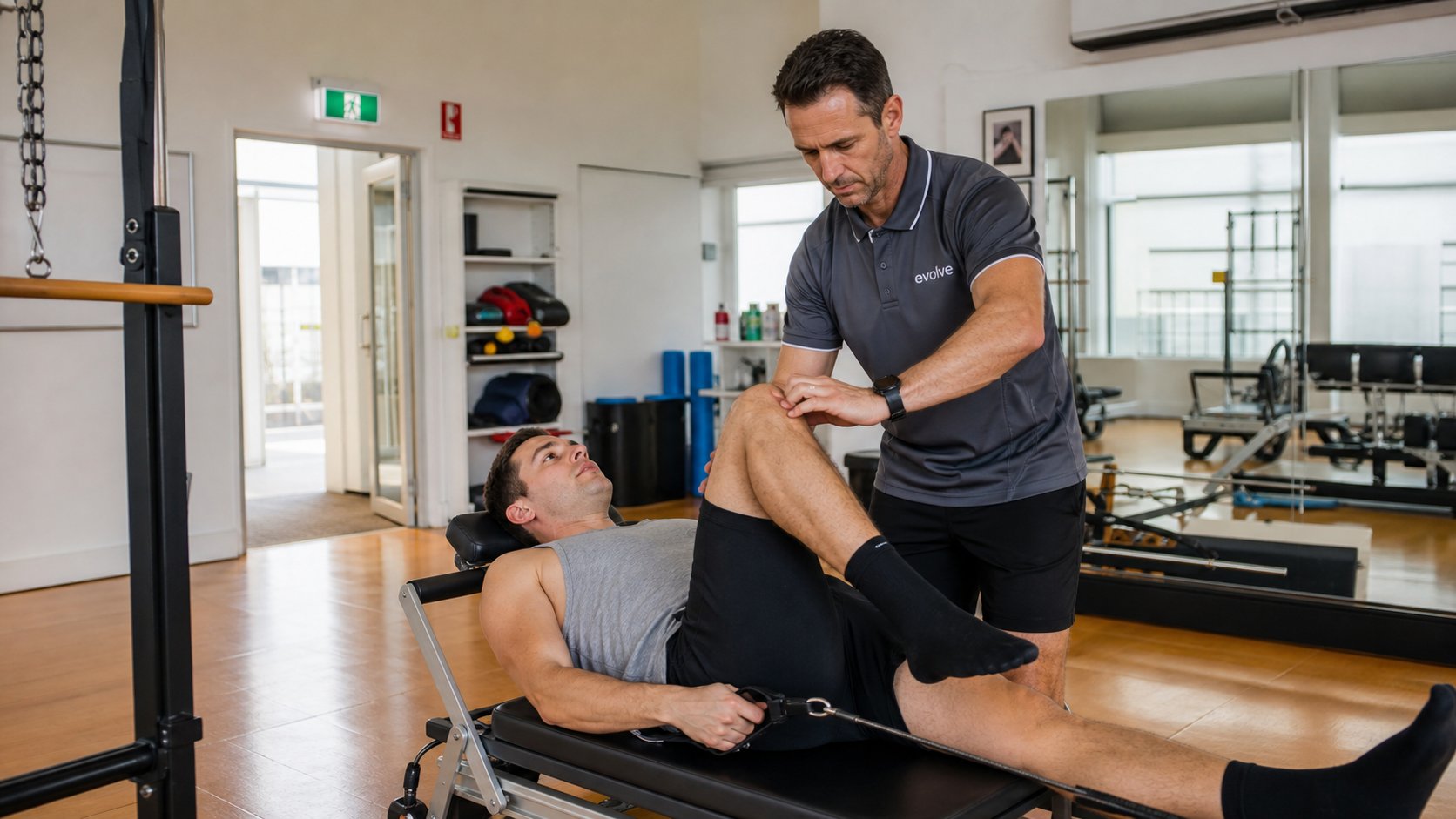
Elite athlete development is expensive, and most families and athletes budget for the obvious pieces – coaching, travel, equipment – while completely missing the line item that determines whether the rest of the money pays off: the body itself. Structured conditioning and rehabilitation work is what keeps an athlete available to train, and availability beats talent more often than anyone likes to admit. In this guide, I’ll break down what a serious elite athlete development budget actually contains, where rehabilitation Pilates fits inside it, and what realistic numbers look like in Las Vegas.
Quick Answer
A complete elite athlete development budget includes sport coaching, strength and conditioning, recovery and rehabilitation work, and periodic assessment. Rehabilitation Pilates typically represents $200–$600 monthly of that budget, and it’s the component that protects every other dollar by keeping the athlete healthy enough to train.
Table of Contents
1. What Elite Athlete Development Actually Means
2. The Full Cost Breakdown, Line by Line
3. Why Rehabilitation Pilates Las Vegas Earns Its Budget Line
4. Pilates Class Cost: What Athletes Actually Pay
5. Building a Development Budget in 5 Steps
6. Where Families Overspend and Underspend
7. Final Thoughts
8. FAQs
What Elite Athlete Development Actually Means
The phrase gets thrown around loosely, so let’s define it. Elite athlete development is the long-term, structured process of building an athlete toward their highest competitive level – college scholarship, professional contract, or national-team selection. It’s not a single program or a season. Instead, it’s a coordinated system with four pillars:
- Sport-specific skill coaching – the technical and tactical work of the sport itself
- Physical preparation – strength, speed, mobility, and conditioning built around the sport’s demands
- Recovery and rehabilitation – the work that repairs training stress and resolves injuries before they compound
- Assessment and planning – regular testing that tells everyone whether the plan is working
Remove any pillar and the structure wobbles. Yet the third pillar – recovery and rehab – is the one families cut first when budgets tighten. That decision usually costs more than it saves, and I’ll show you why.
The Full Cost Breakdown, Line by Line
Here’s what a committed year of serious development typically costs in a market like Las Vegas. Numbers vary by sport and level, but these ranges hold for most serious youth, collegiate, and semi-professional athletes:
- Sport coaching and club fees: $2,000–$10,000+ per year, depending on the sport and travel demands
- Strength and conditioning: $150–$500 monthly for quality supervised programming
- Rehabilitation and Pilates-based conditioning: $200–$600 monthly, scaling with session frequency and format
- Physical therapy (when injured): $75–$200 per visit beyond insurance coverage
- Assessments and screenings: $100–$400 per testing block, two to four times yearly
- Equipment, nutrition, and travel: highly variable, often the largest and least predictable category
Notice something: the rehab and conditioning lines are modest next to club fees and travel. Even so, they’re the lines that determine whether the athlete actually appears at those expensive tournaments healthy. A $4,000 travel season means nothing if the athlete watches it from the bench with a stress injury.
Why Rehabilitation Pilates Las Vegas Earns Its Budget Line
So why Pilates specifically, rather than generic recovery? Because rehabilitation Pilates Las Vegas programs solve a problem ordinary training can’t: they load the body precisely, at low impact, through ranges that rebuild rather than aggravate. Spring resistance on a reformer can be dialed to almost nothing or challenge a professional – the same equipment serves a post-surgical knee in week four and a healthy sprinter in peak season.
The Bridge Between Therapy and Performance
Physical therapy typically ends when pain resolves and basic function returns. Sport, however, demands far more than basic function. That gap between “cleared” and “ready” is where re-injuries happen, and it’s exactly where rehabilitation Pilates lives. Organizations like the American Physical Therapy Association emphasize progressive loading after injury, and reformer-based work delivers that progression with unusual precision. We’ve detailed what this looks like in practice in our article on what really happens inside an elite athlete development session.
Prevention Is the Cheaper Half
Rehabilitation Pilates Las Vegas work isn’t only for injured athletes. Most of our athlete clients use it preventively – screening for asymmetries, strengthening the stabilizers their sport neglects, and maintaining mobility through heavy training blocks. Preventing one significant injury can save thousands in therapy costs and, more importantly, months of lost development time. In a college recruiting timeline, those months are irreplaceable.
Pilates Class Cost: What Athletes Actually Pay
Let’s get specific about the pilates class cost side of the budget, because format changes the number dramatically:
- Group reformer classes: roughly $25–$40 per class – good for general conditioning, limited for rehab needs
- Semi-private sessions (2–4 athletes): roughly $45–$70 per session – the value sweet spot for healthy athletes in development programs
- [Private sessions](https://bluechipconditioning.com/private-pilates/): roughly $90–$130 – the right choice during active rehabilitation or for sport-specific programming
- Package pricing: buying blocks of 10–20 sessions typically cuts the per-session pilates class cost by 10–25%
For a typical developing athlete, a sensible month looks like four to eight sessions, mixing formats based on health status. That lands the monthly pilates class cost between $200 and $600 – consistent with the budget line above. Current package numbers are listed on our pricing page, and intro offers reduce the cost of testing whether the work fits your athlete.
Building a Development Budget in 5 Steps
If you’re planning a full development year, sequence the budget like this:
- Start with an assessment, not a program. Pay for testing first. It tells you where the athlete’s real weaknesses are, so every later dollar targets something specific.
- Fund the body before the travel. Lock in conditioning and rehabilitation Pilates spending before committing to extra tournaments. Availability first, exposure second.
- Match session format to health status. Injured or post-surgical athletes need private sessions; healthy athletes can use semi-private formats and bank the savings.
- Buy in packages, not drop-ins. Consistency is the goal anyway, and package rates reward it. Ten-session blocks fit most training cycles cleanly.
- Reassess every 12 weeks. Retest, review, and reallocate. A budget that never changes is a budget nobody is watching.
How the Rehab Line Changes at Each Development Stage
Elite athlete development spans years, and the rehabilitation budget shouldn’t look identical across them. Here’s how the allocation typically shifts as an athlete advances.
Youth Stage (Ages 10–14)
The priority is movement quality and growth management, not intensity. One weekly semi-private session usually suffices – roughly $180–$280 monthly. Growth spurts temporarily wreck coordination, so budget for short blocks of private sessions during those windows. Catching a movement fault at twelve costs a fraction of treating the injury it produces at sixteen.
High School and Recruiting Stage (Ages 15–18)
Training volume peaks here, and so does injury risk. Two weekly sessions become the standard, mixing formats by health status – call it $300–$550 monthly. This stage carries the highest stakes: a junior-year injury can erase a recruiting cycle entirely. Consequently, this is the worst possible stage to cut the rehab line, and unfortunately it’s the stage families cut most often because club fees peak simultaneously.
Collegiate and Professional Stage
Athletes at this level often have team resources, so the private budget shifts toward specialized gaps: off-season reconditioning, return-to-play bridges after injuries, and the individualized attention team settings can’t always provide. Spending becomes seasonal rather than constant – heavier in off-season and rehab windows, lighter in-season.
Questions to Ask Before You Spend a Dollar
Not all programs deserve your budget. Before committing to any rehabilitation or conditioning provider, ask these directly and listen carefully to the answers:
- Who does the assessment, and what does it measure? If there’s no baseline testing, there’s no way to prove the program works.
- Will you coordinate with our physical therapist or physician? The right answer is an immediate yes. Silos between providers slow recovery.
- How do you progress athletes, and how often do you retest? Look for a defined system – 8-to-12-week blocks with measurable checkpoints.
- What’s your experience with this sport and this age group? A great adult fitness instructor isn’t automatically qualified for a 14-year-old pitcher.
- Which format do you actually recommend for us? Trustworthy studios sometimes recommend the cheaper option. That honesty is the best predictor of everything else.
A provider who answers all five confidently is worth the money. One who dodges any of them isn’t, regardless of price.
Where Families Overspend and Underspend
After years around developing athletes, the spending patterns are predictable. Families overspend on visibility – extra showcases, another travel team, premium gear – because those purchases feel like progress. Meanwhile, they underspend on the unglamorous work that determines whether the athlete’s body can cash the checks their schedule writes.
The correction is simple, though not always easy: treat elite athlete development as a system, and fund the whole system. A slightly smaller tournament calendar with a fully funded conditioning and rehab program beats a maximal calendar on a fragile body. Every experienced coach I know agrees with that trade, and almost every family learns it one injury too late.
One more honest note: not every athlete needs the full elite structure. A recreational player thriving in group classes shouldn’t be upsold into a private-heavy program. Good studios match spending to actual need – and we’d rather tell you that directly than sell you sessions you don’t require.
Ways to Lower the Cost Without Lowering the Quality
Budgets are real, so let’s finish the practical side. Several legitimate strategies reduce spending without gutting the program. Packages come first: buying session blocks routinely saves 10–25% versus drop-in rates, and since consistency is the goal anyway, you lose nothing. Second, format-shift intelligently – reserve private sessions for active rehab and assessment weeks, then run healthy training blocks in semi-private formats at roughly half the rate.
Third, check your insurance and HSA/FSA options. Physical therapy portions of a rehab plan may carry coverage, and some flexible spending accounts reimburse medically directed conditioning with a letter from a physician. It’s paperwork, but it’s real money. Finally, use intro offers to evaluate providers cheaply before committing a season’s budget. What you should never do is stretch sessions so thin that programming loses continuity – six scattered sessions across four months accomplishes far less than six consecutive weeks, even though the invoice looks identical.
Final Thoughts on Elite Athlete Development Costs
Elite athlete development costs real money, and rehabilitation Pilates deserves a permanent line in that budget – not as a luxury add-on, but as the component that protects every other investment. The math is straightforward: $200–$600 monthly in structured, reformer-based conditioning keeps athletes training, and athletes who keep training are the ones who develop.
If you’re mapping out your athlete’s next year, start with an assessment at Blue Chip Conditioning. We’ll test where the body actually stands, show you which format fits the budget, and build a plan that keeps your athlete on the field instead of in the training room. Reach out here to schedule it.
FAQs About Elite Athlete Development and Rehabilitation Pilates
What does elite athlete development include?
Four pillars: sport-specific coaching, physical preparation, recovery and rehabilitation work, and regular assessment. All four must be funded for the system to work.
How much should rehabilitation Pilates cost per month?
Most developing athletes spend $200–$600 monthly, depending on session frequency and whether they train privately or in semi-private formats.
Is Pilates legitimate rehabilitation, or just fitness?
Reformer-based work is widely used as a bridge between physical therapy discharge and full sport return, because spring resistance allows precise, progressive, low-impact loading.
What’s the average pilates class cost in Las Vegas?
Group classes run about $25–$40, semi-privates $45–$70, and private sessions $90–$130. Package pricing lowers each of those meaningfully.
When should an injured athlete start rehabilitation Pilates?
Once their physician or physical therapist clears progressive loading. The Pilates program should then be coordinated with the treating clinician.
Can healthy athletes skip the rehab budget line?
They shouldn’t. Preventive conditioning catches asymmetries early and costs far less than treating the injuries those asymmetries eventually cause.
How many Pilates sessions per week do developing athletes need?
One to two weekly sessions fits most training schedules, increasing temporarily during active rehabilitation phases.