
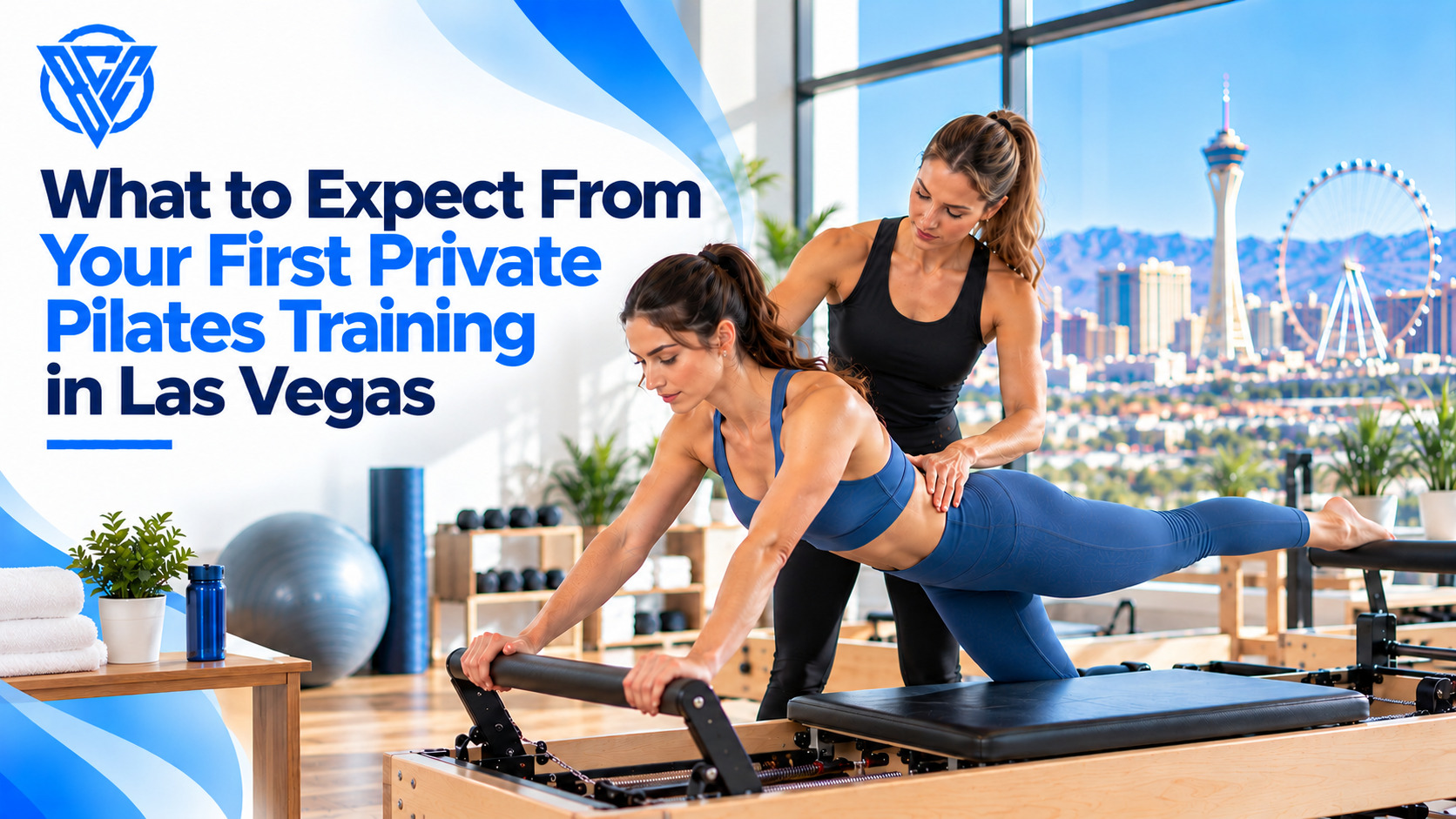
Personal Pilates training gives you an instructor’s undivided attention and a program built around your body, goals, and history. This guide to personal Pilates training explains what happens from the moment you arrive for a private session. It covers the initial assessment, the exercises you might do, how coaching works, how to prepare, and how to keep improving after your first visit.
What Is Personal Pilates Training?
Personal Pilates training is a one-to-one format in which a qualified instructor designs and leads each session for a single client. Unlike group classes, which follow a general plan for everyone in the room, personal Pilates training adapts in real time to how you move, what you feel, and what you want to achieve.
The method itself, Pilates, was developed by Joseph Pilates as a system of controlled movement focused on core strength, alignment, breathing, and flexibility. Many people use personal Pilates training to recover from injury, improve posture, support athletic performance, or simply learn the method correctly from the start.
How One-on-One Pilates Training Differs From Group Classes
In a group, the instructor watches several bodies at once and gives general cues. In one-on-one Pilates training, every cue, spring setting, and exercise choice is made for you. The instructor can notice that your left hip lifts slightly during a leg circle, or that your shoulders tense during footwork, and correct it immediately.
That level of detail is the main reason personal Pilates training often produces faster technical progress than group sessions, especially for beginners.
Before Your First Personal Pilates Training Session
Preparation helps you get the most from your first private Pilates session. Keep these practical points in mind:
- Wear fitted, comfortable clothing: The instructor needs to see your alignment, so avoid very loose tops or shorts.
- Bring grip socks if required: Many studios ask for non-slip socks on reformer equipment for hygiene and safety.
- Arrive a few minutes early: This gives you time to complete paperwork and talk through your goals without cutting into the session.
- Prepare your health history: Be ready to mention past injuries, surgeries, pregnancies, pain, or medical conditions.
- Eat lightly: A heavy meal right before core-focused work can be uncomfortable.
If you have a medical condition or are recovering from an injury, it is sensible to check with your healthcare provider before starting personal Pilates training or any new exercise program.
What Happens During Personal Pilates Training: Your First Session
Every personal Pilates training instructor works a little differently, but most first sessions follow a recognizable flow.
Step 1: Conversation and Goal Setting
Personal Pilates training starts with a conversation. Your instructor will ask why you came, what you want to change, and what has or hasn’t worked for you before. Goals can be broad, such as feeling stronger, or specific, such as reducing lower back discomfort while sitting at work.
This conversation shapes the rest of your personalized Pilates coaching, so be honest and specific.
Step 2: Movement Assessment
Next, the instructor will usually watch you move. This may include standing posture, simple squats, rolling down through the spine, or basic movements on the mat or reformer. They are looking for patterns such as:
- Imbalances between the left and right sides.
- Areas of stiffness or excessive mobility.
- How you breathe and whether you brace or hold your breath.
- How you stabilize your pelvis and shoulders.
The assessment is not a test you can fail. It is simply information that helps the instructor design individual Pilates sessions that fit your body. In personal Pilates training, the assessment is also revisited over time to track your progress.
Step 3: Learning the Fundamentals
Your first private Pilates session will likely focus on fundamentals rather than advanced choreography. Expect to learn the foundation of all personal Pilates training:
- Lateral breathing: Breathing into the sides and back of the ribcage.
- Neutral and imprinted spine: Two key pelvic positions used throughout the method.
- Core engagement: Activating the deep abdominal muscles without gripping or straining.
- Equipment basics: If you use the reformer, how to move the carriage, adjust springs, and use straps safely.
Step 4: Guided Exercises
Once the basics are in place, the instructor will guide you through a short series of exercises chosen for your goals. These might include footwork on the reformer, bridging, gentle spinal articulation, or arm work with light springs. This is where personal Pilates training starts to feel very different from a class, because each exercise is refined with hands-on or verbal cues for your body.
Step 5: Review and Next Steps
At the end of your first private Pilates session, your instructor will usually summarize what they noticed and suggest a plan. This may include how often to train, what to focus on, and whether to continue with one-on-one Pilates training or eventually add group or semi-private classes.
Personal Pilates Training vs Group Classes: Which Fits Your Goals?
The comparison below can help you decide whether personal Pilates training is the right format for you right now.
| Factor | Personal Pilates Training | Group Pilates Classes |
| Instructor attention | Full, individual focus | Shared among participants |
| Program design | Built around your goals and body | General plan by class level |
| Pace of technical learning | Usually faster | Usually more gradual |
| Injury or condition support | Highly adaptable | Limited modifications |
| Social environment | Private, focused | Energetic, community-based |
| Relative cost | Higher per session | Lower per session |
Benefits of Personalized Pilates Coaching
Personalized Pilates coaching offers advantages that are difficult to replicate in a crowded class.
Precision and Safety
Because personal Pilates training means the instructor is watching only you, small errors are caught early. This reduces the risk of building poor habits and helps you move with confidence.
Goal-Specific Programming
Personalized Pilates coaching lets your sessions target what matters to you. A golfer may focus on rotation and hip stability. A desk worker may prioritize posture and thoracic mobility. Someone returning after pregnancy may focus on gradual core restoration, guided by their healthcare provider.
Adaptability
Some days you will feel strong, and some days you will feel tired or sore. Personal Pilates training adjusts to that reality, which helps you stay consistent over time.
Accountability
Booked individual Pilates sessions create a commitment. Knowing an instructor is expecting you makes it easier to stay consistent.
How to Get Real Results From Personal Pilates Training
Results from individual Pilates sessions come from consistency and engagement, not from a single workout. To get the most from your training:
- Train regularly: Many personal Pilates training clients attend two to three sessions per week for steady progress, depending on schedule and goals.
- Ask questions: Understanding why an exercise matters is central to personal Pilates training and helps you perform it better.
- Practice breathing at home: A few minutes of focused breathing between sessions reinforces what you learned.
- Communicate how you feel: Tell your instructor about pain, fatigue, or exercises that feel especially good.
- Be patient: Changes in strength, posture, and body awareness build over weeks of steady practice.
Common Mistakes in Personal Pilates Training
Even motivated beginners can slow their progress. Avoid these common mistakes:
- Trying to do too much: Pilates rewards control over effort, so moving slowly and accurately matters more than repetitions.
- Hiding discomfort: Instructors cannot modify what they don’t know about.
- Comparing yourself to others: Personal Pilates training is about your progress, not someone else’s.
- Skipping the follow-up plan: Your first session lays the foundation, and the individual Pilates sessions that follow build on it.
Who Benefits Most From Personal Pilates Training?
Personal Pilates training can suit almost anyone, but it is especially valuable for:
- Complete beginners who want to learn correct technique.
- People with injuries, joint concerns, or chronic tension.
- Athletes looking to improve mobility, balance, and core control.
- Older adults focused on stability and functional strength.
- Busy professionals who want efficient, focused sessions at set times.
If you see yourself in any of these groups, a private Pilates session in Las Vegas is a practical way to start.
Finding Personal Pilates Training in Las Vegas
When choosing where to book a private Pilates session in Las Vegas, look beyond convenience alone. Consider:
- Instructor qualifications: Ask about certifications and experience with clients like you.
- Equipment: Check whether the studio offers reformer and other apparatus work.
- Assessment process: A thorough first session usually signals a thoughtful approach.
- Communication style: You should feel comfortable asking questions and sharing concerns.
Blue Chip Conditioning offers personal Pilates training with an emphasis on technique, conditioning, and individual goals, making it a strong option if you are searching for a private Pilates session in Las Vegas.
Frequently Asked Questions
What should I expect in my first private Pilates session?
Your first session of personal Pilates training usually begins with a conversation about your goals and health history, followed by a movement assessment. The instructor then teaches breathing, alignment, and core basics before guiding you through tailored exercises.
How long is a private Pilates session?
Most personal Pilates training sessions last about 50 to 60 minutes, although some studios offer shorter or longer options. The first session may include extra time for assessment and goal-setting.
Is personal Pilates training good for beginners?
Yes. Personal Pilates training is one of the best ways for beginners to start because the instructor can teach fundamentals precisely, correct form immediately, and adapt exercises to your fitness level and any limitations. If you are still exploring styles, see our beginner’s guide to the types of Pilates.
How often should I do one-on-one Pilates training?
Many personal Pilates training clients train two to three times per week for steady progress. If your budget or schedule is limited, one private session a week combined with home practice or group classes can still help.
Can personal Pilates training help with back pain?
Personal Pilates training may help some people with back discomfort by improving core control, posture, and mobility. Anyone with ongoing pain should consult a healthcare provider first and inform their instructor of any diagnosis.
What should I wear to a private Pilates session?
Wear fitted, comfortable activewear that lets the instructor see your alignment. Many studios require grip socks on reformer equipment. Avoid jewelry or zippers that could catch on equipment or straps.
Do I need to be flexible to start private Pilates?
No. Flexibility is not a requirement for personal Pilates training. The method develops flexibility gradually, along with strength and control, and your instructor will adjust exercises to suit your current range of motion. Over time, it also supports better balance and stability through Pilates.
Conclusion
Your first session is an investment in learning to move well. Through goal-setting, assessment, fundamentals, and tailored exercises, personal Pilates training gives you a clear and safe foundation, and consistent practice makes improvements in strength, posture, and body awareness realistic and sustainable.
If you are ready to experience personal Pilates training in Las Vegas, think about your goals, gather your health history, and book an initial session with a qualified instructor. Contact Blue Chip Conditioning to schedule your first session and start building a program designed around you. For more help comparing options, read our guide to finding a Pilates studio in Las Vegas.