
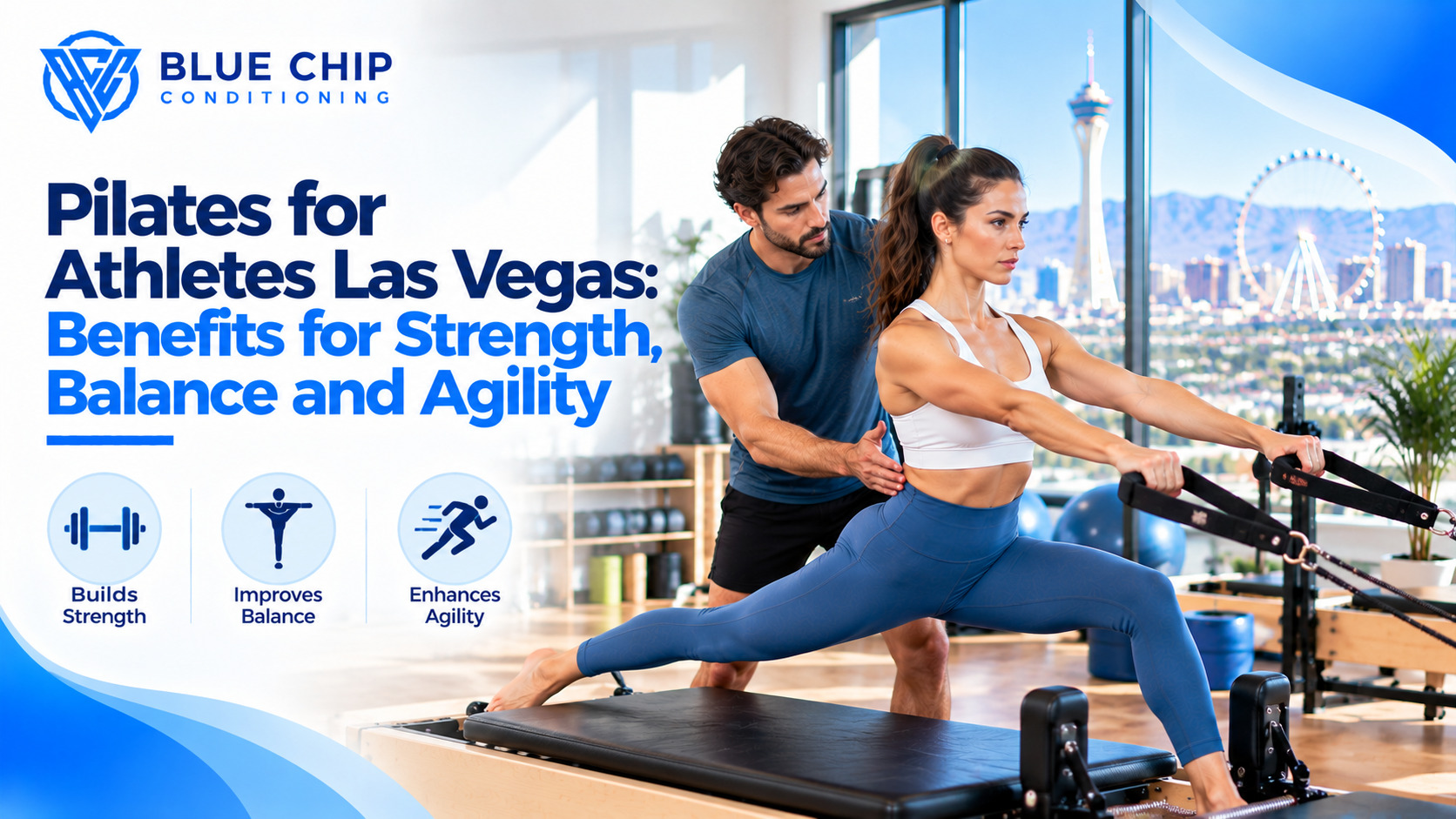
Pilates for athletes Las Vegas competitors use is a focused way to build the core control, balance and body awareness that traditional weight training often misses. This guide explains how Pilates improves strength, balance and agility, how it fits alongside your existing training, which sports benefit, and what to look for in a program.
Athletes already train hard. The question when considering Pilates for athletes Las Vegas sessions is whether that training addresses the small stabilizing muscles, movement imbalances and gaps in mobility that limit performance and raise injury risk. That is where Pilates earns its place in a modern training plan.
What Makes Pilates Different for Athletes
Pilates is a method of controlled movement developed by Joseph Pilates in the early twentieth century. It emphasizes core stability, precision, breathing and alignment. For an athlete, its value lies in how it trains the body to produce and control force through the trunk.
Most sports involve transferring force from the ground, through the hips and core, and out through the arms or legs. A weak or poorly coordinated midsection leaks that force. Athletic Pilates training teaches the trunk to stay stable while the limbs move powerfully, which is exactly what sprinting, throwing, swinging and jumping demand.
Pilates for athletes also tends to be low impact. That makes it useful during heavy competition periods, when athletes need meaningful work without adding joint stress.
Key Benefits of Pilates for Athletes Las Vegas Teams and Individuals Rely On
Strength From the Inside Out
Pilates for strength and balance works the deep muscles of the abdomen, back, hips and shoulders. These muscles rarely get dedicated attention in a barbell program, yet they support every powerful movement. Reformer springs allow precise resistance, so an athlete can load a single-leg or rotational pattern in a controlled way.
Balance and Body Control
Many Pilates exercises are performed on one leg, on an unstable carriage or in positions that challenge alignment. This trains proprioception, the body’s sense of position in space, which helps athletes land, cut and recover their balance more efficiently. Because Las Vegas athletes often train and compete year-round in the desert heat, low-impact balance work is an efficient way to keep building control without adding joint stress. It is one reason Pilates for strength and balance has become popular with local tennis players, golfers and dancers.
Agility and Change of Direction
Pilates for agility focuses on the control behind quick movement: a stable pelvis, responsive hips and a coordinated trunk. When those elements work together, athletes can decelerate and redirect with less wasted motion. Pilates for agility does not replace cone drills or ladder work, but it improves the control those drills rely on.
Mobility That Supports Performance
Restricted hips, ankles or thoracic spines limit stride length, swing mechanics and overhead reach. Pilates builds active mobility, meaning range that the athlete can control under load.
Fewer Imbalances
Sports such as tennis, golf and baseball are one-sided by nature. Pilates for sports performance includes targeted unilateral work that helps address left-right differences before they become problems.
Sports That Benefit Most From Pilates for Athletes Las Vegas Programs
- Tennis and golf: Rotational control, hip mobility and balance through the swing
- Basketball and volleyball: Landing mechanics, ankle and knee control, and core stability for jumping
- Running and track: Pelvic stability, hip strength and efficient stride mechanics
- Football and soccer: Change of direction, hamstring and groin resilience, and trunk control during contact
- Baseball and softball: Shoulder and thoracic mobility with rotational power
- Dance and gymnastics: Strength through extreme range, control and alignment
Pilates vs Other Training Methods
Pilates is not a replacement for strength, speed or sport-specific practice. It complements them. The table below shows how it fits alongside common alternatives.
| Factor | Pilates | Traditional Weight Training | Yoga |
| Primary focus | Core control, alignment, stability | Maximal strength and power | Flexibility and breath |
| Impact on joints | Low | Moderate to high | Low |
| Unilateral and rotational work | Extensive | Varies by program | Moderate |
| Feedback on movement quality | High, especially with instruction | Depends on coaching | Moderate |
| Best use for athletes | Fixing imbalances, injury resilience, control | Building force and power | Recovery and flexibility |
Many athletes searching for sports performance training Las Vegas options compare large performance gyms, physical therapy clinics and Pilates studios. Performance gyms excel at speed and power work, and clinics are essential for diagnosed injuries. Sports performance training Las Vegas athletes choose should match their goals, budget and the level of individual attention they need. A specialized Pilates studio adds detailed movement quality and individual attention, which makes Pilates for athletes Las Vegas programs a strong complement rather than a replacement.
How to Add Pilates for Athletes Las Vegas Sessions to Your Training Plan
The right dose of Pilates for athletes Las Vegas sessions depends on your season, sport and current workload. A youth soccer player, a collegiate volleyball player and a professional golfer will each need a different plan.
- Off-season: Two or three sessions a week to rebuild control, address imbalances and improve mobility.
- Pre-season: One or two sessions, shifting toward sport-specific patterns and higher-level balance challenges.
- In-season: One session a week to maintain stability and mobility without adding fatigue.
- Return to play: Coordinated with your physician or physical therapist, using Pilates as a bridge between rehab and full training.
Place sessions on lighter training days or after skill work. Pilates for sports performance is most effective when it supports, rather than competes with, your main training. Avoid scheduling demanding Pilates directly before high-intensity sessions that require fresh legs.
Common Mistakes Athletes Make With Pilates
- Treating it as a light recovery class: Done properly, athletic Pilates training is challenging and specific.
- Chasing intensity over precision: Athletes often rush. The benefit comes from control and alignment, not speed.
- Using generic routines: A pitcher and a distance runner need different priorities. Programs should reflect your sport.
- Stopping in-season: Dropping all stability work during competition is when imbalances tend to return.
- Skipping communication: Your instructor should know your training schedule, competition dates and injury history so sessions fit your season.
What to Look for in a Las Vegas Program
Not every class is designed for athletes. When comparing options for Pilates for athletes Las Vegas has to offer, look for:
- Instructors with experience working with athletes or dancers
- Individual assessment before programming
- Equipment such as reformers for adjustable resistance
- Small class sizes or private sessions for detailed feedback
- Willingness to coordinate with coaches or physical therapists
Why Blue Chip Conditioning
Blue Chip Conditioning, a studio offering Pilates for athletes Las Vegas families and competitors use, was founded by former Nevada Ballet Theatre dancer Danielle Maas and focuses on athletic enhancement, rehabilitation and overall physical fitness. The studio’s Elite Athlete Development Training program uses Pilates conditioning to help both established and aspiring athletes work toward their full potential, with programming tailored to the athlete’s sport and body.
For Pilates for athletes Las Vegas clients can tailor to their goals, athletes can start with private Pilates sessions for fully individual athletic Pilates training, or train in semi-private sessions that focus on Pilates for sports performance with a small group. Group reformer classes are a useful way to keep up Pilates for strength and balance between other workouts. Dancers and aesthetic athletes can explore Pilates for dancers, which shares the same emphasis that makes Pilates for athletes effective. To see how a studio compares with a typical gym for Pilates for agility and control, read this Pilates studio vs gym comparison, or view the full range of sports performance training Las Vegas services offered at the studio.
Frequently Asked Questions
What are the benefits of Pilates for athletes?
Pilates for athletes builds deep core strength, improves balance, increases controlled mobility and helps correct left-right imbalances. These qualities support more efficient movement and may reduce the risk of overuse injuries, making Pilates a valuable complement to strength, speed and sport-specific training.
Where can I find Pilates for athletes Las Vegas programs?
Look for studios that offer Pilates for athletes Las Vegas programs with individual assessments, reformer equipment and instructors experienced with athletes. Blue Chip Conditioning on South Rainbow Boulevard in Las Vegas offers Elite Athlete Development Training alongside private, semi-private and group reformer sessions.
Can Pilates improve agility?
Yes. Pilates improves the stability and control that underpin quick changes of direction, including pelvic control, hip strength and trunk coordination. Combined with sport-specific speed and agility drills, it can help athletes move more efficiently and decelerate with better control.
How often should athletes do Pilates?
Two or three sessions a week work well in the off-season, while one session a week is usually enough to maintain progress during competition. The ideal frequency depends on your sport, overall workload and recovery, so it is best planned with your coach or instructor.
Is Pilates enough on its own for sports performance?
No. Pilates is most effective as part of a complete program that also includes strength, power, conditioning and sport-specific practice. Its role is to improve control, alignment and resilience so that the rest of your training transfers more effectively.
Is reformer Pilates better for athletes than mat Pilates?
The reformer offers adjustable spring resistance and an unstable carriage, which allow more sport-specific loading and balance challenges. Mat Pilates is convenient for home maintenance. Most athletes benefit from reformer sessions with an instructor, supported by short mat routines.
Can Pilates help athletes recover from injury?
Pilates can be a helpful bridge between physical therapy and full training once a clinician has cleared you. Its low-impact, adjustable nature allows gradual progression. Always share your injury history with your instructor and follow your medical team’s guidance.
Conclusion
Strength, balance and agility depend on a stable core, mobile joints and precise body control. Pilates develops all three in a low-impact format that fits around demanding training schedules. Pilates for athletes Las Vegas programs are not a substitute for strength or speed work, but it makes that work more effective by improving how force moves through the body and by addressing the imbalances that sport creates.
If you are an athlete looking for an edge, Pilates for athletes Las Vegas sessions built around your sport and season can help. To prepare, read our guide on what to expect from your first private Pilates training in Las Vegas. The team at Blue Chip Conditioning can assess how you move and design a program that complements your existing training. Book a session to see how Pilates can support your performance.