
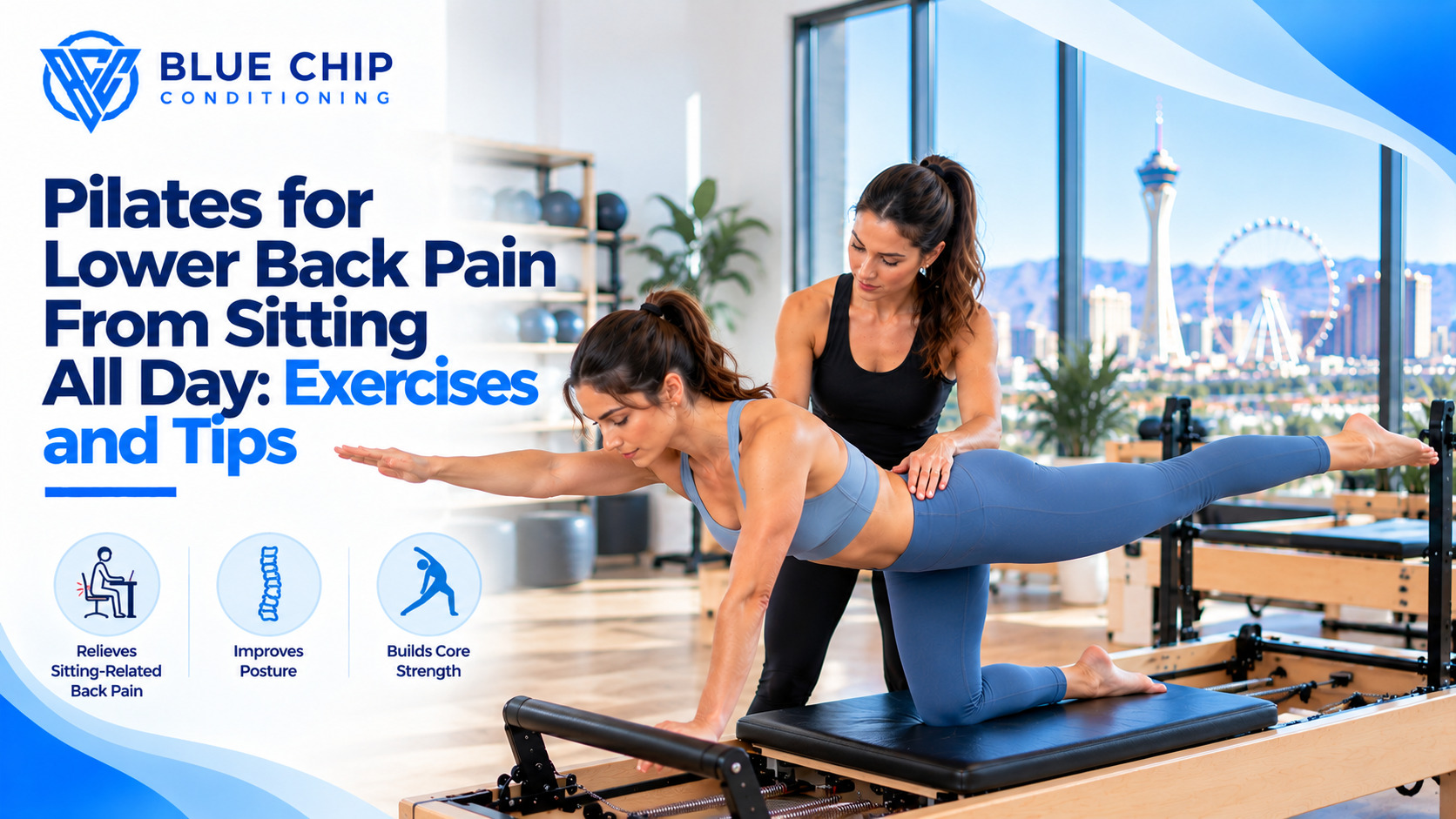
Pilates for back pain is one of the most practical ways to counter the stiffness and ache that build up after long hours at a desk. This guide explains why sitting strains the lower back, which exercises help, how to fit them around a working day, and which mistakes to avoid so your practice supports recovery rather than aggravating it.
The goal is not to stop sitting, which is unrealistic. It is to restore movement to the hips and spine, strengthen the deep muscles that support you, and build habits that break up long periods in one position.
Why Sitting All Day Hurts Your Lower Back
Low back pain is one of the most common musculoskeletal complaints in adults, and prolonged sitting is a frequent contributor. When you sit for hours, several things happen at once:
- Hip flexors shorten: The muscles at the front of the hip stay in a shortened position, which can tug on the lumbar spine when you stand.
- Glutes switch off: Long periods without use make the glute muscles less responsive, so the lower back picks up work they should be doing.
- Posture collapses: Most people slump as the day goes on, rounding the spine and placing steady load on the discs and ligaments.
- Movement disappears: Spinal joints and tissues rely on movement to stay healthy. Staying still for hours tends to leave them stiff.
Sitting is not dangerous, but the body adapts to the positions it holds most and needs counterbalancing movement.
How Pilates for Back Pain Works
Pilates for back pain focuses on control, alignment and breath rather than intensity. Its emphasis on deep abdominal muscles, the muscles alongside the spine and the hips makes it well suited to people whose backs have weakened through inactivity.
Three principles explain why Pilates for back pain helps:
- Stability before strength. You learn to keep the pelvis and spine steady while the arms and legs move, which reduces strain during everyday tasks.
- Mobility through the whole spine. Gentle flexion, extension and rotation help undo the stiffness of fixed sitting postures.
- Body awareness. Precise cueing teaches you to notice when you slump or grip, a skill that carries over to your desk.
Core strengthening exercises for back pain are often misunderstood as endless crunches. In Pilates, core work means training the deep stabilizers to support the spine during movement, which is far more relevant to daily life.
Gentle Pilates Exercises for Beginners With Back Pain
The following gentle Pilates exercises for beginners suit most people with general, non-specific back stiffness. Move slowly, breathe steadily and stay well within a comfortable range. If any exercise increases pain, stop.
1. Pelvic Tilts
Lie on your back with knees bent and feet flat. Exhale to gently flatten the lower back toward the mat, then inhale to return to neutral. This teaches you to control the pelvis and wakes up the deep abdominals.
2. Bridging
From the same position, peel the spine off the mat one segment at a time until the hips lift, then lower slowly. Bridging works the glutes and hamstrings, which are often underused after a day in a chair.
3. Knee Folds
Keeping the pelvis level, lift one bent knee toward the ceiling and return it without letting the lower back arch or the hips rock. It is among the simplest core strengthening exercises for back pain because it trains stability without loading the spine.
4. Cat-Cow on Hands and Knees
Alternate between gently rounding and gently arching the spine. This restores movement to stiff segments and is one of the easiest lower back pain exercises to do between meetings.
5. Spine Twist (Seated or Supine)
Rotate gently from the upper back while keeping the pelvis still. Rotation is often the first movement lost when we sit for long periods.
6. Swimming Prep
Lying face down, lift one arm and the opposite leg a short distance while keeping the pelvis steady. This strengthens the muscles along the back of the body that hold you upright at your desk.
7. Hip Flexor Stretch
From a half-kneeling position, tuck the pelvis slightly and shift forward until you feel a stretch at the front of the back hip. Hold for several slow breaths on each side.
These Pilates exercises for back pain work best as a short routine, roughly 15 to 20 minutes, done several times a week.
Mat vs Reformer for Back Pain Relief
Both mat and reformer work can support Pilates for back pain. The right choice depends on your comfort level and how much guidance you need.
| Factor | Mat Pilates | Reformer Pilates |
| Support | Body weight only | Springs can assist or resist movement |
| Load on the spine | Can feel demanding for beginners | Easier to adjust and reduce load |
| Feedback | Mostly self-directed | Machine helps reveal imbalances |
| Convenience | Can be done anywhere | Requires studio equipment |
| Best for | Daily maintenance at home | Guided progression and rehabilitation |
Many people start Pilates for back pain in the studio, then add a short mat routine at home.
How does this compare with other common options? For Pilates for back pain relief, the comparison matters. A general gym program can build strength, but it often lacks detailed attention to spinal alignment. Yoga improves flexibility, though some poses may push a sensitive back too far into end range. Physical therapy is the right starting point for diagnosed conditions. Pilates for back pain often fits between these, offering controlled strength and mobility work that can continue after formal rehab ends.
Tips for Desk Workers
Even consistent Pilates for back pain will not fully offset eight hours of sitting. Pair your practice with small changes during the workday:
- Move every 30 to 45 minutes: Stand, walk to refill water, or do two or three cat-cow repetitions.
- Set up your workstation: Keep the screen at eye level and feet flat, with hips slightly higher than knees.
- Use your breath: A few slow breaths into the sides and back of the rib cage can release tension built up from bracing.
- Practice micro-sessions: Pelvic tilts or seated twists are quick lower back pain exercises that keep the spine moving.
Common Mistakes to Avoid
- Gripping the abdominals too hard: Strong bracing can make the back stiffer. Aim for a gentle, sustained engagement.
- Rushing repetitions: Speed hides poor control. Slow movement builds the stability you actually need.
- Ignoring pain signals: Mild muscle effort is fine; sharp, radiating or worsening pain is not.
- Doing the same routine forever: Progress gradually as your strength improves to keep seeing results.
When to See a Professional First
Pilates for back pain is suitable for most people with general, mechanical stiffness. However, see a physician before starting if you have pain that travels down the leg, numbness or tingling, loss of bladder or bowel control, unexplained weight loss, pain after a fall, or pain that is severe at night. Once you are cleared, tell your instructor about any diagnosis so they can adapt the work.
Why Guided Sessions Help
Back pain is personal, so Pilates for back pain works best with individual attention. At Blue Chip Conditioning in Las Vegas, instructors emphasize hands-on corrections and tailor sessions to each client’s goals and history.
Semi-private sessions offer focused attention on Pilates for back pain relief at a pace that suits you, while group reformer classes are a good next step once you understand the fundamentals and want to keep practicing Pilates exercises for back pain regularly. If you are unsure where to begin, this guide to beginner Pilates classes in Las Vegas explains the difference between small groups and private training. You may also find it helpful to read what to expect from your first private session, where an instructor assesses your posture before choosing lower back pain exercises, and to compare a Pilates studio with a gym for core strengthening exercises for back pain.
Frequently Asked Questions
Is Pilates good for lower back pain from sitting?
Yes. Pilates for back pain strengthens the deep core and glutes, restores spinal mobility and improves posture awareness, all of which counter the effects of prolonged sitting. Most people with general, non-specific stiffness can benefit, provided they start gently and progress gradually.
How often should I do Pilates for back pain relief?
Two or three sessions a week is a practical starting point, supported by a short daily routine at home. Consistency matters more than session length, so regular 15 to 20 minute practices often help more than one long weekly workout.
What are the best Pilates exercises for back pain?
Pelvic tilts, bridging, knee folds, cat-cow, gentle spine twists, swimming prep and a hip flexor stretch are effective places to start. They build stability and mobility without placing heavy load on the spine, which makes them suitable for most beginners.
Can beginners do Pilates with back pain?
Yes. Gentle Pilates exercises for beginners are designed to be low impact and adjustable. Starting with guided sessions is helpful because an instructor can modify movements, check alignment and make sure you are using the right muscles from the beginning.
Is reformer Pilates better than mat Pilates for back pain?
Neither is universally better. The reformer’s springs can support or reduce load, which some beginners find more comfortable. Mat work is convenient for home practice. Many people use both: reformer sessions for guided progress and mat routines between visits.
How long does it take for Pilates to help back pain?
Many people notice easier movement and less stiffness within a few weeks of consistent practice. Lasting change in strength and posture usually takes longer and depends on your starting point, daily habits and how regularly you practice.
Can Pilates make back pain worse?
It can if exercises are too advanced, performed with poor form or done while ignoring sharp pain. Starting gently, progressing slowly and working with a qualified instructor greatly reduces that risk. Seek medical advice if pain worsens or spreads.
Conclusion
Sitting for long hours tightens the hips, weakens the glutes and stiffens the spine, and the lower back often pays the price. Pilates for back pain addresses each of those issues through controlled core work, gentle mobility and better body awareness. Combine a short routine of the exercises above with regular movement breaks during the day, and progress gradually as your strength builds.
For the best results, learn the fundamentals with guidance so that every repetition supports your spine. Before your first class, read our guide on beginner Pilates classes in Vegas: small groups vs private training. If desk-related back pain is affecting your work or daily comfort, the instructors at Blue Chip Conditioning in Las Vegas can assess how you move and build a plan around your needs. Book a session to start practicing Pilates for back pain with expert support.