
Strength and youth fitness go hand in hand when the goal is to raise confident, capable and resilient young athletes. This guide explains why strength training matters for children and teens, how to start safely, which principles to follow at each stage, and which common mistakes parents and coaches should avoid.
Many families still worry that lifting weights is unsafe for kids, and that concern often delays sensible strength and youth fitness habits. Leading health and sports medicine organizations have moved away from that view. With qualified supervision, good technique and sensible progression, strength work is widely regarded as a safe and valuable part of youth athletic development.
Why Strength and Youth Fitness Matter
Strength and youth fitness are closely linked to long-term athletic health. Young athletes today often specialize early, train year-round and play on multiple teams. That volume can build skill, but it also concentrates stress on the same joints and muscles. Strength and youth fitness programs balance that load by developing the whole body.
Strength training in young people is associated with several benefits:
- Better movement quality: Stronger muscles help children control landings, cuts and changes of direction.
- Injury resilience: Balanced strength around the hips, knees, ankles and shoulders supports joints during sport.
- Bone health: Weight-bearing and resistance exercise during growth support the development of healthy bones.
- Confidence: Mastering new skills and seeing progress builds self-belief that carries over to sport and school.
The U.S. Centers for Disease Control and Prevention recommends that children and adolescents aged 6 to 17 get at least 60 minutes of physical activity each day, including muscle-strengthening activity on at least three days a week. Structured youth strength training is one practical way to meet that goal, and it builds strength and youth fitness habits that can last into adulthood.
When Can Kids Start Strength Training?
There is no single right age to begin strength and youth fitness training. A more useful question is whether the child can listen to instructions, follow technique cues and enjoy the process. For many children, that readiness appears around age seven or eight.
The approach should change with development:
Ages 7 to 11: Movement Foundations
Focus on body-weight skills such as squatting, lunging, hinging, pushing, pulling, crawling, balancing and jumping. Games and varied activities keep it enjoyable. The aim is coordination and confidence, not heavy loads.
Ages 12 to 14: Technique and Gradual Load
As kids enter adolescence, introduce light external resistance using bands, medicine balls or light dumbbells. Strength training for young athletes at this stage should prioritize perfect form and controlled tempo. Growth spurts can temporarily affect coordination, so patience matters.
Ages 15 and Up: Structured Progression
Older teens with solid technique can follow more structured programs, including progressive loading under qualified supervision. Strength training for young athletes at this stage can mirror adult training more closely, while still respecting recovery needs. Sport-specific power, speed and conditioning work can be added here.
Top Strength and Youth Fitness Tips
The following principles apply across most sports and ages. They form the backbone of any good strength and youth fitness plan.
1. Master Movement Before Adding Load
Every exercise should look smooth and controlled before resistance increases. Poor form under load is where most problems start.
2. Build a Strong, Stable Core
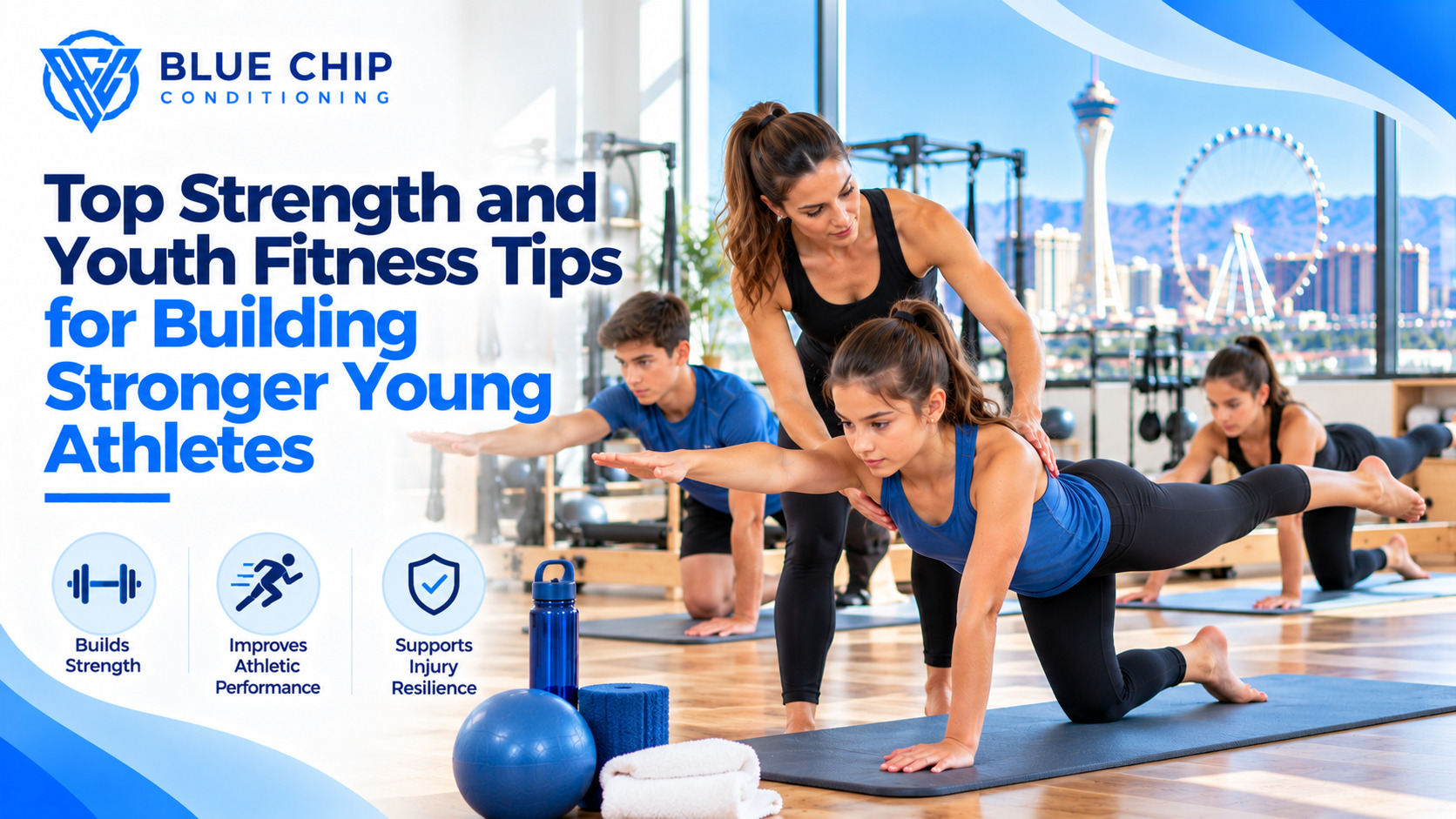
The trunk connects the upper and lower body. Exercises such as planks, dead bugs, bird dogs and Pilates-based core work teach young athletes to stay stable while their limbs move. Pilates is particularly useful because it emphasizes control, alignment and body awareness, three qualities at the heart of youth athletic development.
3. Train the Whole Body
Avoid focusing only on the muscles a sport seems to use most. Strength and youth fitness programs work best when they develop the whole athlete. Balanced programs include upper and lower body, front and back, and both sides of the body.
4. Include Balance and Landing Work
Single-leg exercises and controlled landing drills help young athletes absorb force safely, which is especially important in jumping and cutting sports such as basketball, volleyball and soccer. Practicing how to land softly with the knees tracking over the toes is a simple habit with lasting value.
5. Keep Sessions Short and Engaging
For athletic performance training for kids, two or three sessions of 30 to 45 minutes a week are usually enough for children and younger teens. Variety and fun keep motivation high. Strength and youth fitness should feel rewarding, not like a chore, if you want kids to stay with it.
6. Prioritize Recovery and Sleep
Growth, training and school all demand energy. Adequate sleep, balanced nutrition and rest days are essential parts of strength and conditioning for youth.
7. Choose Qualified Supervision
Coaches should understand growth and development, emphasize technique and adjust programs for each child. Supervision is the single biggest factor in keeping youth training safe. Good strength and conditioning for youth also includes clear communication with parents about goals and progress.
Youth Training vs Adult Training
Young athletes are not small adults, and strength and youth fitness programs should not simply copy adult routines. Their programs should reflect where they are developmentally.
| Factor | Youth Training | Adult Training |
| Main goal | Movement skill, coordination, confidence | Performance, strength, body composition |
| Load | Body weight to light, progressive resistance | Moderate to heavy as appropriate |
| Session style | Varied, game-based, short | Structured and specific |
| Supervision | Essential at all times | Recommended, especially for beginners |
| Progression | Driven by technique and maturity | Driven by goals and training history |
Families exploring options will find several types of programs. Large performance facilities often specialize in speed and power for older teens. Team-based school programs offer convenience but may lack individual attention. Pilates and movement-focused studios offer smaller groups and detailed feedback on alignment and control. The best choice depends on the child’s age, sport and personality, and many families combine two approaches. Whatever you choose, athletic performance training for kids should put long-term development ahead of short-term results.
Common Mistakes to Avoid
- Lifting too heavy, too soon: Ego and comparison lead to poor form. Progress should follow technique, not the number on the bar.
- Early single-sport specialization without balance: Year-round repetition of one sport increases overuse risk. Cross-training helps.
- Skipping warm-ups: A dynamic warm-up prepares joints and muscles and reinforces good movement patterns.
- Comparing kids to each other: Children mature at different rates. Measure progress against the child’s own starting point.
- Ignoring growth spurts: Rapid growth can temporarily reduce flexibility and coordination. Reduce load and emphasize control during these periods.
- Treating pain as weakness: Persistent joint pain in a child should be evaluated by a medical professional, not trained through.
How Pilates Supports Young Athletes
Pilates offers a useful complement to traditional strength and youth fitness work for kids and teens. Its emphasis on core control, balanced strength and body awareness helps young athletes move efficiently and safely. Reformer springs allow resistance to be adjusted precisely, which makes progression gradual and controlled.
At Blue Chip Conditioning in Las Vegas, the Elite Athlete Development Training program serves both established and aspiring athletes, using Pilates conditioning tailored to the athlete’s sport and body. Families can ask the team about options for young athletes and how sessions are adapted to age and experience.
Private Pilates sessions provide one-on-one youth strength training with full attention on technique, while semi-private sessions let teammates or siblings focus on strength training for young athletes together. Young dancers can explore Pilates for dancers, a strong path for youth athletic development in aesthetic sports. To understand how a specialized studio differs from a standard gym for strength and conditioning for youth, read this Pilates studio vs gym comparison, and review the full list of services that support athletic performance training for kids and adults.
Conclusion
Strength and youth fitness are not about turning children into miniature powerlifters. They are about building movement skill, balanced strength, confidence and habits that protect young athletes as their sporting demands increase. Start with body-weight foundations, progress only when technique is solid, prioritize recovery and always ensure qualified supervision.
For families in Las Vegas looking for a thoughtful approach to strength and youth fitness, Blue Chip Conditioning offers individual attention and Pilates-based conditioning tailored to each athlete. If your child is new to Pilates, read our guide on beginners Pilates classes in Vegas to see how small groups compare with private training. Contact the team to ask about options for your young athlete and how sessions can support their sport.
Frequently Asked Questions
Is strength training safe for kids?
Yes, when it is properly supervised, uses age-appropriate loads and emphasizes good technique. Major health and sports medicine organizations support youth strength training. Most injuries are linked to poor supervision, improper form or unsupervised use of heavy equipment rather than the training itself.
What age should kids start strength training?
Many children are ready around age seven or eight, provided they can follow instructions and enjoy the activity. Early training should focus on body-weight movements, coordination and fun. External load can be introduced gradually as technique and maturity develop.
Does strength training stunt growth?
No. Current evidence does not support the belief that properly supervised strength training stunts growth. Weight-bearing and resistance exercise can support healthy bone development. The main risks come from poor technique, excessive loads and lack of supervision.
How often should young athletes do strength training?
Two or three non-consecutive sessions per week of roughly 30 to 45 minutes is suitable for most children and younger teens. Older, experienced athletes may train more, but rest days, sleep and recovery remain essential.
What are the best exercises for youth athletic development?
Squats, lunges, hip hinges, push-ups, rows, planks, balance drills and controlled jumping are excellent foundations. Pilates-based core and mobility work also helps young athletes build control, alignment and balanced strength that transfer to most sports.
Can Pilates help young athletes?
Yes. Pilates builds core stability, balanced strength and body awareness, which support efficient, controlled movement in sport. Its low-impact, adjustable format makes it suitable for gradual progression, and it pairs well with sport practice and other strength training.
How do I choose a youth strength and conditioning program?
Look for qualified coaches, small groups or individual attention, an emphasis on technique over load, and a clear plan for progression. A good program also adapts to growth spurts, communicates with parents and keeps sessions engaging for young athletes.