
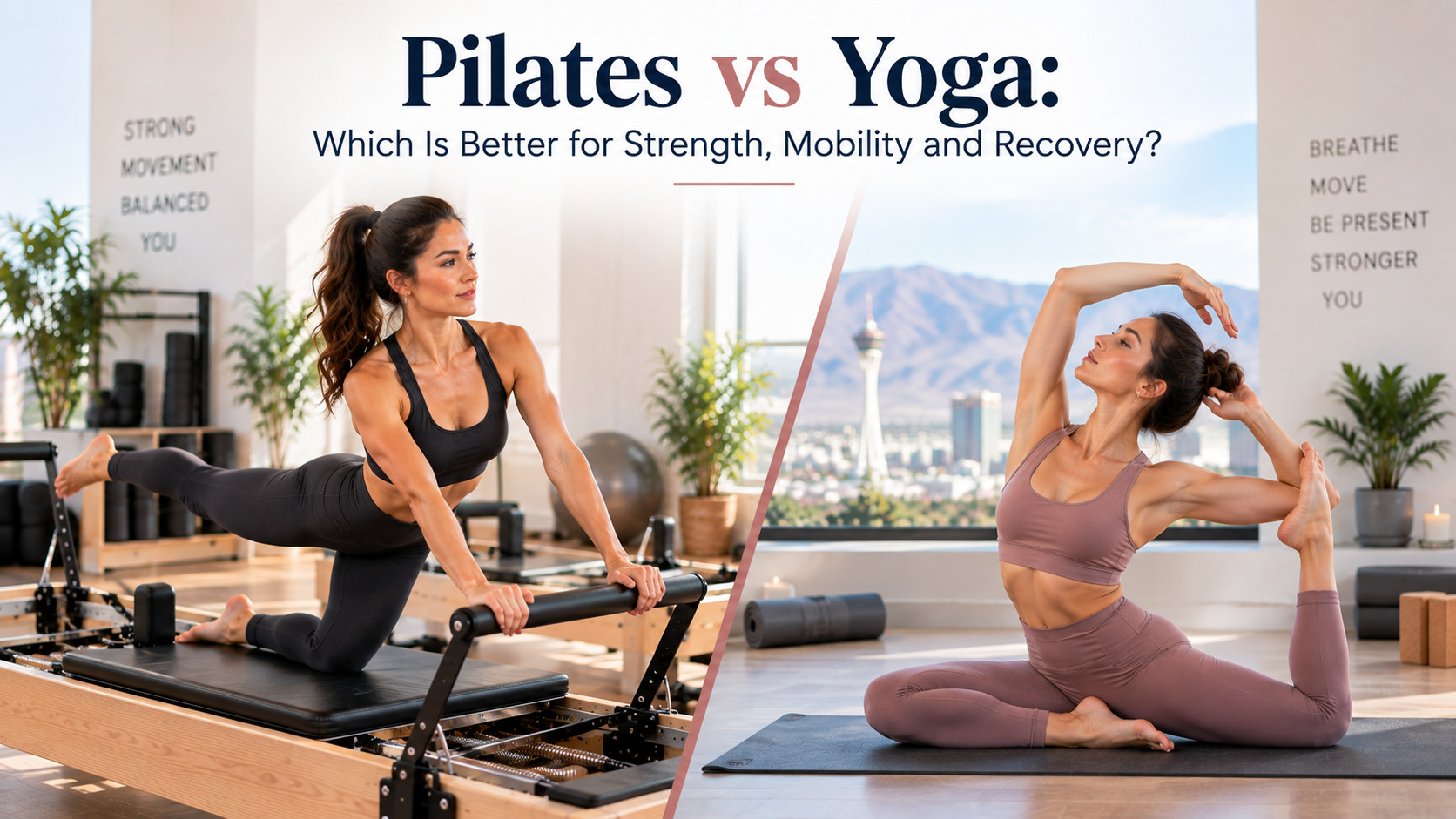
Choosing between Pilates vs yoga usually comes down to one question: what do you want your body to do better? Both methods build strength, flexibility and body awareness, yet they reach those results through different paths. This guide explains the real difference between Pilates and yoga, how each supports strength and recovery, which may suit back pain or weight management, and how to combine the two in a sensible weekly routine.
Two Disciplines, Two Goals
Yoga is a mind and body practice with roots in ancient Indian philosophy. As the National Center for Complementary and Integrative Health explains, most styles combine physical postures, breathing techniques and meditation or relaxation. Depending on the style, a class can feel slow and meditative or athletic and demanding.
Pilates was developed by Joseph Pilates in the early twentieth century, originally under the name Contrology. It centres on precise, controlled movement driven from the deep core muscles, with a strong emphasis on alignment, breath and quality over quantity. It can be practised on a mat or on specialised equipment such as the reformer, which uses springs to add resistance or support.
When people compare yoga vs Pilates, the simplest framing is this: yoga tends to prioritise flexibility, balance and a calm mental state, while Pilates tends to prioritise core strength, stability and movement control. There is plenty of overlap, but the intent behind each session is different, and that intent shapes the results you can expect. Understanding it is the first step in any Pilates vs yoga decision.
How Pilates vs Yoga Compare
The table below summarises the main difference between Pilates and yoga across the factors most people weigh up before booking a class.
| Factor | Pilates | Yoga |
| Primary focus | Core strength, stability and controlled movement | Flexibility, balance, breath and mindfulness |
| Typical pace | Moderate, with controlled repetitions | Varies widely, from long holds to flowing sequences |
| Equipment | Mat or apparatus such as the reformer | Usually a mat, with blocks and straps as props |
| Role of breathing | Supports movement and core engagement | Often central to the practice and meditation |
| Mind-body element | Concentration and precision | Meditation, relaxation and, in some styles, spiritual roots |
| Often chosen for | Strength, posture and rehabilitation support | Mobility, stress relief and balance |
Strength and Core Control
Pilates is built around what Joseph Pilates called the powerhouse: the muscles of the abdomen, lower back, hips and pelvic floor. Exercises are performed with careful control, so muscles work through their full range under steady tension. On a reformer, spring resistance can make an exercise harder or easier, which lets an instructor progress strength gradually and safely.
Yoga builds strength too, particularly in vinyasa or power styles, where you support your bodyweight through planks, lunges and arm balances. However, the load is limited to bodyweight and static holds. If your main aim is targeted core strength and stability, Pilates generally offers more direct and adjustable training. For many people asking is Pilates better than yoga for strength, that adjustability is the deciding factor.
Flexibility and Mobility
Yoga typically asks you to hold stretches for longer, which suits people who want to improve passive flexibility. Pilates approaches mobility differently: it trains you to control your range of motion, so flexibility and strength develop together. Our article on yoga vs Pilates for long-term mobility looks at what the research says about range of motion over time.
A useful rule of thumb for the Pilates vs yoga choice on mobility: if you are very stiff, yoga’s longer holds can help open things up; if you are already flexible but feel unstable, the Pilates emphasis on control is often more valuable.
Stress and Recovery
Yoga’s breathing and meditation components make it a strong option for managing stress. Pilates also uses deliberate breathing and concentration, and many clients find the focus it demands genuinely calming. For physical recovery, Pilates is low impact and highly adaptable, which is why it is often used alongside physical therapy and athletic rehabilitation. On recovery, the Pilates vs yoga question is less about which is superior and more about timing and intent.
Key recovery considerations for each approach:
- Pilates allows loads to be scaled precisely, so an injured area can be protected while the rest of the body keeps working.
- Restorative and gentle yoga styles encourage relaxation and can ease general muscle tension after hard training.
- Both practices sharpen body awareness, helping you notice poor movement patterns before they turn into pain.
- A common mistake is treating either as passive recovery; both still require effort, so schedule them sensibly around harder training days.
Difficulty for Beginners
Deciding on Pilates vs yoga for beginners is less about which is easier and more about which environment helps you learn safely. Beginner yoga classes introduce foundational postures and breathing, while beginner Pilates introduces core engagement and a neutral spine. Reformer classes can feel unfamiliar at first, but the springs often support the body and make movements more accessible. Our guide to Pilates vs yoga for beginners covers whether to start on the mat or the reformer.
So, which is harder, Pilates or yoga? It depends on the class. A power yoga session can be very demanding, while a slow mat Pilates class can feel manageable. In general, Pilates feels harder on the core and deep stabilising muscles, and yoga feels harder on flexibility and balance. The best way to learn which is harder, Pilates or yoga, for your own body is to try a beginner-level class of each.
Which Is Better for Back Pain
People often ask about Pilates or yoga for back pain because both are commonly recommended. A considerable amount of research has looked at yoga for low-back pain and suggests there may be some benefit, while Pilates is widely used in rehabilitation settings because it trains the deep stabilising muscles of the trunk.
The better choice depends on the cause and stage of your pain:
- Pilates can suit people whose pain relates to weak core stability, posture or returning from injury, because resistance and range can be controlled closely.
- Yoga can suit people whose discomfort is linked to stiffness, tension or stress, especially in gentle or therapeutic styles.
- Avoid deep bending, twisting or loaded positions that provoke symptoms, whichever method you choose.
- Get persistent, severe or radiating pain assessed by a medical professional before starting either practice.
In the Pilates vs yoga discussion around back health, individual instruction matters more than the label on the class. An instructor who can modify exercises for your spine is the real advantage, which is why many people with back concerns begin in private or semi-private sessions before joining group classes.
Which Is Better for Weight Management
When looking at Pilates vs yoga for weight loss, it helps to be realistic. Neither is primarily a calorie-burning workout compared with running or high-intensity interval training, and weight management depends mostly on overall energy balance, sleep, stress and consistency.
That said, both can contribute. Faster reformer classes and flowing yoga styles raise heart rate and build lean muscle, which supports metabolic health. Reviews summarised by NCCIH found that many yoga-based weight-control programmes produced gradual, moderate weight reductions, especially when sessions were longer and more frequent. Pilates builds strength and control, which makes other training more effective and less injury-prone.
The honest answer on Pilates vs yoga for weight loss is that the best option is the one you will do consistently, ideally several times a week, alongside sensible nutrition and regular walking or cardio.
Can You Do Both
Yes, and for many people doing Pilates and yoga together is the most balanced approach. Pilates builds the strength and control that protect your joints, while yoga develops flexibility and a calmer nervous system. Each fills gaps the other can leave, which is why the Pilates vs yoga question often ends in “both.”
A sensible weekly structure might look like this:
- Two Pilates sessions focused on core strength, posture and controlled mobility.
- One or two yoga sessions for flexibility, balance and stress relief.
- At least one full rest day or light walking day to allow recovery.
- Demanding sessions placed on different days from intense sport or heavy strength training.
Combining the two also reframes whether Pilates is better than yoga at all: for most people, a thoughtful mix outperforms either practice on its own. At Blue Chip Conditioning in Las Vegas, group reformer membership credits can also be used for mat and stretch classes, which makes it easier to build variety into your week.
Frequently Asked Questions
What is the main difference between Pilates and yoga?
The main difference between Pilates and yoga is focus. Pilates prioritises core strength, stability and precise, controlled movement, often using equipment such as the reformer. Yoga prioritises flexibility, balance, breathing and mindfulness through held postures and flowing sequences. Both improve body awareness, but Pilates is generally more strength-focused.
Is Pilates better than yoga?
Neither is universally better. The answer to is Pilates better than yoga depends on your goal. Pilates suits people who want core strength, better posture and rehabilitation support, while yoga suits those seeking flexibility, stress relief and balance. Many people get the best results by combining both practices each week.
Should I choose Pilates or yoga for back pain?
Choose based on the cause of the pain. With Pilates or yoga for back pain, Pilates is often preferred when pain relates to weak core stability or recovery from injury, while gentle yoga may help pain linked to stiffness and tension. Have persistent or severe pain assessed by a medical professional first.
Is Pilates or yoga better for weight loss?
When comparing Pilates vs yoga for weight loss, neither burns as many calories as running or interval training. Both support weight management by building muscle, improving consistency and helping manage stress. Faster reformer classes and vinyasa yoga raise heart rate more, but nutrition, sleep and regular activity matter most.
Which is harder, Pilates or yoga?
The answer to which is harder, Pilates or yoga, depends on the class style. Pilates tends to challenge the core and stabilising muscles more intensely, while yoga challenges flexibility and balance. A power yoga class can be tougher than a gentle mat Pilates class, so intensity varies more by class than method.
Should beginners start with Pilates or yoga?
For Pilates vs yoga for beginners, both are accessible if you choose an introductory class. Pilates teaches core engagement and alignment that carry over to other exercise, while yoga teaches foundational postures and breathing. If you have a past injury or want close guidance on form, a small-group Pilates session is a sensible start.
Can you do Pilates and yoga together?
Yes. Doing Pilates and yoga together is a balanced approach that many instructors recommend. A common routine includes two Pilates sessions for strength and control plus one or two yoga sessions for flexibility and relaxation each week. Leave at least one rest day and avoid stacking intense sessions back to back.
Conclusion
The Pilates vs yoga debate does not have a single winner. Pilates stands out for core strength, stability, posture and rehabilitation support, while yoga excels at flexibility, balance and stress management. When you weigh yoga vs Pilates against your own goals, injury history and preferences, the right choice usually becomes clear, and for many people the answer is a considered mix of both.
If strength and recovery are your priorities, reformer Pilates offers adjustable resistance and hands-on coaching that is difficult to replicate on a mat alone. If you are in Las Vegas and want to see how Pilates fits your routine, start with a complimentary demo session or the New Client Special at Blue Chip Conditioning. Our instructors will look at how you move and recommend group, semi-private or private sessions that match your body and goals. Book your first session to experience the difference for yourself.