
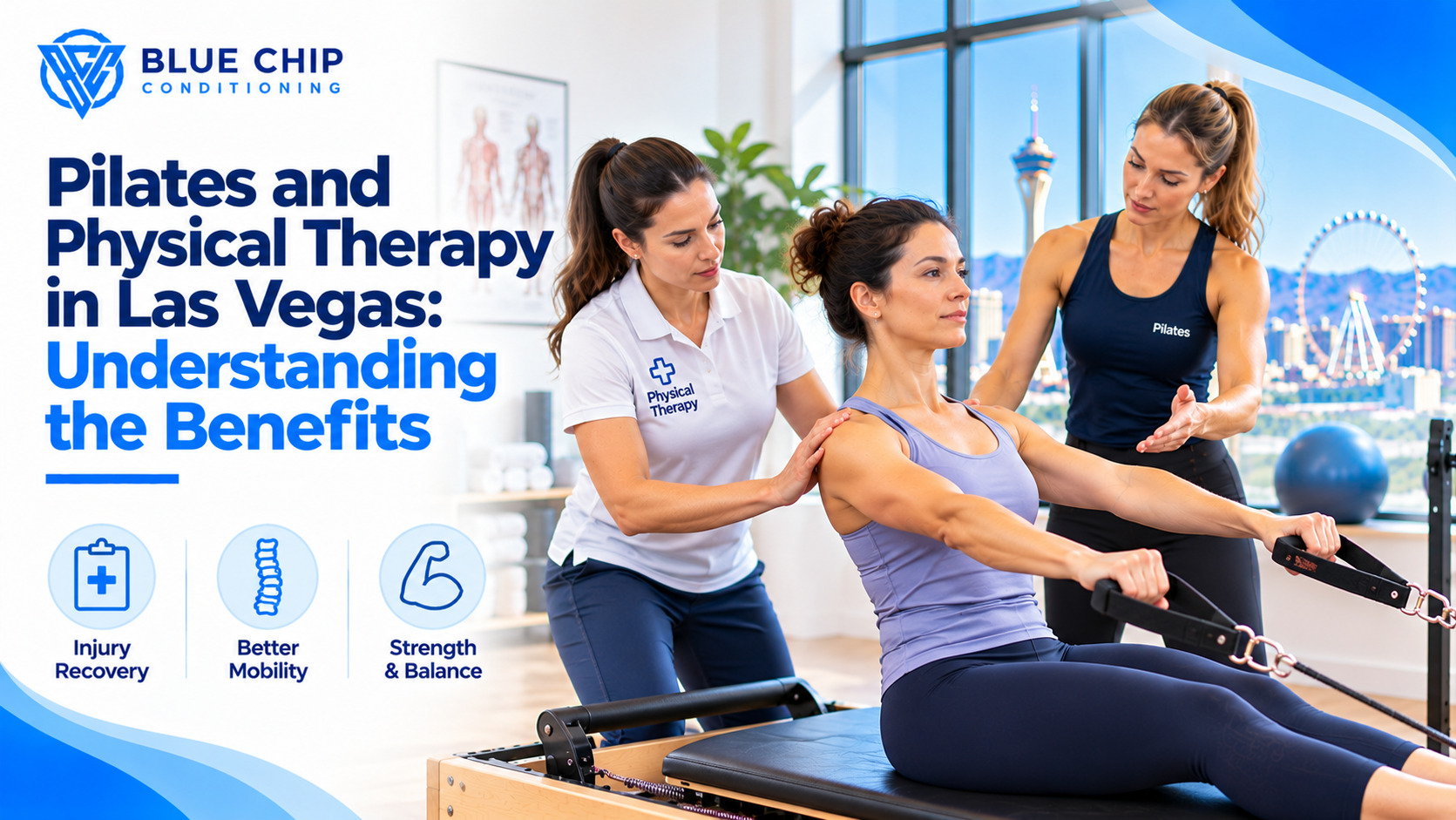
If you are recovering from an injury, managing chronic pain or trying to move better, you have probably come across Pilates and physical therapy Las Vegas options and wondered how they differ. The short answer: physical therapy diagnoses and treats a problem, while Pilates builds the strength, control and mobility that help keep it from returning. This comparison explains what each discipline does, how Pilates and physical therapy Las Vegas residents combine work together, who benefits most and how to choose your next step.
What Physical Therapy Does
Physical therapy is a licensed healthcare profession focused on assessing, diagnosing and treating movement problems caused by injury, surgery, illness or pain. A therapist evaluates your condition, sets clinical goals and uses manual therapy, targeted physical therapy exercises and education. In any Pilates and physical therapy in Las Vegas plan, therapy comes first when you have acute pain, a new injury, recent surgery or undiagnosed symptoms.
What Pilates Brings to Recovery
Pilates is an exercise method built on breath, alignment, core control and precise movement. On the reformer, adjustable springs either assist a movement or add resistance, so one exercise can be scaled for an athlete or for someone returning after months away.
Pilates is not medical treatment. Its value lies in rebuilding confidence, restoring balanced strength and turning short clinical routines into a lasting habit. That is why the Pilates and physical therapy Las Vegas conversation is about sequencing, not choosing a winner.
Pilates vs Physical Therapy: Key Differences
The clearest way to understand Pilates vs physical therapy is to compare purpose, provider and setting.
| Factor | Physical Therapy | Pilates |
| Primary purpose | Diagnose and treat injury, pain or dysfunction | Build strength, mobility, control and resilience |
| Provider | Licensed physical therapist | Certified Pilates instructor |
| Typical setting | Clinic or hospital | Studio, private or small group |
| Medical diagnosis | Yes | No |
| Insurance | Often billed to insurance | Usually paid privately |
| Best stage | Acute injury, post-surgery, undiagnosed pain | After clearance and for long-term maintenance |
Neither replaces the other. Pilates vs physical therapy is best viewed as a handoff, and every Pilates and physical therapy in
Las Vegas client benefits when that handoff is planned.
Pilates and Physical Therapy Las Vegas: How the Two Work Together
Many people finish therapy with fewer symptoms but without the full strength to return to what they love. A Pilates and physical therapy in Las Vegas approach fills that gap:
- Early phase: Your therapist manages pain, restores basic movement and sets restrictions.
- Transition phase: With clearance, private Pilates reinforces your physical therapy exercises in a coached, low-impact setting.
- Strength phase: Spring resistance rebuilds strength through full range, including single-sided work to correct imbalances.
- Maintenance phase: Regular sessions help protect the area and support long-term mobility.
Share your therapist’s notes with your instructor so every Pilates and physical therapy Las Vegas program stays within your provider’s guidance.
What a Pilates and Physical Therapy Las Vegas Session Looks Like
A typical transition session starts with a check-in on symptoms and your therapist’s restrictions, followed by breathing and core activation. Your instructor then selects reformer exercises that mirror your clinical goals, such as single-leg footwork after a knee injury or supported arm work after a shoulder strain, and finishes with mobility work. Every Pilates and physical therapy in Las Vegas session should end with a clear note on what to progress next time.
Benefits of Combining the Two
Pilates for Mobility
Pilates for mobility moves the spine, hips and shoulders through controlled ranges while muscles stay active, so you own new range with strength. Pilates for mobility also complements the range-of-motion work most therapists assign.
Pilates for Flexibility
Pilates for flexibility lengthens muscles under control rather than forcing end range. Pilates for flexibility usually feels safer than aggressive stretching after a strain.
Pilates for Strength and Balance
Pilates for strength and balance challenges stability and deep core strength, helping athletes return to sport and older adults move confidently. Pilates for strength and balance reinforces the stability work started in therapy.
Pilates for Injury Recovery
Because resistance adjusts spring by spring, Pilates for injury recovery allows gradual, measurable progression. Pilates for injury recovery works best when it builds on the physical therapy exercises you already know.
Who Benefits From Pilates and Physical Therapy Las Vegas Programs?
- People with recurring back pain who want stronger core support after therapy.
- Athletes returning to golf, tennis, running or team sports.
- Post-surgical clients cleared by their surgeon or therapist.
- Active older adults focused on balance, posture and independence.
- Dancers and performers rebuilding precise control after a strain or overuse injury.
Comparing Pilates and Physical Therapy Las Vegas Providers
When comparing Pilates and physical therapy Las Vegas providers, you will find four broad types. Physical therapy clinics deliver diagnosis and insurance-supported care, and some use reformers within therapy visits. Large franchise studios offer convenient schedules but often bigger classes. Gyms with add-on classes are affordable but rarely offer hands-on correction. Boutique rehab-focused studios, such as Blue Chip Conditioning on S Rainbow Blvd, offer private, semi-private and small group sessions where instructors adapt therapeutic Pilates exercises to each client.
Before booking any Pilates and physical therapy in
Las Vegas provider, ask about instructor certification, experience with post-injury clients, class sizes and whether they will follow your therapist’s restrictions.
Why Guided Instruction Makes a Difference
The move from clinic to studio is where many people lose momentum. Without feedback, it is easy to drift back into old compensations, such as favoring the stronger leg or arching the lower back, which can undo the progress made in therapy. Hands-on cues help you feel the difference between a movement done correctly and one that only looks right.
At Blue Chip Conditioning in Las Vegas, instructors emphasize hands-on corrections and tailor each session to the client’s goals and history. In semi-private sessions, an instructor can adjust springs and therapeutic Pilates exercises in real time, while group reformer classes let you keep training alongside others once you are ready. If you are still choosing a coach, the studio’s guide to the Best Pilates Instructors in Las Vegas explains what to look for, and Pilates for Lower Back Pain From Sitting All Day shows how these principles apply to one of the most common reasons people start therapy.
Frequently Asked Questions
Is Pilates the same as physical therapy?
No. Physical therapy is licensed healthcare that diagnoses and treats injury, pain and dysfunction. Pilates is an exercise method that builds strength, mobility and control. In a Pilates and physical therapy Las Vegas plan, therapy leads early recovery and Pilates extends progress once a provider clears you.
Can Pilates replace physical therapy?
No, not for a new injury, recent surgery or undiagnosed pain. A therapist provides assessment and treatment that an instructor cannot. Once you are discharged or cleared, a Pilates and physical therapy Las Vegas routine is an excellent way to continue progress and reduce the chance of the problem returning.
Should I start Pilates during or after physical therapy?
Either can work in a Pilates and physical therapy Las Vegas plan, depending on your provider. Some people add private Pilates during late-stage therapy, while others begin after discharge. The key is clearance and sharing restrictions with your instructor so therapeutic Pilates exercises stay within safe limits.
Is reformer Pilates good for injury recovery?
Yes. Spring resistance can be set very light, then increased gradually, supporting low-impact movement, single-sided work and controlled range. It works best with clearance from your provider and an instructor experienced with post-injury clients, which is exactly what to look for in a studio.
Does insurance cover Pilates in Las Vegas?
Physical therapy is often billed to insurance, while studio Pilates is usually paid privately. Some clinics include Pilates-based exercise within a therapy visit, which may be billed as therapy. Check with your insurer and provider, because coverage depends on your plan and the setting.
How often should I do Pilates after physical therapy?
Two to three sessions per week is a common target in a Pilates and physical therapy Las Vegas routine. Many people begin with private or semi-private sessions, then move to small group classes as strength grows. Consistency over months matters more than intensity in any single session.
Conclusion
Physical therapy and Pilates are not competitors. Therapy diagnoses and treats, while Pilates rebuilds strength, mobility, flexibility and balance so progress lasts. The most effective Pilates and physical therapy in Las Vegas plan respects that order: start with your therapist, get clearance, then use coached Pilates to bridge the gap between feeling better and performing at your best.
If your provider has cleared you for exercise, start with a private session so an instructor can review your history before building a program. Explore Pilates and physical therapy Las Vegas support at Blue Chip Conditioning: book a session or call (702) 848-2583.