
Pilates for women over 40 offers something many workouts do not: real strength, better posture and improved balance without the joint stress of high-impact training. As hormones, muscle mass and bone density begin to change in midlife, the way you exercise matters as much as how often. This guide covers why Pilates for women in their 40s and 50s is so effective, the best exercises to start with, a sample weekly plan, how home practice compares with studio classes, and the beginner mistakes worth avoiding.
Why Pilates for Women Changes After 40
Your body after 40 is not the body you trained at 25, and that is not a problem. It simply calls for a smarter approach. Muscle mass gradually declines with age unless it is actively maintained, and bone density loss tends to accelerate around menopause. Many women also notice stiffer hips, a rounder upper back from desk work and less reliable balance.
Pilates addresses these changes directly. It builds deep core and postural strength, trains balance and coordination, and improves mobility through controlled movement. The CDC’s physical activity guidelines for adults recommend muscle-strengthening activity at least two days a week alongside regular aerobic exercise, and Pilates is an approachable way to meet the strength part of that recommendation.
Key Benefits of Pilates After 40
- Core and pelvic floor support: Pilates trains the deep abdominal and pelvic muscles that support the spine, help with posture and matter after pregnancy and through menopause.
- Posture and upper-back strength: Extension exercises counter the forward slump that comes from phones, laptops and driving.
- Joint-friendly strength: Spring and bodyweight resistance build muscle without jumping or heavy impact, which suits sensitive knees and hips.
- Balance and fall prevention: Single-leg and standing work improves stability and body awareness.
- Stress relief: Breath-led movement offers a calm, focused hour in a busy week.
These benefits explain why Pilates for women over 40 has become a long-term habit for so many, rather than a short-term fitness trend.
How Pilates Supports Bone, Muscle and Balance
It helps to understand the mechanics. Muscles respond to resistance, and reformer springs provide that resistance through a full range of motion, so Pilates builds strength in the glutes, hips, back and arms as well as the core. Bones respond to loading and muscle pull, which is why many women pair Pilates with walking and some heavier strength training for the most complete bone-health routine.
Balance depends on strength, joint awareness and reaction time. Standing and single-leg exercises in Pilates train all three in a controlled setting, which builds the kind of steadiness that makes stairs, uneven paths and carrying groceries feel easier.
Best Pilates Exercises for Women in Midlife
The following Pilates exercises for women build a strong foundation. Each can be modified, so focus on control rather than range or speed. Good Pilates exercises for women at this stage prioritize quality over quantity.
Foundational Mat Exercises
- The Hundred (modified): Lie on your back with knees bent or in tabletop, pump the arms and breathe rhythmically. Keep the head down if the neck tires.
- Bridge: Roll the spine up from the mat one vertebra at a time to strengthen the glutes and hamstrings and mobilize the back.
- Side-lying leg series: Lifts and circles strengthen the outer hips, which support balance and knee alignment.
- Swan prep: A gentle chest lift on the stomach that strengthens the upper back and improves posture.
- Spine twist: Seated rotation improves mobility through the mid-back.
These are among the best Pilates exercises for beginners because they teach breathing, alignment and core engagement without equipment.
Reformer Exercises
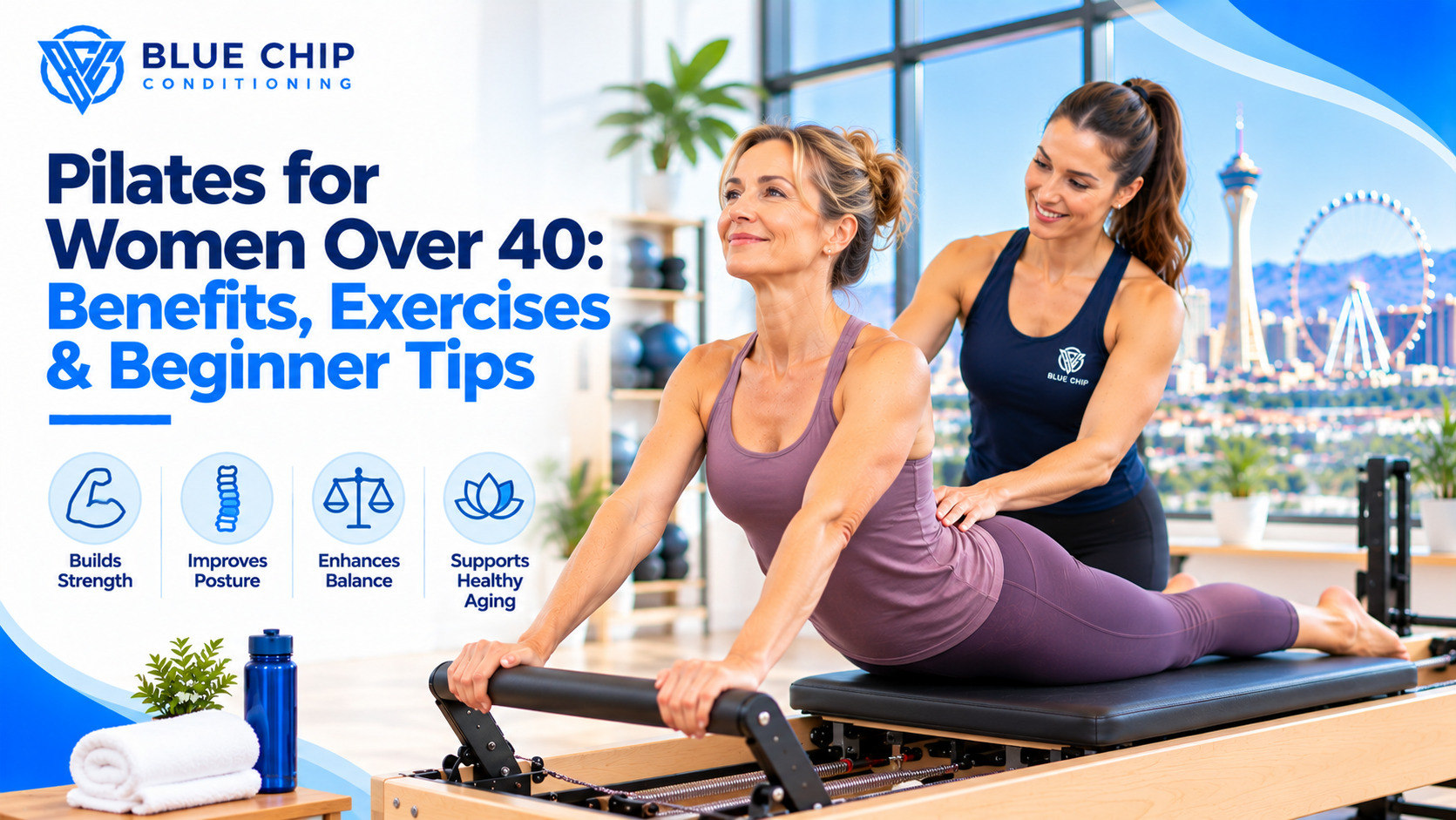
The reformer’s springs make it easier to learn good form and to add resistance as you get stronger. Footwork, bridging, arm work in straps and side splits are staples of Pilates for women on the reformer. A well-structured Pilates workout for women combines lower-body strength, upper-body pulling, core control and spinal mobility in one session. Even a 30-minute Pilates workout for women can cover all four areas when it is well planned.
A Sample Weekly Plan
Pilates works best as part of a balanced week. A realistic starting structure looks like this:
- Two Pilates sessions: One reformer class or private session for strength and technique, plus one mat session at home or in the studio.
- Three walks: Brisk walking for heart health, ideally on varied terrain to challenge balance.
- One additional strength session: Light weights or bodyweight work, especially if bone density is a concern.
- Rest and mobility: Gentle stretching or a short Pilates mobility routine on recovery days.
As you progress, practice can grow to three sessions a week, with more challenging springs and exercises. On busy weeks, a short Pilates workout for women at home keeps the habit alive, even if it is only 20 minutes of footwork-style bridges, side-lying leg work and spinal mobility. Pilates rewards that kind of steady, realistic consistency far more than occasional all-out sessions.
Pilates for Women Over 50: What Changes
Pilates for women over 50 follows the same principles, with a few extra considerations. If you have osteopenia or osteoporosis, many bone health experts advise limiting loaded forward spinal flexion, such as full roll-ups and rolling exercises, and favoring spinal extension, hip strength and balance work instead. Ask your doctor whether a bone density scan is appropriate before starting.
Joint replacements, arthritis and pelvic floor concerns also influence exercise selection. That is where individualized coaching helps: an instructor can substitute safer variations so Pilates for women over 50 remains challenging without adding unnecessary risk. Semi-private sessions are a practical middle ground, offering personal attention at a lower cost than fully private training.
Studio vs Home: Choosing Where to Practice
Both settings have value, and many women combine them. Pilates at home for women offers convenience, while a studio offers equipment and expert correction.
| Factor | Studio Reformer Classes | Home Mat Practice |
| Equipment | Reformer with adjustable springs | Mat and optional small props |
| Form correction | Hands-on, in real time | Self-guided or video-based |
| Progression | Structured by an instructor | Depends on your own planning |
| Convenience | Scheduled sessions | Any time, any place |
| Best for | Learning technique, building strength, modifications | Maintaining routine between classes |
If you train at home, invest in a quality mat and read up on Pilates at home for women before buying equipment. Reputable online instructors can also help, and the studio’s guide to the best Pilates exercises for beginners on YouTube is a useful starting point. Pilates at home for women works best once you already understand alignment, which is why many women begin with a few coached sessions.
How Pilates Compares With Other Popular Workouts
Women over 40 often weigh Pilates against yoga, barre, Lagree and traditional weight training.
- Yoga excels at flexibility and relaxation but generally offers less progressive resistance than reformer Pilates.
- Barre blends ballet-inspired movement with light weights, often with high repetitions and less spinal mobility work.
- Lagree uses a heavier machine at a slower, more intense pace, which some find demanding on joints. For women who want precision and joint-friendly strength, Pilates is often the gentler fit.
- Weight training is excellent for bone and muscle health, and Pilates complements it by improving core control and mobility.
The best routine is the one you will keep doing. Many women pair Pilates for women with walking and some form of strength training.
What to Expect in Your First Class
A first class in Pilates for women should feel welcoming rather than intimidating. Your instructor will ask about injuries, surgeries and goals, explain how the reformer’s springs, straps and footbar work, and offer modifications throughout. Wear fitted clothing and grip socks, arrive a few minutes early and expect to leave feeling worked but not wrecked. Small class sizes make a real difference here, because Pilates for women depends on precise form. Afterward, note which exercises felt easy or difficult so your instructor can tailor the next session to you.
Beginner Tips for Women Starting Pilates After 40
Beginner Pilates for women is far more effective with a little preparation:
- Start with a coached session: Learning alignment early prevents habits that are hard to undo.
- Share your health history: Mention injuries, surgeries, pelvic floor issues or bone density concerns.
- Aim for two to three sessions a week: Consistency produces results faster than occasional long workouts.
- Progress gradually: Add springs, range or repetitions only when form holds.
Why Guided Instruction Makes a Difference
Midlife bodies are skilled at compensating, and that is the biggest obstacle to getting results from Pilates. Without feedback, many women repeat exercises while gripping the neck, holding the breath or letting the lower back take over, which limits progress and can cause discomfort. Hands-on cues help you feel the difference between a movement that works the right muscles and one that only looks right.
At Blue Chip Conditioning in Las Vegas, instructors emphasize hands-on corrections and tailor each session to the client’s goals and history. Beginner Pilates for women is easier with a coach who can adjust springs, positions and pacing in real time, and the studio’s team of instructors includes former professional dancers and performers. If you are still weighing your options, read Pilates Classes in Las Vegas: Reformer vs Mat vs Private Training, Pilates vs Yoga: Which Is Better for Strength, Mobility and Recovery? and Pilates vs. Lagree in Las Vegas: Which Workout Fits You? before you book.
Frequently Asked Questions
Is Pilates good for women over 40?
Yes. Pilates for women builds core strength, posture, balance and joint-friendly muscle, which become more important as muscle mass and bone density change with age. It is low impact and easy to modify, so women can start at any fitness level and progress safely with good coaching.
How often should a woman over 40 do Pilates?
Two to three sessions per week is a realistic and effective target for most women over 40. That frequency allows progress in strength and mobility while leaving time for walking, other strength work and recovery. Consistency over several months matters more than any single intense session.
Can Pilates help with menopause symptoms?
Pilates does not treat menopause, but it supports several areas women commonly focus on during this stage, including core and pelvic floor strength, posture, balance and stress management. Pair it with medical guidance, adequate sleep, strength training and good nutrition for the best overall results.
Is Pilates enough exercise on its own after 40?
Pilates covers strength, mobility and balance well, but most guidelines also recommend regular aerobic activity such as brisk walking, cycling or swimming. Many women combine Pilates with walking and occasional heavier strength training to support heart health and bone density.
What are the best Pilates exercises for beginners over 40?
Good starting points include the modified Hundred, bridge, side-lying leg series, swan prep and spine twist. On the reformer, footwork and bridging are common first exercises. These build breathing, alignment and core control before you move on to more complex movements.
Is reformer or mat Pilates better for women over 50?
Both work well. The reformer offers spring support and adjustable resistance, which helps with alignment and progressive strength. Mat work is convenient for home practice. Many women over 50 start on the reformer with coaching, then add mat sessions at home between classes.
Is Pilates safe for women with osteoporosis?
Pilates for women with osteoporosis can be safe when exercises are chosen carefully. Many experts advise avoiding loaded forward spinal flexion and twisting under load, while emphasizing extension, hip strength and balance. Get your doctor’s approval and work with an instructor who understands bone health modifications.
Conclusion
After 40, the goal of exercise shifts from simply burning calories to building a body that stays strong, mobile and steady for decades. Pilates for women meets that goal through low-impact strength, better posture, improved balance and a deeper connection between breath and movement. Beginner Pilates for women should start with coached sessions, then practice two to three times a week and adapt as your needs change through your 40s, 50s and beyond.
If you are in Las Vegas and ready to begin, Pilates for women over 40 at Blue Chip Conditioning starts with a conversation about your goals and health history. Instructors offer private, semi-private and small group reformer classes capped at eight people, so Pilates for women stays personal at every stage. Book your first session or call (702) 848-2583 to find the right starting point for your body.