
What Is Pilates? Benefits, Types, Exercises & Beginner Tips
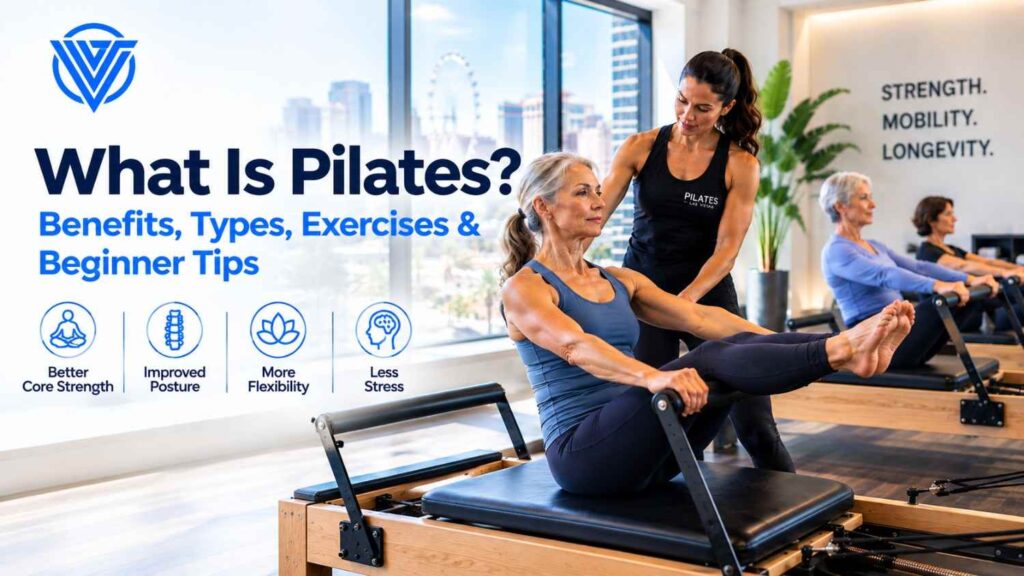
If you are trying to establish what is pilates beyond the marketing language, the short answer is that it is a systematic method of low-impact exercise built around controlled movement, breath and spinal alignment, developed in the early twentieth century and now practised both on a mat and on spring-loaded apparatus. This guide explains where the method came from, how it works mechanically, what the main formats are, what it realistically does for your body, and how to approach your first few sessions. It helps to answer what is pilates in two parts: the system itself, and the many formats that system is now taught in. The method has spread far beyond its origins, which means the word covers a wide range of class styles, and understanding the underlying system makes choosing a class considerably easier. The Origin and Meaning of the Method Any serious answer to what is pilates has to begin with its origins, because the method’s structure follows directly from them. The system was developed by Joseph Pilates, a German-born physical trainer who called his method Contrology. He refined it during the First World War while working with immobilised patients, reportedly using bed springs for assisted resistance the conceptual ancestor of today’s apparatus. He emigrated to New York in 1926 and opened a studio with his wife Clara, where dancers became early and influential clients. The pilates meaning that survives from that period is essentially control: a practice in which every repetition is deliberate, sequenced and executed with attention rather than performed quickly for volume. That pilates meaning still separates a well-taught session from a generic core class, and it explains why the pilates meaning of “exercise” differs from what most gyms imply by the word. The principles it is built on Contemporary teaching commonly organises the method around six principles: concentration, control, centring, precision, breath and flow. These principles are the clearest short answer to what is pilates as a discipline rather than a class format. They describe how each exercise is meant to be performed, and they are why a well-taught session is mentally demanding as well as physically demanding. How Does Pilates Work? Understanding how does pilates work mechanically is more useful than any list of benefits, and it is the part of the explanation most articles skip. It is also the part of what is pilates that separates the method from general core training. The method operates on several levels at once. Asking how does pilates work is ultimately a question about the nervous system as much as the muscles, which is why progress can feel slow for three weeks and then arrive suddenly. This is also why understanding how does pilates work matters more than counting repetitions. The Main Types of Pilates Knowing the main types of pilates helps you interpret a studio timetable, since the same word can describe quite different experiences. The question of what is pilates has a slightly different practical answer in each format below. Mat Pilates This is what is pilates in its original form: work performed on the floor using body weight and gravity. Classical mat repertoire follows a specific sequence and order, and it is accessible, inexpensive and demanding in its own right. Reformer Pilates So what is reformer pilates, specifically? It is work performed on a carriage that slides along rails against adjustable springs, with a footbar, shoulder rests and long straps. The springs can resist a movement or assist it, which makes the reformer unusually adaptable across ability levels. Most people first understand what is reformer pilates in practice rather than theory during a beginner class, when the carriage gives immediate feedback about stability. Anyone asking what is reformer pilates compared with mat work is really asking about that spring assistance. Other Apparatus Beyond the reformer, the equipment repertoire includes the Cadillac or trapeze table, the Wunda chair, the ladder barrel and the spine corrector. Each supports and isolates the body differently, and together they show how broad the answer to what is pilates has become. Classical Versus Contemporary Classical schools preserve the original exercises and sequencing, while contemporary schools incorporate later movement-science research and adapt more freely. Both are legitimate types of pilates; the difference is emphasis rather than quality. Clinical and rehabilitative types of pilates form a further category, delivered by instructors with additional training and often coordinated with healthcare providers. What Does Pilates Do for Your Body? Having covered what is pilates and how it works, the natural next question is what it produces. Asking what does pilates do deserves a precise answer rather than sweeping claims, and the realistic outcomes align closely with what the method actually trains. So what does pilates do that other training does not? It improves movement quality in a way that transfers to running, lifting, a golf swing or simply carrying a load. The realistic benefits of pilates depend on consistent, well-taught practice, and attending occasionally produces occasional results. Is Pilates a Workout? Asking is pilates a workout is fair, because the pace looks unhurried from outside. The answer is yes, and it follows directly from what is pilates as a system: a strength and control practice rather than a cardiovascular one. It builds muscular endurance and stability effectively, but it does not replace cardiovascular training if heart and lung conditioning is your goal. A useful framing: is pilates a workout in the sense of leaving you breathless? Not usually. Is pilates a workout in the sense of building strength and control? Definitely. Most people pair it with some cardiovascular activity, and the benefits of pilates complement that training rather than duplicating it, which is why the benefits of pilates are widely used to support performance in a primary sport. Getting Started: Practical Advice Understanding what is pilates on paper is useful, but the method only makes sense once you have felt the movements under instruction. Approaching pilates for beginners sensibly makes a substantial difference to whether you stay with it. Most well-run
Pilates for Men: Why Male Membership Is the Fastest-Growing Segment in Boutique Fitness
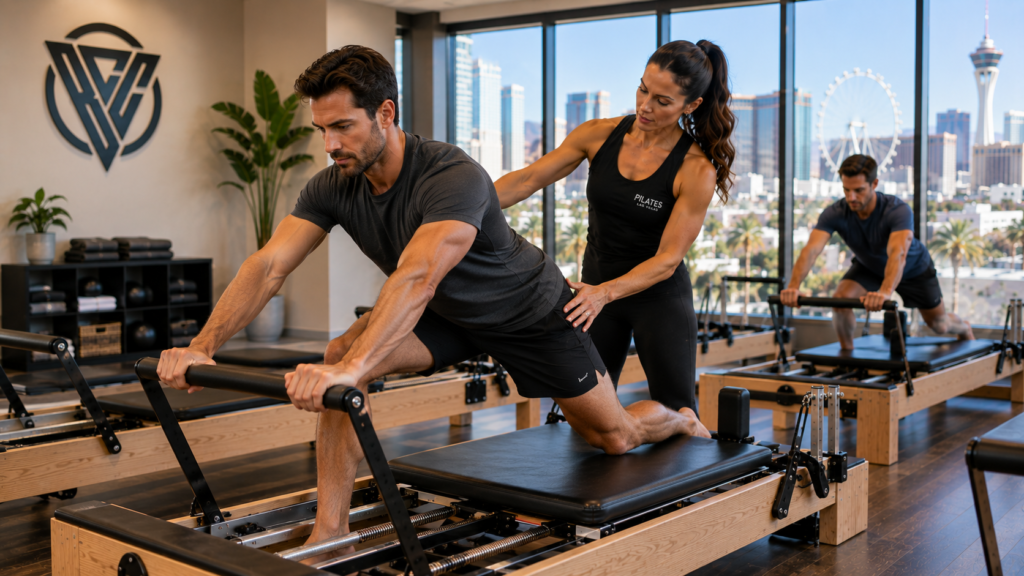
Pilates for men was a punchline in most weight rooms. Today it is the fastest-growing demographic in boutique fitness, and the men signing up are not casual exercisers they are lifters, cyclists, golfers and desk-bound professionals whose hips stopped cooperating. This article explains what is driving that adoption, what a reformer delivers that a barbell cannot, and how to structure your first eight weeks so the investment actually pays off. Why Pilates for Men Became a Serious Category The shift did not come from marketing. Pilates for men grew because it solved three practical problems conventional training handles poorly. The first is mobility. A man who has squatted and pressed for a decade usually has strong prime movers and stiff joints. Hip internal rotation, thoracic extension and shoulder flexion narrow year after year, and the narrower they get, the worse his lifts look. The second reason Pilates for men caught on is injury history. Lower back tightness, cranky shoulders and a knee that objects to stairs send men looking for loading that does not aggravate what already hurts. The third is time. A well-run reformer session trains strength, control, mobility and breathing in fifty minutes. For someone with a job and a family, consolidation matters more than variety, and Pilates for men delivers it. Instructors here see the same first-session pattern almost every time. A strong man gets on the reformer, moves the carriage easily with his quads and last, and then cannot hold a stable pelvis through a single controlled leg extension. Strength is not the limiter. Control is. What Pilates for Men Trains That Lifting Misses Barbell training is excellent at what it does: producing force in a fixed, largely sagittal plane. It is less good at three things that matter enormously after thirty-five. Rotation and anti-rotation. Almost every sport and most daily tasks involve twisting or resisting a twist. Men reformer Pilates loads rotation directly through straps and springs, in ranges a cable machine rarely reaches. This is where Pilates for men separates itself from accessory gym work, and it is a distinction the coaching literature published by the National Strength and Conditioning Association has made for years. Eccentric control at end range. The reformer’s spring returns the carriage whether you are ready or not, which forces you to control the lengthening phase. That control is what protects hamstrings, groins and shoulders. Unilateral honesty. Men reformer pilates exposes what a barbell hides, because a barbell lets the strong side compensate. A single-strap or single-foot reformer exercise does not. The first time most men train one leg at a time on a reformer, they discover a difference of fifteen to twenty percent between sides. Research indexed on PubMed and summarised by the National Institutes of Health has repeatedly linked unilateral strength asymmetry to elevated injury risk in athletic populations, which is one reason strength coaches now test it routinely. Reformer Work Versus the Weight Room Pilates for men is not a replacement for lifting. It is the complement most training programmes are missing. The table below shows how the two compare across the qualities men typically care about. Training Quality Barbell / Weight Room Reformer Pilates Maximal strength Excellent Limited Hypertrophy potential Excellent Moderate Rotational and anti-rotational load Limited Excellent Eccentric control Moderate Excellent Hip and thoracic mobility under load Limited Excellent Joint stress per session Moderate to high Low Unilateral imbalance exposure Poor Excellent Ideal weekly frequency alongside lifting 3–4 sessions 1–2 sessions The honest reading of that table is that a man lifting three times a week and adding one or two reformer sessions covers far more of the athletic spectrum than a man lifting five times a week. Comparative work of this kind appears regularly in the Journal of Bodywork and Movement Therapies. Pilates for Men Is Adopted Fastest by Lifters Pilates for lifters has become its own category for a reason, and it is the entry point into Pilates for men for most experienced trainees. The men who commit fastest are usually the ones with the most training history, because they can feel the difference immediately. A lifter already understands tempo, progressive load and positional cues. Put him on a reformer and he does not need the concepts explained he needs the application. That is why a lifter’s second session usually looks dramatically better than his first, while a complete beginner’s improvement is slower and steadier. Lifters also tend to start in private Pilates sessions rather than group classes, because a coach who can see a barbell pattern can correct a reformer pattern in half the time. Once the pattern holds, most move into the group timetable. What Changes Between Week Two and Week Eight Week two is uncomfortable in an unfamiliar way. Clients report soreness in the deep hip rotators, the adductors and the lower abdominals muscles that were present but under-recruited. By week eight the reports change. Squat depth improves without a mobility warm-up. Overhead position feels less forced. Lower back stiffness after long drives fades. Those are the changes that keep men booking, because Pilates for lifters produces results visible in the training they already care about. A Realistic First Eight Weeks Male pilates beginners consistently make the same three mistakes: they choose springs that are too heavy, they rush the tempo, and they train through positions they cannot yet hold. Here is an eight-week structure for Pilates for men that avoids all three. Male pilates beginners who follow that progression generally reach useful competence in eight weeks, particularly when our certified Pilates instructors set the spring load in the first fortnight. Those who chase heavy springs in week one usually stall, because they recruit the same dominant muscles they already over-use. Before committing to eight weeks, it is worth checking Pilates pricing and packages so the schedule and the budget are decided at the same time. Mobility for Men Is a Strength Problem, Not a Stretching Problem Most men treat tightness as something to stretch away. It rarely works,
Pilates for Athletes on GLP-1 Medications: How to Protect Lean Muscle During Weight Loss
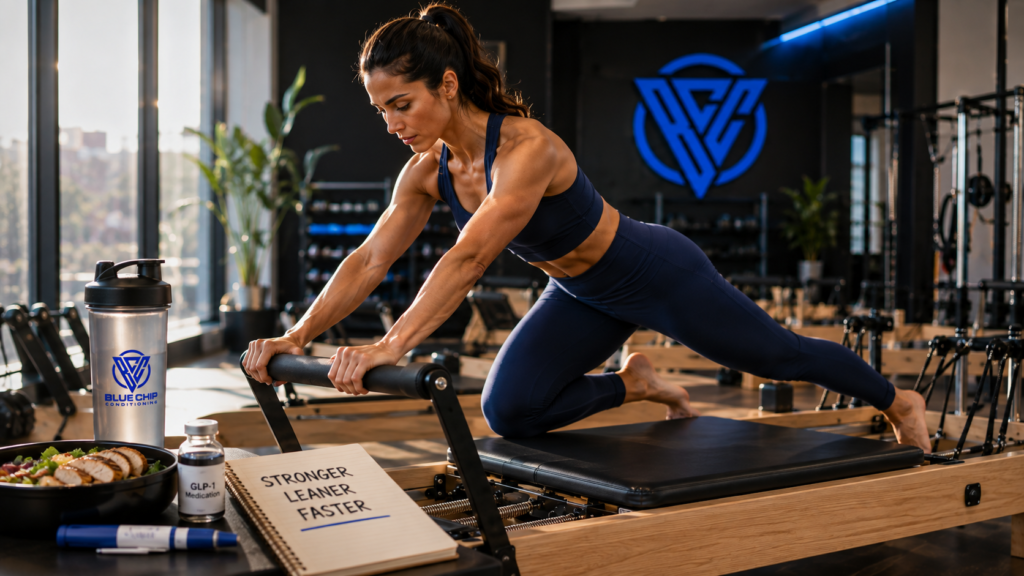
If you are an athlete using a GLP-1 medication such as similitude or tripeptide, you have likely noticed the scale moving faster than you expected and your strength moving in the wrong direction. This is one of the most common concerns we hear from clients at Blue Chip Conditioning, and it is the reason pilates for athletes has become such an important conversation in Las Vegas performance circles this year. This article explains why muscle loss happens on these medications and what you can do, session by session, to keep the lean tissue that fuels your sport. Why Rapid Weight Loss Puts Athletic Muscle at Risk GLP-1 medications work by suppressing appetite, which is effective for fat loss but indiscriminate about where the weight comes from. Research published through the National Institutes of Health has found that a meaningful share of weight lost on these drugs comes from lean tissue rather than fat alone, particularly when resistance training is absent from the routine. For athletes, that lean tissue is not cosmetic it is the contractile machinery behind every sprint, jump, and change of direction. Coaches at our studio see this pattern repeat itself: an athlete starts a GLP-1 medication, drops weight quickly, and then notices their vertical jump or sprint times sliding even though they feel “lighter.” That disconnect is glp-1 muscle loss showing up in performance data before it shows up on a scale. What Pilates for Athletes Actually Trains Pilates for athletes is not a recovery gimmick. It is targeted, spring-loaded resistance work that trains the deep stabilizers transverse abdominis, multifidus, glute medius alongside the larger prime movers most athletes already train in the weight room. On a reformer, resistance comes from springs rather than gravity, which lets an athlete load muscle through a full range of motion without the joint compression of heavy barbell work. This matters directly for anyone managing glp-1 muscle loss, because the goal is not simply “more exercise.” The goal is targeted mechanical tension applied consistently enough to signal the body to preserve, rather than shed, muscle tissue during a caloric deficit. How Pilates for Athletes Fits Into a Weekly Training Split A well-built pilates for athletes plan does not replace sport practice or the weight room it fills the gap both leave open. Most in-season athletes fit two reformer sessions around existing practice and lifting days, using lighter spring settings during heavy competition weeks and heavier settings during off-season blocks. Building a Resistance Training on Ozempic Protocol Resistance training on ozempic (or any GLP-1 medication) needs to account for two realities: appetite suppression often means lower protein intake unless a client is deliberate about it, and fatigue can be higher on lower daily calories. A well-built protocol respect both. A typical progression we use with athletes at our studio looks like this: Instructors running pilates for athletes protocols track load and repetitions each week, and most athletes notice a real shift by week eight grip strength returns, single-leg balance improves, and reported energy during sport-specific drills stabilizes even while total body weight continues to decrease. Lean Mass Preservation Requires More Than Exercise Lean mass preservation is a three-part equation: mechanical tension, protein intake, and recovery. Exercise alone will not offset a large caloric deficit if protein intake is too low. Athletes on GLP-1 medications frequently under-eat protein simply because appetite has dropped, so we ask clients to track intake for at least two weeks so any gaps become visible. The American College of Sports Medicine has published position guidance indicating that combining resistance exercise with adequate protein intake is the most reliable way to protect lean tissue during intentional weight loss. That guidance lines up with what we see on the studio floor: athletes who prioritize protein and stay consistent with resistance sessions retain far more strength than those who rely on medication and cardio alone. Low Impact Strength Training and Joint Health Rapid weight loss changes how the body distributes load through joints, and athletes managing an injury history need training that respects that shift. Low impact strength training on a reformer allows heavy mechanical loading without the axial compression of barbell squats or the impact forces of running, which is particularly useful for athletes returning from a prior injury or managing joint sensitivity while their body composition changes quickly. This is also where reformer-based training earns its place alongside traditional lifting rather than replacing it. Many athletes keep their barbell work and add pilates for athletes sessions specifically to reinforce the smaller stabilizing muscles that protect the joints doing the heavy lifting. Signs You May Be Losing Muscle, Not Just Fat Athletes often assume every pound lost on a GLP-1 medication is fat. It rarely is. Watch for these warning signs, and treat any two of them together as a signal to increase resistance work and reassess protein intake: Why Athletes Specifically Need a Different Approach Than General Weight-Loss Clients Generic weight-loss programming is built for a client trying to lose fat with no performance requirement attached. That is not the situation most of our clients are in. Pilates for athletes is programmed differently from the start, with load progressions tied to sport demands a soccer player needs rotational core control, a swimmer needs shoulder stability, a runner needs single-leg strength through the hip. A generic circuit class cannot make those distinctions, but an individualized reformer protocol can. This is also why we ask new athlete clients about their competitive calendar before building a plan. Pilates for athletes works best when spring load and volume are periodized around competition dates, not applied on a flat, one-size-fits-all schedule. Reformer Pilates vs. Traditional Resistance Training During Weight Loss Factor Reformer Pilates Traditional Barbell Training Joint loading Low impact, spring-based Higher axial and joint compression Range of motion Full range, controlled tempo Variable, load-dependent Core and stabilizer focus High, built into every exercise Secondary, often accessory work Best use during GLP-1 weight loss Preserve lean mass with lower fatigue cost Build maximal
What Elite Athlete Development Costs Include Rehabilitation Pilates: A Guide
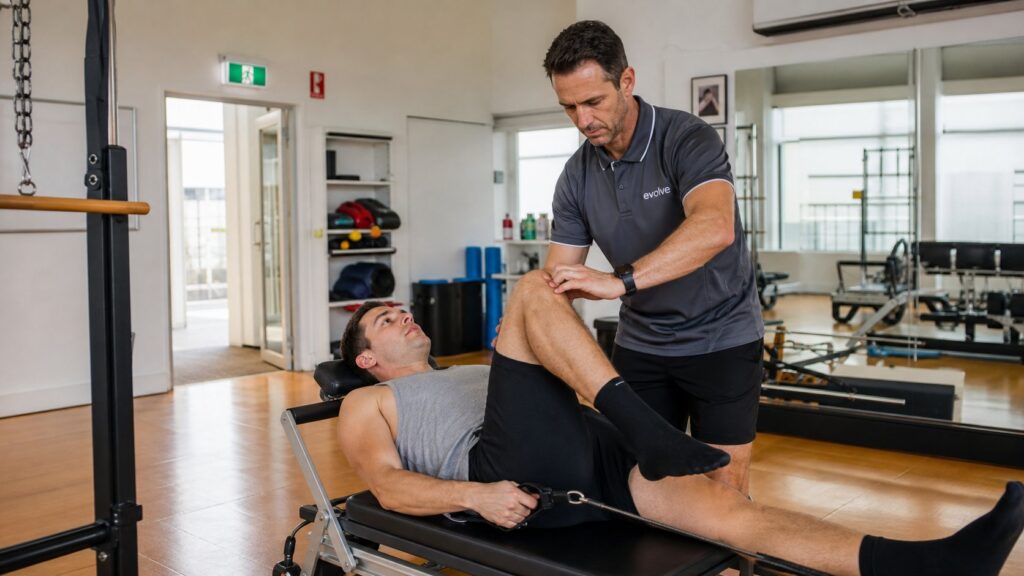
Elite athlete development is expensive, and most families and athletes budget for the obvious pieces – coaching, travel, equipment – while completely missing the line item that determines whether the rest of the money pays off: the body itself. Structured conditioning and rehabilitation work is what keeps an athlete available to train, and availability beats talent more often than anyone likes to admit. In this guide, I’ll break down what a serious elite athlete development budget actually contains, where rehabilitation Pilates fits inside it, and what realistic numbers look like in Las Vegas. Quick Answer A complete elite athlete development budget includes sport coaching, strength and conditioning, recovery and rehabilitation work, and periodic assessment. Rehabilitation Pilates typically represents $200–$600 monthly of that budget, and it’s the component that protects every other dollar by keeping the athlete healthy enough to train. Table of Contents 1. What Elite Athlete Development Actually Means 2. The Full Cost Breakdown, Line by Line 3. Why Rehabilitation Pilates Las Vegas Earns Its Budget Line 4. Pilates Class Cost: What Athletes Actually Pay 5. Building a Development Budget in 5 Steps 6. Where Families Overspend and Underspend 7. Final Thoughts 8. FAQs What Elite Athlete Development Actually Means The phrase gets thrown around loosely, so let’s define it. Elite athlete development is the long-term, structured process of building an athlete toward their highest competitive level – college scholarship, professional contract, or national-team selection. It’s not a single program or a season. Instead, it’s a coordinated system with four pillars: Remove any pillar and the structure wobbles. Yet the third pillar – recovery and rehab – is the one families cut first when budgets tighten. That decision usually costs more than it saves, and I’ll show you why. The Full Cost Breakdown, Line by Line Here’s what a committed year of serious development typically costs in a market like Las Vegas. Numbers vary by sport and level, but these ranges hold for most serious youth, collegiate, and semi-professional athletes: Notice something: the rehab and conditioning lines are modest next to club fees and travel. Even so, they’re the lines that determine whether the athlete actually appears at those expensive tournaments healthy. A $4,000 travel season means nothing if the athlete watches it from the bench with a stress injury. Why Rehabilitation Pilates Las Vegas Earns Its Budget Line So why Pilates specifically, rather than generic recovery? Because rehabilitation Pilates Las Vegas programs solve a problem ordinary training can’t: they load the body precisely, at low impact, through ranges that rebuild rather than aggravate. Spring resistance on a reformer can be dialed to almost nothing or challenge a professional – the same equipment serves a post-surgical knee in week four and a healthy sprinter in peak season. The Bridge Between Therapy and Performance Physical therapy typically ends when pain resolves and basic function returns. Sport, however, demands far more than basic function. That gap between “cleared” and “ready” is where re-injuries happen, and it’s exactly where rehabilitation Pilates lives. Organizations like the American Physical Therapy Association emphasize progressive loading after injury, and reformer-based work delivers that progression with unusual precision. We’ve detailed what this looks like in practice in our article on what really happens inside an elite athlete development session. Prevention Is the Cheaper Half Rehabilitation Pilates Las Vegas work isn’t only for injured athletes. Most of our athlete clients use it preventively – screening for asymmetries, strengthening the stabilizers their sport neglects, and maintaining mobility through heavy training blocks. Preventing one significant injury can save thousands in therapy costs and, more importantly, months of lost development time. In a college recruiting timeline, those months are irreplaceable. Pilates Class Cost: What Athletes Actually Pay Let’s get specific about the pilates class cost side of the budget, because format changes the number dramatically: For a typical developing athlete, a sensible month looks like four to eight sessions, mixing formats based on health status. That lands the monthly pilates class cost between $200 and $600 – consistent with the budget line above. Current package numbers are listed on our pricing page, and intro offers reduce the cost of testing whether the work fits your athlete. Building a Development Budget in 5 Steps If you’re planning a full development year, sequence the budget like this: How the Rehab Line Changes at Each Development Stage Elite athlete development spans years, and the rehabilitation budget shouldn’t look identical across them. Here’s how the allocation typically shifts as an athlete advances. Youth Stage (Ages 10–14) The priority is movement quality and growth management, not intensity. One weekly semi-private session usually suffices – roughly $180–$280 monthly. Growth spurts temporarily wreck coordination, so budget for short blocks of private sessions during those windows. Catching a movement fault at twelve costs a fraction of treating the injury it produces at sixteen. High School and Recruiting Stage (Ages 15–18) Training volume peaks here, and so does injury risk. Two weekly sessions become the standard, mixing formats by health status – call it $300–$550 monthly. This stage carries the highest stakes: a junior-year injury can erase a recruiting cycle entirely. Consequently, this is the worst possible stage to cut the rehab line, and unfortunately it’s the stage families cut most often because club fees peak simultaneously. Collegiate and Professional Stage Athletes at this level often have team resources, so the private budget shifts toward specialized gaps: off-season reconditioning, return-to-play bridges after injuries, and the individualized attention team settings can’t always provide. Spending becomes seasonal rather than constant – heavier in off-season and rehab windows, lighter in-season. Questions to Ask Before You Spend a Dollar Not all programs deserve your budget. Before committing to any rehabilitation or conditioning provider, ask these directly and listen carefully to the answers: A provider who answers all five confidently is worth the money. One who dodges any of them isn’t, regardless of price. Where Families Overspend and Underspend After years around developing athletes, the spending patterns are predictable. Families overspend on visibility –
How to Get Real Results From Your First Pilates Class in Las Vegas
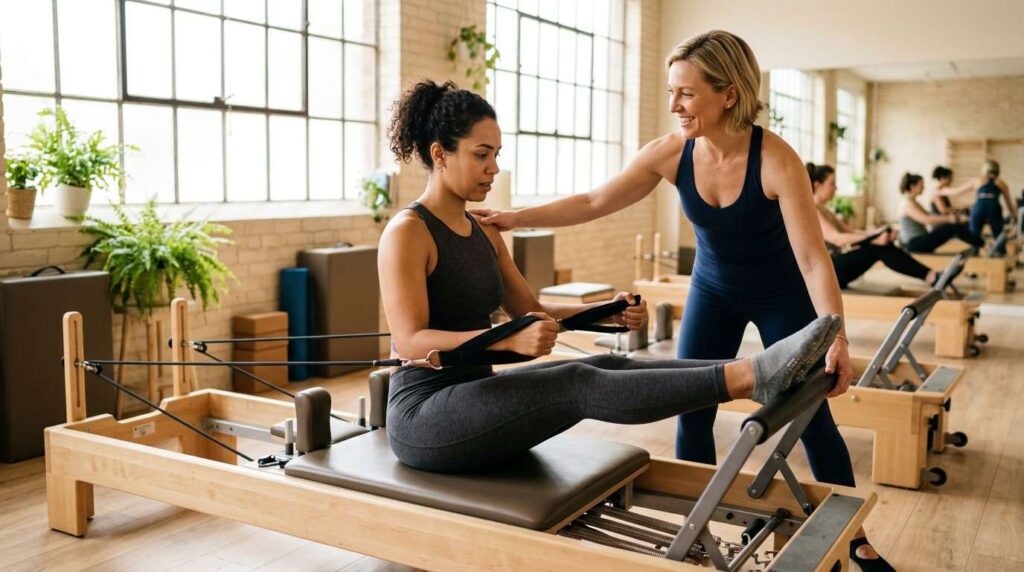
Let’s be honest about your first pilates class in Las Vegas : one session will not remake your body. But it will prove that something real is happening. You will feel your deep core switch on. You will find muscles you forgot you owned. And you will walk out with a clear signal that the work matters. That signal is the point. Real change builds from what you do after class one – the second session, the third, the routine. Still, your first class sets the tone for everything that follows. At Blue Chip Conditioning, we watch nervous beginners walk in stiff and leave standing taller. So this guide keeps expectations honest. You will learn what shifts right away, what takes a few weeks, and how to prep so your first session actually counts. Quick answer A first pilates class in Las Vegas beginners try won’t transform your body. But you should feel real core engagement, better posture awareness, and mild muscle fatigue the same day. Visible strength and posture changes usually appear around weeks 3 to 6 with two classes per week. What Counts as a “Real Result” After Just One Class? Beginners often expect a mirror moment after one hour. That is the wrong scoreboard. A real result after one pilates class in las vegas newcomers try is not a flatter stomach. Instead, it is a working connection between your brain and your deep core. Once that link fires, everything else follows. So the first win is control, not appearance. The Physical Changes You Can Feel Immediately You will notice a few things the same day. Here is what most first-timers report: None of this is dramatic. But it is honest proof that the method reached the right muscles. Take one recent beginner, a nurse who stands through 12-hour shifts. After a single reformer session, she didn’t lose a pound. Yet she messaged the next day to say her lower back felt calm for the first time in months. That’s a real result. It just never shows up in a photo. So the smartest thing you can do is learn to feel progress, not only see it. What Won’t Change Yet – And Why That’s Normal Now the honest part. Your scale will not budge after one class. You will not see new muscle definition. Flexibility gains take repeated sessions, not a single hour. And soreness may not arrive until the next morning. That delay is normal. Pilates works small, deep muscles that most workouts ignore, so the feedback shows up slowly. Give it time. What Actually Happens During Your First Pilates Class in Las Vegas Walking in blind makes anyone tense. So here is the full arc of a first session, start to finish. Most las vegas pilates classes for beginners follow this rough shape. The Intake and Movement Assessment A good studio starts with questions, not exercises. First, your instructor asks about injuries, past workouts, and goals. Then they watch how you stand, bend, and breathe. This quick screen shapes the whole session. Because of it, your teacher can protect a cranky knee or a stiff back before you ever touch a machine. Honestly, skipping this step is a red flag. This intake also sets your expectations. A good instructor will tell you what to focus on and what to ignore for now. So you won’t waste energy chasing advanced moves your body isn’t ready for. Instead, you’ll spend the hour building a base that everything else stacks on top of. Reformer vs. Mat: What Your First Session Involves Two formats exist. Mat work uses your body weight on the floor. Reformer work uses a sliding carriage with springs for resistance and support. Many people assume the machine looks intimidating. In practice, though, the reformer is often easier for beginners, because the springs guide your movement and reduce strain. At our group reformer classes, first-timers usually start with slow, guided reformer basics. So don’t fear the springs. Most reformer pilates las vegas studios build the opening session around control, not speed. You move through footwork, gentle core sequences, and a few stretches. That’s plenty for day one. Here’s what surprises new people most: the reformer feels supportive, not scary. The carriage moves with you. The springs catch you. So instead of fighting gravity on a hard floor, you get gentle assistance through every rep. Many beginners who dread the machine end up preferring it by the end of class one. That’s a big reason reformer pilates las vegas has become the default starting point for newcomers. And that early comfort keeps them coming back, which is what really drives results. How to Set Yourself Up for Results Before You Even Arrive Your prep decides how smooth the first class feels. A little planning removes most of the first-day nerves. What to Wear, Eat, and Bring Keep it simple. Follow these basics: One more thing matters just as much as gear: your mindset. Walk in ready to learn, not to perform. Nobody expects you to nail every move on day one. So ask questions, laugh at the wobbles, and focus on feeling each position. That relaxed, curious attitude actually helps you learn faster than white-knuckle effort does. Questions Worth Asking the Studio Beforehand A quick call or message saves surprises. So ask these before you book: Honest studios answer fast and clearly. And if you want help matching a class to your goals first, this decision framework for choosing Pilates in Las Vegas is a useful place to start. The Realistic Pilates Results Timeline: Class 1 Through Month 3 Results follow a pattern. Once you know the pattern, you stop quitting too early. Here is what most consistent beginners feel over three months. Weeks 1–2: Awareness Over Aesthetics Early on, the wins live in your head, not the mirror. You start to feel your core before you lift. You catch yourself sitting straighter at your desk. Movement feels more coordinated. This awareness phase is the real
How to Choose Las Vegas Pilates in 3 Steps: Method, Location & Instructor Credentials Checklist
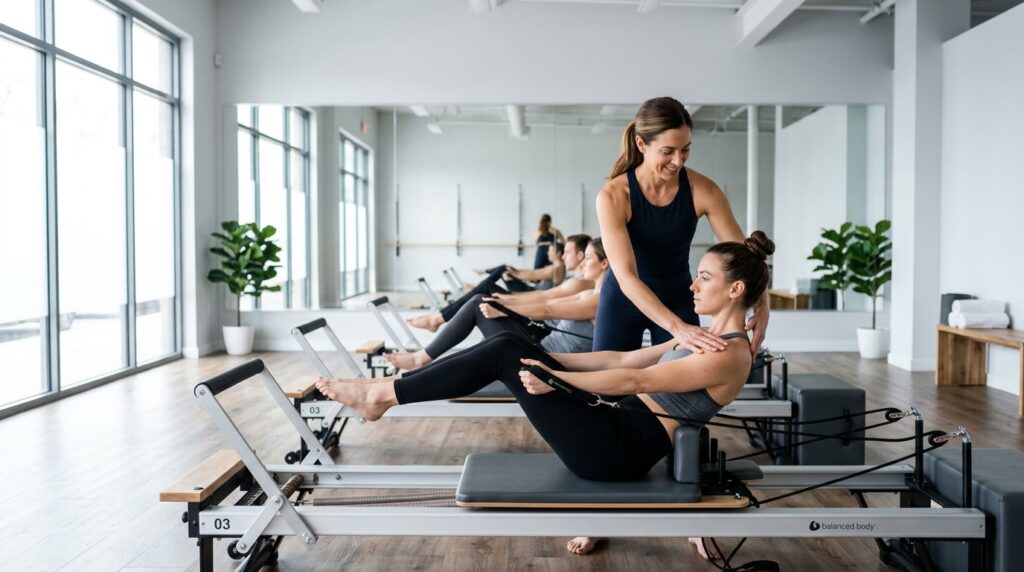
The 3 Decisions That Eliminate 90% of Bad Pilates Experiences Choosing las vegas pilates shouldn’t require a spreadsheet. Yet most people overcomplicate it, comparing dozens of studios on price alone. In reality, only three decisions actually matter when you’re starting out. Your method. Your location. And your instructor’s credentials. Nail these three, and you’ll skip almost every bad experience people run into. Miss even one, and you risk a wasted membership. You also risk a nagging injury, or a habit that quietly fades within a month. This guide walks through each decision step by step. That way, your first class feels right instead of random. Quick Answer To choose the right las vegas pilates studio, start with your method (reformer, mat, private, or a hybrid). Then confirm the location fits your real schedule, and finally check that instructors carry real certification with ongoing training. Skip any one of these three steps, and you raise your odds of a wasted membership. Step 1: Pick Your Method – Reformer, Mat, Private, or Hybrid Method comes first because it shapes everything else about your experience. Quick Definitions: What Each Method Actually Delivers Reformer uses a spring-loaded machine for resistance training, working your muscles on the push and the pull. Mat relies on bodyweight alone, using gravity and controlled breathing instead of springs. Private means one-on-one instruction built around your specific goals, injury history, and current ability. A hybrid approach blends two or more formats across your week. That’s exactly what most long-term las vegas pilates clients end up doing once they’ve tried each format on its own. The “Goal → Method” Matchmaker (Simple Table) Your Goal Best Starting Method Build visible strength fast Group Reformer Learn foundational control on a budget Mat Recover from injury or manage pain Private or Semi-Private Train for a specific sport Athletic Performance Track Stay consistent without overthinking it Hybrid Mat + Reformer Method Mistake #1: Choosing Mat Because It Looks Easier on Instagram Mat videos online often look gentle and slow. In person, proper mat work is genuinely hard. Picking it purely because it “looks easier” sets you up for a surprise on day one. Without spring resistance to guide your form, mat classes actually demand more core control, not less. Pick your method based on your goal, not social media footage. Method Mistake #2: Jumping Straight to Private Without Trying Group First Private sessions cost more, and some people assume that means better results automatically. For general fitness goals, group classes deliver comparable results at a lower price. You also get built-in accountability from a set class time and familiar faces. Save private sessions for injury recovery or advanced goals that actually need one-on-one attention. Let group las vegas pilates classes handle everything else. Your Method Decision in 60 Seconds (Flowchart Summary) Ask yourself: Do I have an injury or specific medical concern? If yes, start private. If no, do I want maximum resistance and visible tone fast? If yes, start group reformer. If you’d rather build a foundation slowly and affordably, start mat, then add reformer later. Step 2: Lock In Your Location – The Radius Rule The best pilates las vegas program on paper still fails if you can’t realistically get there. Location is the decision people underrate most. That changes fast once they’ve missed three classes in a row because traffic made the drive feel like a chore. Why Driving 25 Minutes to Pilates Is a Retention Killer Distance quietly kills consistency. Once a class requires more than fifteen minutes of driving each way, attendance drops off within the first couple of months. That happens no matter how motivated you felt on day one. Even the best las vegas pilates studio in the valley can’t fix that. A commute that feels like a second job kills motivation fast. The Las Vegas Neighborhood Map: Where the Top Studios Cluster Most established studios cluster around Summerlin, Spring Valley, Henderson, and the southwest valley near Rainbow Boulevard. Fewer options exist further from these hubs. Location should factor into your decision early, not as an afterthought. Blue Chip’s Southwest Location: Serving Summerlin, Spring Valley, and Enterprise Blue Chip Conditioning sits at 6275 S Rainbow Blvd. That gives quick access to Summerlin, Spring Valley, and Enterprise alike. That central positioning matters. It helps if you’re comparing las vegas pilates studio options across different parts of the valley. Location Checklist: Parking, Traffic Patterns, and Class Times Step 3: Vet Instructor Credentials – The Non-Negotiable Standards Method and location matter, but the instructor is who actually shapes your results. The Certification Alphabet: What PMA, NCPT, STOTT, and Balanced Body Actually Mean PMA stands for the Pilates Method Alliance, an industry certifying body. NCPT means Nationally Certified Pilates Teacher. STOTT and Balanced Body are training organizations with their own certification tracks. These often run several hundred hours long. None of these letters guarantee quality alone. But their presence signals something real: that instructor spent real time in formal training before ever stepping in front of a las vegas pilates class. Continuing Education: Why It Matters More Than the Original Cert A certification earned five years ago means little without ongoing education since then. Ask whether instructors attend workshops, pursue specialty training, or stay current on injury modification techniques. Continuing education signals an instructor actively improving, not coasting on an old credential, and it’s one of the clearest quality markers across any las vegas pilates studio you visit. Hands-On Corrections: The Single Biggest Predictor of Results Watch a class before you book one. If the instructor walks the room and physically adjusts hips and shoulders, that’s the real signal. So is calling out names. Verbal cueing from the front of the room, without any hands-on correction, rarely produces the same results. That’s true no matter how experienced the instructor sounds on paper. The 3-Question Instructor Interview (Use This Before You Book) Red Flags That Should Make You Walk Away Immediately Watch for instructors who can’t clearly explain their training background. Watch
Pilates Vegas: 5 Class Types Compared – Which One Gets You Results Fastest?
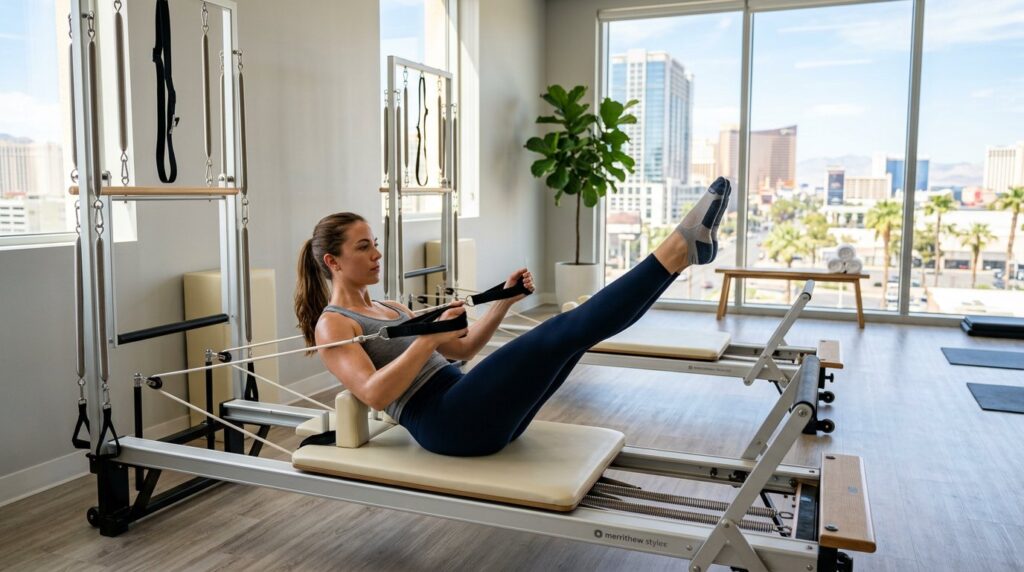
Walk into any studio offering Pilates Vegas classes for the first time, and you’ll see five different formats before you even sign a waiver. Reformer, mat, private, group, and athletic performance training all promise results. But they don’t work the same way. Pick the wrong one, and you often waste weeks. Then you quietly cancel a membership out of frustration. At Blue Chip Conditioning, our studio at 6275 S Rainbow Blvd was built so you never have to guess between endless pilates classes in las vegas. Every format lives under one roof. So your first Pilates Vegas class doesn’t have to be your last stop before you switch studios. Below, we compare all five formats honestly. You’ll learn what each one actually does, who it fits best, and how fast your body responds. Quick Answer If speed matters most in your Pilates Vegas search, private or small-group reformer sessions win. Most people see visible change in three to four weeks. Mat Pilates builds a strong foundation, but it takes longer on its own. Private coaching speeds things up because corrections happen in real time – it just costs more per session than group classes. Quick Comparison: 5 Pilates Class Types at a Glance Class Type Best For Avg. Session Cost Time to See Results Intensity Level Group Reformer Full-body toning + accountability $16–$27 per class 4–6 weeks Moderate–High Mat Pilates Core control + mobility, budget-friendly Included with most memberships 6–8 weeks Moderate Private Pilates Injury recovery + precise correction $98–$140 per session 2–4 weeks Fully Customized Semi-Private Personal coaching, shared cost Roughly $33–$50 per session 3–5 weeks Moderate–High Athletic Performance Sport-specific power + mobility Custom private-based pricing 4–8 weeks High Reformer Pilates: The Spring-Loaded Powerhouse Reformer pilates las vegas classes get the most attention online. Honestly, the hype is mostly earned. The machine looks scary the first time you see it. But once you learn how it works, it’s one of the best tools for building strength. And it puts very little stress on your joints. How a Reformer Class Actually Works (Carriage, Springs, and Straps) A reformer is a sliding carriage attached to springs. It has straps for your hands and feet, plus a footbar you push against. As you push or pull the carriage, the springs create resistance both ways. So your muscles work on the way out and the way back in. That constant tension is what makes a 45-minute class feel harder than it looks. Instructors adjust the springs to make moves gentler for beginners, or much harder for advanced clients stuck on a plateau. Who Should Choose Reformer Pilates Anyone searching for a faster way into Pilates Vegas culture tends to land here first. This format suits you if: Who Should Skip It (or Wait) If you’re new to structured exercise, equipment can feel intimidating. A fast-paced reformer class might overwhelm you at first. In that case, try a private session or a few mat classes first, and build confidence before you tackle the springs. If you’re recovering from an acute injury, get clearance first, then start with private or semi-private sessions instead of a full group class. Realistic Results Timeline: What 4, 8, and 12 Weeks Look Like By week four, most clients notice better posture. Lower-back tightness eases up too, even before the scale moves. By week eight, visible core definition and better balance show up, and daily movement like climbing stairs starts feeling easier. By week twelve, consistent attendees report real strength gains and tighter waistlines – friends and coworkers usually notice the change by then. This is the typical timeline for Pilates Vegas clients who train twice a week. Results always depend on consistency, though. Mat Pilates: Zero Equipment, Pure Body Control Mat work is the original form of Pilates. It stays deceptively hard, even without a single piece of equipment. It’s also one of the most common pilates classes in las vegas for beginners just getting started. The Classic Mat Setup and What Makes It Deceptively Hard A mat class uses only your bodyweight and gravity for resistance. There’s no spring assistance to guide your form. So mat Pilates demands sharper control and deeper core engagement than most people expect. Small, precise movements burn more than big, sloppy ones – a five-inch leg lift held with perfect alignment can shake your whole core. Mat Pilates Is Best When You Want… Where Mat Falls Short Mat classes offer less resistance variety than reformer sessions. So progress can plateau faster if you’re chasing visible muscle change. There’s also no spring support to help your form, which means beginners sometimes develop bad habits that go uncorrected in a bigger group. Why Most People Combine Mat WITH Reformer (Not Choose One) Most experienced clients don’t pick one over the other – they use both. Many group reformer class memberships at Blue Chip include credit for mat and stretch sessions too, so you’re not paying twice for variety. This combo is common among people who take reformer pilates las vegas classes seriously. Mat days become active recovery between harder reformer sessions, which keeps your body progressing without burning out. Private Pilates Sessions: One-on-One Precision Private training removes the group setting entirely. For certain goals, that single change matters more than anything else in the Pilates Vegas decision. What Happens in a Private That Never Happens in a Group Class In a private Pilates session, your instructor watches every rep and adjusts your form in real time – something that’s simply not possible when one teacher manages eight people at once. Your program gets built around your goals, your injury history, and your current ability, not a set class plan built for the average attendee. The Real Cost Difference and Whether It’s Worth It Private sessions at Blue Chip run around $98 per session. An All-Star session with founder Danielle Maas runs $140. That’s a real jump from an $18 to $27 group class, but for injury rehab or fast-tracked Pilates Vegas results, the extra
Home Pilates Equipment: What You Actually Need to Get Started
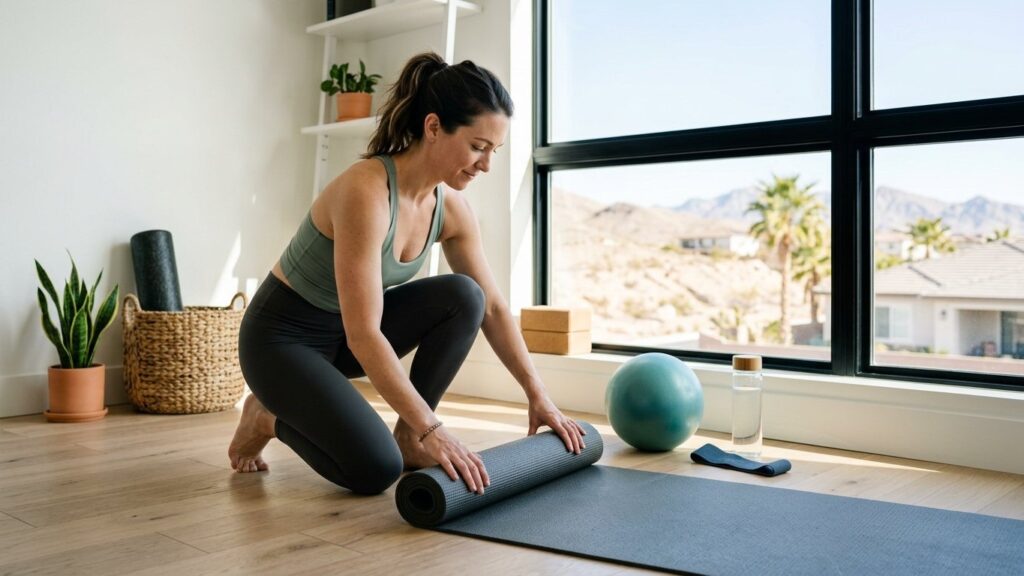
Do you actually need a room full of gear to start Pilates at home? No, you don’t. Most people buying pilates equipment end up with far more than they use, while the one thing that truly changes results – real coaching – never makes it onto the shopping list. This guide walks through exactly what earns a spot in your home setup, what’s a waste of money, and when a studio class simply beats anything you can buy. By the end, you’ll know precisely where to spend, where to save, and where to skip entirely. Quick Answer: For most beginners, the only pilates equipment worth buying right away is a supportive mat, a light resistance band, and a small stability ball. Together they cost under $80 and cover the majority of beginner-friendly moves. Everything bigger, like a reformer or tower, only pays off once you’ve built real form under an instructor. What Pilates Equipment Do Beginners Really Need? Here’s the short list that covers almost every beginner workout: That’s it. You don’t need weights, boards, or a machine to get a genuinely effective session. Once you’ve mastered these basics, you’ll have a much clearer sense of whether more advanced pilates equipment is worth the investment. Why Most Equipment Lists Get This Wrong Search for pilates equipment online and you’ll find lists pushing towers, chairs, and full reformers at every beginner, regardless of experience. That advice sells products, but it doesn’t build strength any faster. A $2,000 reformer used with sloppy form teaches your body bad habits efficiently. Meanwhile, a coach standing beside you for 45 minutes corrects those same habits before they stick. Because of this, the gear isn’t the bottleneck for most people. Instruction is. That single fact should guide almost every purchase decision you make, whether you’re spending $30 or $3,000. The Three Pieces of Pilates Equipment Worth Buying First A Supportive Mat Your spine and hip bones spend a lot of time pressed against the floor during Pilates, so a flimsy yoga mat won’t cut it. Look for one with extra cushioning and a non-slip base. A good mat also travels well, so you can bring it along if you ever join a mat-based studio session. A Resistance Band A light band mimics spring resistance without the price tag of a reformer. It works for leg circles, arm series, and seated rows, and it packs flat into a drawer. Bands are also forgiving for beginners, since you can adjust tension just by changing your grip. A Small Stability Ball This is where a lot of home practitioners get surprised. A small ball forces your deep core muscles to fire in ways flat-floor exercises simply can’t. It’s cheap, light, and genuinely useful – unlike many flashier items marketed as must-have pilates equipment for beginners. Choosing the Right Ball Size for Your Body Not every stability ball suits every body, and size matters more than most people expect. A ball that’s too large won’t let you squeeze it properly between your knees or ankles, while one that’s too small won’t create enough resistance to feel the exercise working. If you’re unsure, an 8-inch pilates ball is the safest first purchase, since it suits the widest range of body types and exercises. Pilates Equipment That Sounds Useful But Rarely Gets Used A few categories get marketed hard, yet rarely earn their price for a home beginner: If a product promises to replace an entire studio, treat that as a warning sign, not a selling point. Common Mistakes First-Time Buyers Make Even careful shoppers fall into a few predictable traps. Watch out for these before you check out: Avoiding these mistakes saves money and, more importantly, saves you from building habits you’ll later have to unlearn. Setting a Pilates at Home Equipment Budget: $50 vs. $500 vs. $2,000+ Your pilates at home equipment budget should match how often you actually plan to train, not how much a website recommends you spend. Here’s a realistic breakdown: Budget What It Buys Best For $50 Mat, resistance band, small stability ball Absolute beginners testing the method $500 Everything above, plus a firmer ball, hand weights, a resistance ring, and storage Consistent home practitioners supplementing studio classes $2,000+ An entry-level home reformer plus accessories Advanced practitioners with prior instructor-led training Notice that cost scales with commitment, not with results. A beginner who trains consistently with a modest pilates at home equipment setup and a weekly class will usually outpace someone training alone with a $2,000 machine. Building a Home Pilates Setup Step by Step Follow this order if you’re starting completely from zero: Is a Portable Pilates Reformer Worth Adding Later? A portable pilates reformer can extend your practice once you already know proper form, but it isn’t the right starting point for most beginners. These machines fold for storage and cost far less than studio-grade equipment, yet they also use shorter carriage travel and lighter springs. That’s a fair trade for convenience, but it limits how far your training can progress on the machine alone. If you already train with an instructor and want extra reps between sessions, a portable pilates reformer is a reasonable supplement. If you’ve never used a reformer at all, skip it and start where the feedback lives. Many clients wait a few months before buying one. By then, they already know what proper spring tension feels like. That makes it much easier to judge a folding model fairly, instead of guessing. What Wearing the Right Gear Adds to Your Setup Equipment isn’t only about mats and bands. What you wear changes how safely and comfortably you move, especially once grip and traction come into play. Loose clothing can catch on straps, and the wrong socks can turn a simple footwork drill into a slipping hazard. Our full guide to what to wear for Pilates covers fitted clothing, sock choices, and layering so nothing you own works against your form. Home Practice vs. Studio Training: What Actually Changes Results Even a well-chosen
Why More Professionals Are Choosing Pilates Las Vegas for Strength and Longevity
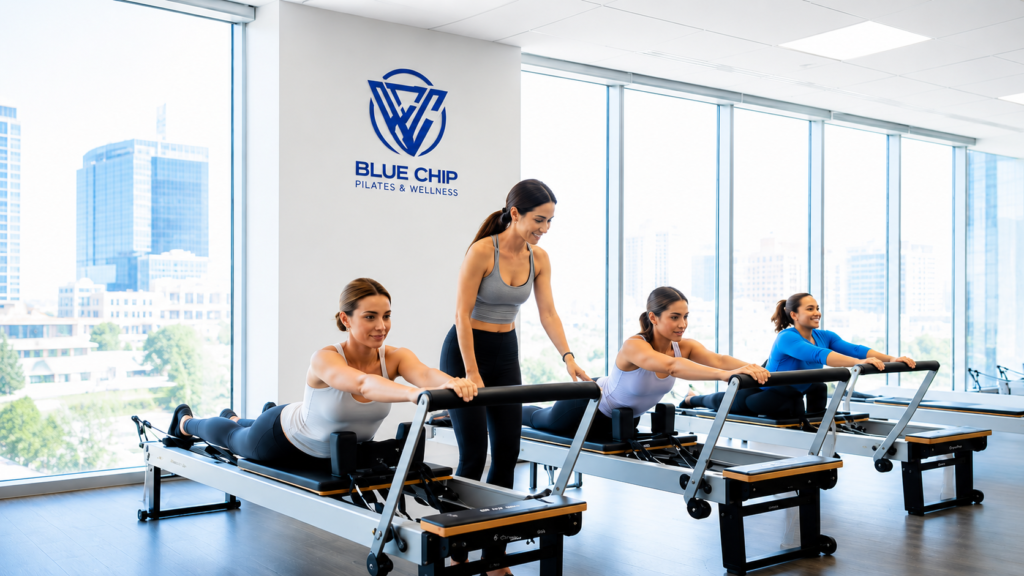
Discover why busy professionals in Las Vegas are turning to Pilates for long-term strength, injury prevention, and a healthier career. Find out what makes pilates Las Vegas so effective. Las Vegas is not just a city of entertainment anymore. Over the past few years, it has quietly become one of the most fitness-forward cities in the country. And right at the center of that shift? Pilates Las Vegas -a training method that is gaining serious traction among professionals, executives, athletes, and everyday people who want to move better and live longer. If you have been curious about why so many working professionals are swapping their gym routines for reformer sessions, this article breaks it all down. No fluff. Just real reasons why Pilates works -especially if you have a demanding career and a body that needs to last. What Does “Strength and Longevity” Actually Mean in Fitness? Before we get into the why, it helps to understand the goal. Most people start working out to look better or lose weight. But professionals -especially those in their 30s, 40s, and beyond -start asking a different question: How do I stay strong and pain-free for the next 20 years? That is what longevity training is about. It is not about lifting the heaviest weight or running the fastest mile. It is about building a body that stays functional, resilient, and injury-free for decades. And that is exactly where pilates Las Vegas studios like Blue Chip Conditioning have carved out a reputation. The Unique Demands on Las Vegas Professionals Let’s be honest. Life in Las Vegas is intense. Whether you are in hospitality, healthcare, real estate, entertainment, or athletics -long hours, high stress, and inconsistent schedules are the norm. Here is what that lifestyle does to your body over time: Traditional gym workouts -lots of heavy lifting, high-impact cardio, repetitive motion -can actually make these problems worse. That is why so many professionals in Las Vegas are switching to a smarter approach. How Pilates Las Vegas Addresses These Problems Differently Pilates is a low-impact, precision-based movement system. It was originally developed to help dancers and athletes recover from injuries, but it has evolved into one of the most well-rounded fitness methods available today. At a pilates reformer studio Las Vegas, the reformer machine plays a central role. Unlike free weights or machines at a regular gym, the reformer uses spring resistance that can be adjusted to match your exact fitness level, body mechanics, and health needs. This makes every session safer and more effective at the same time. Here is what a typical professional gains from consistent Pilates training: 1. Core Strength That Goes Deeper Than Abs When people say “core,” most think of a six-pack. In Pilates, the core includes your deep stabilizing muscles -the ones that protect your spine and keep your entire body aligned. Strengthening these muscles is what eliminates chronic back pain and improves posture over time. 2. Functional Flexibility Pilates Las Vegas stretches and strengthens muscles simultaneously. This means your flexibility actually serves a purpose -it improves how you move in real life. Getting out of a car, reaching overhead, carrying groceries -everything feels easier. 3. Better Breathing and Stress Response Breath control is built into every Pilates movement. This is not just a mindfulness trick. It directly activates your parasympathetic nervous system -the part that calms your body down. For a high-stress professional, this is genuinely therapeutic. 4. Joint Health and Injury Prevention The controlled, low-impact nature of Pilates reduces wear and tear on your joints. Many professionals who have dealt with knee pain, shoulder issues, or hip tightness find that regular Pilates Las Vegas sessions reduce or even eliminate those symptoms. What the Best Pilates Instructors in Las Vegas Actually Do Differently One of the biggest reasons pilates Las Vegas is becoming the go-to for professionals is the quality of instruction available here. Not all Pilates studios are the same. The best pilates instructors in Las Vegas are trained to do much more than just count reps and play music. At a studio like Blue Chip Conditioning, instructors are trained to: This level of expertise is what separates a great Pilates Las Vegas session from a mediocre one. And it is exactly what busy professionals need -efficient, personalized training that delivers results without wasted time. Why the Reformer Changes Everything If you have never tried a reformer, it might look intimidating at first. It should not be. The reformer is actually one of the most versatile and body-friendly pieces of exercise equipment ever designed. A good pilates reformer studio Las Vegas will walk you through everything. Within one or two sessions, most people understand the machine intuitively. And once they do, the results come fast. The reformer allows you to: For professionals who have avoided weight training because of previous injuries or joint sensitivity, the reformer is often the perfect alternative. Real Results Professionals Are Seeing People who commit to regular Pilates training in Las Vegas report changes that go well beyond the physical. Here are the most common results they notice: These are not small quality-of-life changes. For someone who spends 40 to 60 hours a week working, feeling physically better has a direct impact on productivity, mood, and career performance. How to Get Started Without Disrupting Your Schedule One of the most common excuses professionals give for not exercising is time. But the truth is, pilates Las Vegas studios are designed to fit into a busy lifestyle. Sessions at Blue Chip Conditioning run in formats that include: Even two sessions per week -done consistently -will produce measurable improvements in strength, flexibility, and posture within a few months. It does not require hours in the gym every day. The Long-Term Case for Pilates This is the part most fitness marketing skips over. Short-term results are easy to sell. Long-term impact is harder to explain but far more important. Here is the truth: the professionals who are choosing pilates Las Vegas are not just looking
Pilates for Seniors: 7 Smart Ways to Improve Flexibility and Core Support
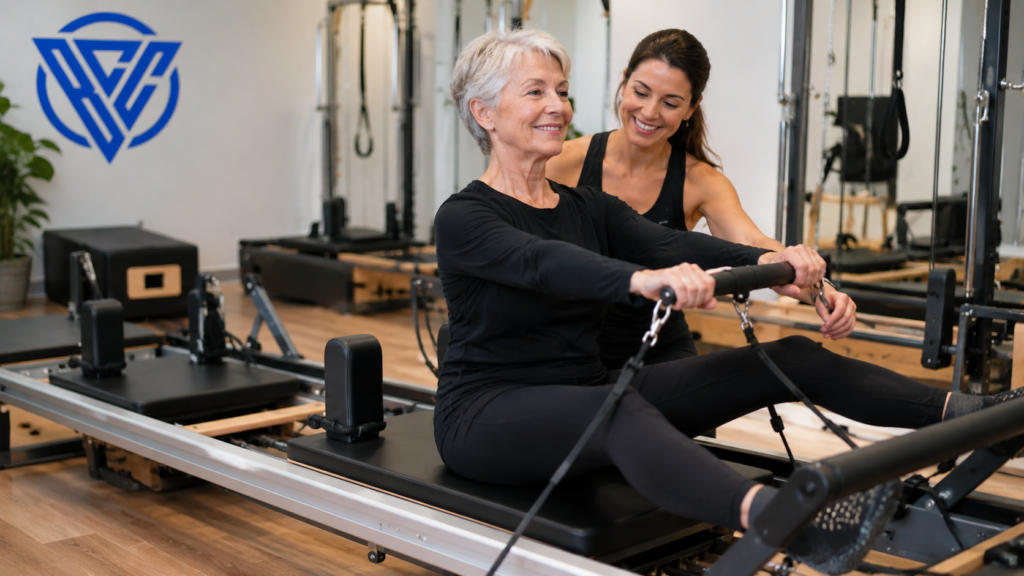
Introduction A lot of older adults do not quit moving because they lose motivation. They slow down because stiffness, balance worries, or joint discomfort make exercise feel less friendly than it used to. That is exactly where pilates for seniors stands out: it is controlled, low-impact, and built around better movement instead of punishing effort. At Blue Chip Conditioning, that same approach fits naturally with their rehab-minded, personalized style, including reformer pilates las vegas and pilates classes in las vegas for people who want guidance, confidence, and real support. Pilates for seniors is a low-impact way to build core stability, improve posture, and move with more control. It can be a smart fit for adults who want better flexibility, balance, and confidence in daily movement. When the program is scaled correctly, it can also feel safer and more approachable than high-impact workouts. Key Takeaways Why This Approach Works So Well The reason pilates for seniors gets attention is simple: it trains the body to move well before it tries to move harder. That matters because older adults often need more stability, not more strain. Pilates emphasizes controlled breathing, mindful movement, alignment, and core engagement, which are all useful for everyday strength and safer movement. Mayo Clinic notes that core work supports balance and stability, while gentle movement can help flexibility. 1. Start with breath before motion In pilates for seniors, breath is not just a nice detail. It helps set rhythm, reduce rushing, and improve body awareness. That slower pace is especially helpful for beginners who feel nervous, stiff, or out of practice. 2. Build core support without heavy strain A strong center helps the body stay organized during standing, walking, reaching, and twisting. That is one reason this style of training is so practical for daily life: it trains support muscles that many people ignore until they start feeling unstable. Research and clinical resources on older-adult exercise continue to point to strength and balance work as useful fall-prevention tools. 7 Smart Ways to Improve Flexibility and Core Support 1) Begin with the most comfortable version of each move For many adults, the first win is simply learning how to move without tension. In a well-designed senior-friendly session, an instructor can shorten the range of motion, slow the pace, or use support from equipment so the body feels safe enough to open up. That is one reason reformer-based training can be a strong choice for older adults who want guided resistance instead of jumping straight into floor work. Blue Chip Conditioning offers private and semi-private options, plus beginner-friendly training that can be adapted to the person in front of the instructor. 2) Train posture as a daily habit, not a once-in-a-while fix Poor posture usually builds slowly. So does better posture. That is why this training works best when people think of it as a practice, not a challenge. Repeated alignment work can help the shoulders, ribs, pelvis, and spine cooperate better, which often makes standing, sitting, and walking feel easier. Mayo Clinic’s fitness guidance also connects Pilates-style training with improved posture, balance, and range of motion. 3) Use controlled resistance to wake up the stabilizers Muscles do not need to be exhausted to be useful. Sometimes they just need a clear signal. A reformer gives spring-based feedback that helps people feel where they are moving well and where they are compensating. That is a big reason reformer pilates las vegas is appealing to seniors who want support, not chaos. It can feel especially helpful when stiffness, previous injury, or fear of falling makes a person overly cautious. 4) Keep flexibility work gentle and repeatable The goal is not to force a deeper stretch every session. The goal is to teach the body that movement is safe again. Gentle rotation, hip opening, chest expansion, and hamstring work can gradually improve mobility without the “next day regret” many people get from aggressive workouts. A review of Pilates training in older adults found improvements in flexibility, and other studies suggest possible balance benefits, though outcomes depend on the program and the person. 5) Choose the right setting for your confidence level Some people enjoy a group atmosphere. Others do better with more eyes on them. Both can work, but the best setting depends on confidence, mobility, and prior exercise experience. At Blue Chip Conditioning, small-group classes in Las Vegas are paired with private and semi-private training so the session can match the level of attention a client actually needs. That flexibility matters for older adults who want a slower ramp-up, more feedback, or a rehab-friendly environment. 6) Make consistency the real goal A lot of people overestimate what one hard workout can do and underestimate what eight steady weeks can do. For older adults, regular activity that includes strength and balance work is a proven part of reducing fall risk. Two well-coached sessions a week can often do more than a random burst of intense exercise followed by a long break. 7) Link every exercise to a real-life movement This is where the method starts feeling useful fast. Reaching into a cabinet, getting up from a chair, turning to look behind you, or standing on one foot while putting on a shoe all depend on the same qualities: core support, balance, and mobility. When pilates for seniors is taught well, those daily actions become the training goal, not just the byproduct. Comparison: What Seniors Usually Notice First When people compare pilates for seniors with other low-impact options, the first difference is usually the level of control. Walking is excellent for general activity, but it does not always challenge the core or posture in a targeted way. Yoga can improve flexibility, but some seniors prefer the more structured support and feedback of Pilates. That is why many people exploring pilates classes in las vegas and reformer-based sessions are really looking for one thing: a guided workout that feels safe, useful, and specific to their body. Option Best for Main feel Walking General